

Medication Timing Calculator for Night Shift Workers
Calculate when to take medications based on your sleep schedule to avoid residual sedation and ensure your next shift is safe. The article explains why proper timing is critical for avoiding drowsiness while driving or working.
Medication Information
Optimal Medication Timing
Enter your sleep schedule and medication type to see when to take your medication.
Working nights isn’t just inconvenient-it’s physically disruptive. Your body is wired to sleep at night and be awake during the day. When you flip that schedule, your internal clock gets confused. This isn’t just about feeling tired. It’s called Shift Work Disorder, and it affects up to 84% of night shift workers depending on their job and schedule. The result? Poor sleep, reduced alertness, and a higher risk of accidents-on the job and on the road.
Why Night Shifts Break Your Sleep
Your body runs on a 24-hour rhythm called the circadian clock. Light tells it when to be awake. Darkness tells it when to sleep. When you work nights, you’re fighting biology. Even if you force yourself to sleep during the day, your body resists. Sunlight, noise, and social obligations make deep, restorative sleep hard to get. That’s why many night shift workers sleep 1-4 hours less than day workers, even when they try.This isn’t laziness. It’s biology. And when you’re chronically sleep-deprived, your reaction time slows, your judgment clouds, and your risk of mistakes spikes. The National Safety Council found fatigued workers are 70% more likely to have a workplace accident. For nurses, truck drivers, and factory workers, that’s not a small risk-it’s life-threatening.
Medications: The Double-Edged Sword
Many night shift workers turn to medications to cope. Two types are commonly used: wake-promoting drugs to stay alert during work, and sleep aids to catch rest during the day. But neither fixes the root problem. They just mask it.Modafinil and armodafinil are the only FDA-approved wakefulness drugs for shift work. They don’t act like caffeine. They target brain chemicals that control alertness. Studies show they improve reaction time by 34% during night shifts. But they don’t make you as sharp as you’d be after a full night’s sleep. And they last a long time-up to 15 hours. Taking them too late can ruin your next attempt at daytime sleep.
For sleep, doctors often prescribe eszopiclone (Lunesta), zolpidem (Ambien), or zaleplon (Sonata). These help you fall asleep faster. But they come with serious warnings. The FDA added a Boxed Warning in 2023 after reports of people sleep-driving, sleep-eating, and even walking out of their homes while still asleep. One nurse in a 2022 FDA report drove 15 miles in her sleep after taking zolpidem. She didn’t remember a thing.
Over-the-counter options like melatonin are popular too. It’s not a sedative-it’s a hormone that tells your body it’s time to sleep. For night shift workers, taking 0.5-5 mg about 3-4 hours before your planned sleep helps reset your clock. But research is mixed. Some studies show it adds less than an hour of sleep. Others say it’s barely better than a placebo. Still, it’s safer than prescription pills and doesn’t cause next-day grogginess.
What You Should Never Do
There are dangerous shortcuts many night workers take-and they’re not worth the risk.- Don’t mix sleep meds with alcohol. The FDA warns this combo can cause dangerous breathing problems, memory loss, and even death.
- Don’t take benzodiazepines long-term. Drugs like lorazepam or clonazepam can lead to dependence in 25-30% of users after just 4-6 weeks. Withdrawal can cause seizures.
- Don’t rely on antihistamines. Diphenhydramine (Benadryl) and doxylamine (Unisom) are common OTC sleep aids. But they cause heavy drowsiness that lasts into your next shift. One in five users report being too groggy to drive safely.
- Don’t take sleep meds without planning 7-8 hours of uninterrupted sleep. If you have to wake up for a child, a noisy neighbor, or a work call, you’re at risk of residual drowsiness. That’s why the FDA says: “Go to bed right after taking the medicine and stay in bed.”

Real Stories, Real Risks
A nurse in Chicago told her story on Reddit: “I’ve been on Ambien for 9 months. I can’t sleep without it now. But I’m still tired at work. I’m scared I’ll make a mistake.”Another truck driver in Texas said modafinil helped him stay awake on 12-hour night runs. But after three weeks, it stopped working as well. He had to increase his dose-and now he’s worried he’s addicted.
These aren’t rare cases. A 2022 survey by the American Nurses Association found 45% of night shift nurses use prescription sleep aids. Of those, 28% said they still felt drowsy on their next shift. 15% admitted to making errors because they weren’t fully alert.
And it’s not just about work. The National Highway Traffic Safety Administration found people who take prescription sleep meds are 4.5 times more likely to crash within 2 hours of taking them. The risk doesn’t vanish after 8 hours-for some drugs, it lingers.
What Actually Works
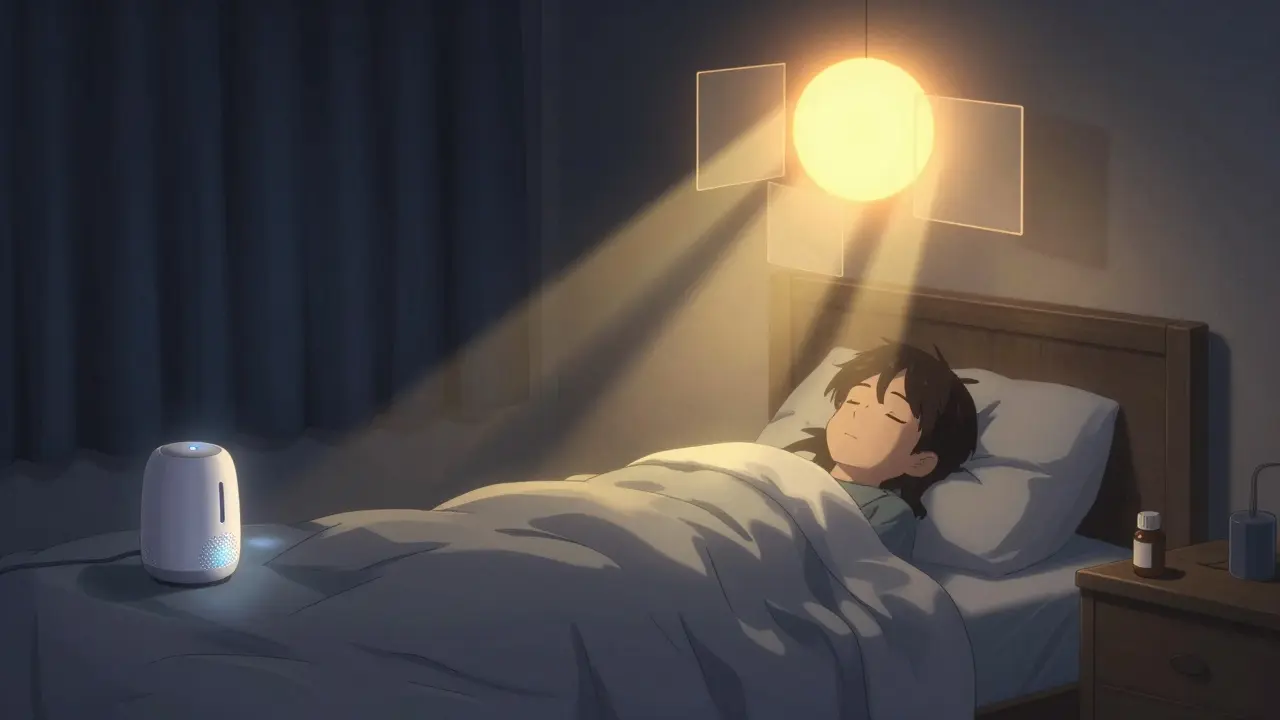
Medications can help in the short term-but they’re not a cure. The real solution is managing your environment and schedule.- Block out daylight. Use blackout curtains, eye masks, and white noise machines. Your bedroom should feel like night-even at noon.
- Stick to a schedule. Even on days off, try to sleep and wake at the same time. Changing your schedule every day makes your body more confused.
- Use light strategically. Bright light during your shift (especially in the first half) helps your brain stay alert. After your shift, avoid bright light on the way home. Wear sunglasses if needed.
- Don’t eat heavy meals before sleep. A large dinner right before bed can disrupt sleep. Stick to light snacks if you’re hungry.
- Ask your doctor about timing. Many doctors don’t know how to prescribe sleep meds for shift workers. Tell them your exact schedule. A 2022 study found medical residents get less than 5 hours of training on this topic.
The Bigger Picture
More hospitals and companies are starting to take this seriously. In 2023, 68% of large healthcare systems implemented formal fatigue management programs. Some now provide light therapy lamps, nap pods, and sleep coaching.But the burden still falls mostly on the worker. And that’s unfair. You shouldn’t have to choose between your health and your paycheck. Still, until systems change, you need tools to protect yourself.
The best plan? Use medications only as a temporary bridge-not a long-term crutch. Combine them with smart sleep habits. And never ignore the signs: if you’re falling asleep at the wheel, forgetting tasks, or feeling constantly drained, it’s time to reassess.
There’s no magic pill that can fix your circadian rhythm. But with the right strategy, you can stay safer, sharper, and healthier-even on the night shift.
Can I take melatonin every night for night shift work?
Yes, melatonin is safe for daily use in most people, especially at low doses (0.5-3 mg). It doesn’t cause dependence like prescription sleep aids. But it’s not a sleeping pill-it helps signal your body that it’s time to sleep. Take it 3-4 hours before your planned sleep time. If you don’t notice improvement after 2 weeks, it may not be effective for you.
Is modafinil addictive?
Modafinil is not considered addictive in the same way as stimulants like Adderall. It doesn’t trigger the same dopamine surge. But some users report needing it to feel normal, especially after long-term use. It can also lose effectiveness over time. Always use it under medical supervision and avoid increasing the dose without consulting your doctor.
Why do sleep meds make me groggy the next day?
Many sleep medications, especially zolpidem and eszopiclone, have long half-lives. That means they stay in your system for hours. If you don’t get a full 7-8 hours of sleep, the drug is still active when you wake up. This causes “residual sedation”-drowsiness, slowed thinking, and poor coordination. That’s why timing and sleep duration are critical.
Can I use alcohol to help me sleep after my shift?
No. Alcohol might make you feel sleepy at first, but it fragments your sleep later in the night. It reduces deep sleep and REM sleep-the most restorative stages. When combined with prescription sleep aids, alcohol can cause dangerous breathing problems, memory blackouts, or even death. The FDA and CDC both warn against this combination.
What should I do if I think I’m dependent on sleep meds?
If you can’t sleep without your medication, or if you’ve increased your dose over time, you may be dependent. Don’t stop suddenly-it can cause rebound insomnia or seizures. Talk to your doctor about tapering off slowly. Combine this with behavioral strategies: dark room, consistent schedule, no screens before bed, and relaxation techniques. Many night shift workers successfully wean off meds with support.
Next Steps for Night Shift Workers
If you’re using sleep or wakefulness medications:- Write down your exact work and sleep schedule. Share it with your doctor.
- Check the label on every prescription. Look for the FDA Boxed Warning about sleepwalking.
- Set alarms to remind you when to take your medication and when to go to bed.
- Track your alertness for a week. Note when you feel foggy or sluggish.
- Try one non-medication strategy this week-blackout curtains, light therapy, or a consistent bedtime routine.
There’s no perfect solution for night shift work. But you don’t have to accept constant fatigue as normal. With better timing, smarter habits, and careful medication use, you can protect your health-and your safety.




Reviews
Man, I’ve been on nights for 7 years. Melatonin’s my only friend. 1.5mg, 3 hours before bed, blackout curtains, white noise - it’s not perfect, but it’s kept me alive.
Y’all need to hear this - sleep isn’t a luxury, it’s your armor. If you’re relying on pills to get through your shift, you’re already losing. Start with light exposure. Get bright light during your shift, block it out when you sleep. Your brain will thank you. No magic pills, just biology.
Modafinil saved my life on long hauls 🙌 But I cut it to 100mg now - no more 200mg. Don’t be dumb like me and think ‘more is better’. You’re not a robot. 💪
How is this even a discussion? We’ve reduced human beings to biological machines that can be ‘optimized’ with pharmaceuticals. The real problem isn’t your circadian rhythm - it’s a society that demands you sacrifice your health for profit. You’re not broken. The system is.
That nurse who drove 15 miles asleep? That’s not a fluke - that’s the tip of the iceberg. I’ve seen coworkers sleepwalk through med passes. One guy put insulin in a coffee cup. He didn’t realize it until the patient screamed. This isn’t ‘bad sleep’. This is institutional negligence.
Y’all talking about melatonin like it’s a cure-all? I tried it for 3 weeks. Woke up feeling like I’d been hit by a truck. Then I started taking it at 10pm instead of 2am - boom. 4 hours of actual sleep. Timing matters more than the pill.
Why are we even talking about pills when the solution is obvious - stop forcing people to work nights. Capitalism turned sleep into a commodity. You think a nurse should be medicated to work 12-hour shifts while her kid cries alone? Pathetic
Let’s get real - modafinil is the new Adderall for adults who don’t want to admit they’re burnt out. You’re not ‘enhancing performance’, you’re just delaying the inevitable collapse. The body doesn’t lie. It just goes silent until it explodes.
Okay so I’ve been on nights for 14 years and I’ve tried everything - Ambien, Lunesta, melatonin, caffeine cocktails, even that weird light box thing - and honestly? The only thing that actually works is quitting. I got a job at a damn taco truck. I sleep 8 hours. I don’t dream about syringes anymore. I’m not ‘lazy’ - I’m smart. You can’t out-drug your biology. I tried. I lost. Now I make guac and feel human again.
Important note: The FDA’s boxed warning on zolpidem includes sleep-driving, sleep-eating, and sleep-sex - yes, that’s a real thing. And it’s not rare. One study found 1 in 15 users experienced parasomnias. If you’re taking this, you’re gambling with your dignity. And your safety.
I just started nights last month. I’m scared. I read this whole thing. I’m buying blackout curtains tonight. Thank you for writing this. I didn’t know I wasn’t broken - I just needed to know how to fight back.
Thank you for the detailed breakdown - I’m a nurse and I’ve been on the fence about modafinil. I’ll schedule a consult with my doctor and bring my sleep log. This was exactly what I needed to stop guessing.
I’m from Indonesia - we have night shift cleaners and factory workers who sleep in shifts on the floor. No meds. No light boxes. Just quiet, dark rooms and family support. Maybe the answer isn’t more science - it’s community. We used to take care of each other. Now we just hand out pills.