

Chronic acid reflux isn’t just a nuisance. For some people, it’s a silent warning sign that could lead to esophageal cancer. If you’ve had heartburn for years - even if it’s mild - you might be at higher risk than you think. The truth is, most people with GERD never develop cancer. But for those who do, the delay in recognizing the warning signs often means diagnosis comes too late. The good news? Knowing the red flags and who’s truly at risk can change everything.
How GERD Turns Into Cancer
Every time stomach acid flows back into your esophagus, it’s like a slow burn. Your esophagus isn’t built to handle acid. Over time, the cells lining it start to change, trying to protect themselves. This isn’t just irritation - it’s a biological rewrite. That process is called Barrett’s esophagus, and it’s the only known precursor to esophageal adenocarcinoma, the most common type of esophageal cancer in the U.S.
Studies show that people with chronic GERD (lasting five or more years) are over three times more likely to develop esophageal cancer than those without it. That’s not a small increase. It’s a major red flag. And it’s not just about how often you get heartburn - it’s about how long it’s been going on. Even if you take medication and feel better, the damage can still be happening beneath the surface.
The progression is slow. Most people with GERD won’t get Barrett’s esophagus - only about 5 to 15 out of every 100 long-term sufferers. And even among those with Barrett’s, only 1 in 200 to 500 develop cancer each year. But because so many people have GERD - about 1 in 5 Americans - that small percentage adds up to thousands of cases every year.
Who’s Most at Risk?
Not everyone with GERD is equally at risk. Certain factors stack the odds. If you’re a white male over 50, have had GERD for more than 10 years, and carry extra weight, your risk jumps dramatically. In fact, men are 3 to 4 times more likely than women to develop this cancer. And while GERD affects people of all backgrounds, white Americans have three times the rate of adenocarcinoma compared to Black Americans.
Obesity plays a huge role. Extra belly fat increases pressure on the stomach, forcing acid upward. Losing just 5 to 10% of your body weight can cut GERD symptoms by 40%. Smoking? It doubles or triples your risk. And if you’ve smoked for years and still have acid reflux, your risk isn’t just added - it’s multiplied. The same goes for family history. If a parent or sibling had esophageal cancer, your chances go up even if your GERD is mild.
Here’s what the data says about key risk factors:
| Factor | Risk Increase | Notes |
|---|---|---|
| GERD lasting 5+ years | 3.2x higher risk | Adjusted hazard ratio from NIH 2023 study |
| Male sex | 3-4x higher risk | Men are far more likely than women |
| Age over 50 | 90% of cases occur after 55 | Risk rises sharply after midlife |
| Obesity (BMI ≥30) | 2-3x higher risk | Contributes to 30-40% of GERD cases |
| Smoking | 2-3x higher risk | Combines dangerously with GERD |
| Family history | 2-4x higher risk | Stronger link than many realize |
| White non-Hispanic ethnicity | 3x higher rate | Compared to Black Americans |
The Red Flags You Can’t Ignore
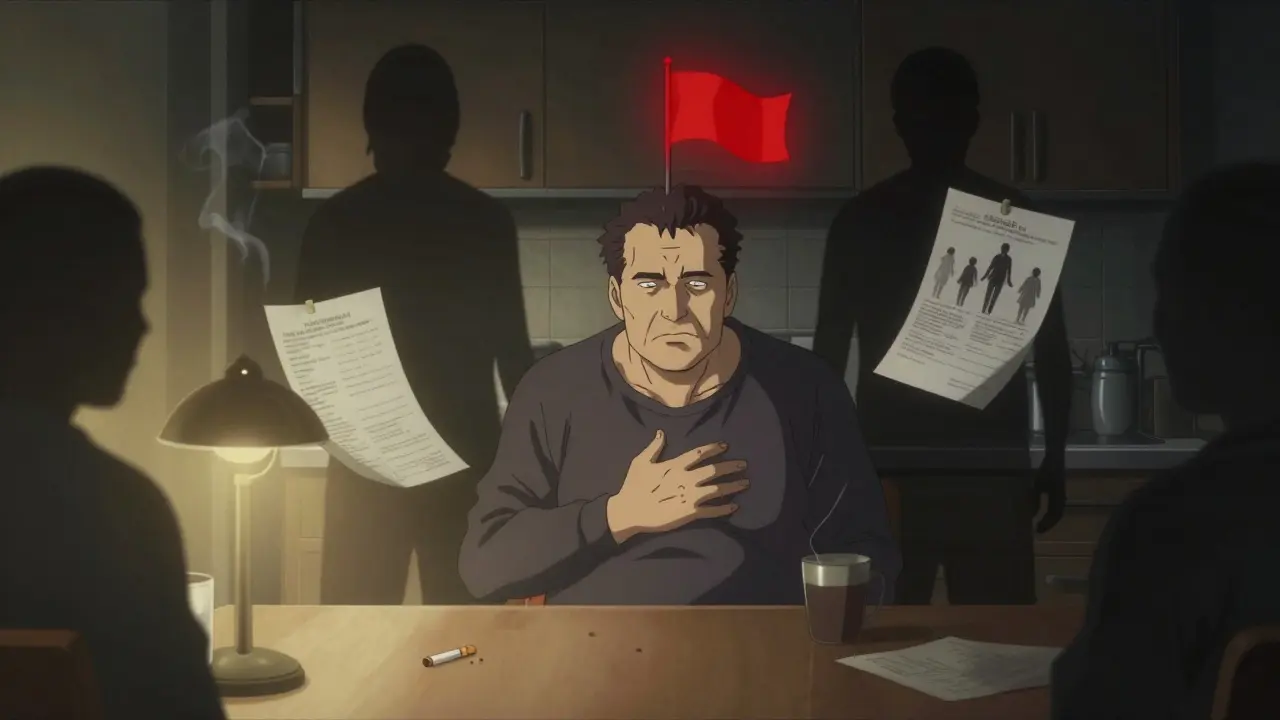
Most esophageal cancers are found too late - when they’ve already spread. Why? Because early symptoms are easy to dismiss. If you’ve had GERD for years, you might think new problems are just part of the package. But some signs mean you need to see a doctor now.
- Dysphagia - Trouble swallowing, especially with solid foods like meat or bread. It starts subtly, then gets worse. By the time liquids are hard to swallow, the cancer is often advanced.
- Unexplained weight loss - Losing 10 pounds or more in six months without trying. This isn’t just about appetite. It’s your body signaling something’s wrong.
- Food getting stuck - Feeling like food is stuck in your chest or throat. It might go away after drinking, but if it happens often, it’s a red flag.
- New or worsening heartburn after age 50 - If you’re over 50 and your reflux is getting worse, especially if you have other risk factors, this isn’t normal aging.
- Chronic hoarseness or cough - Acid reflux can irritate your vocal cords. If you’ve been hoarse for more than two weeks, it’s worth checking.
- Persistent chest pain - Not heartburn. This is pressure or tightness that doesn’t go away with antacids.
These symptoms don’t always mean cancer. But they’re your body’s way of saying: Look closer. The American Cancer Society says 75% of esophageal cancers are diagnosed at late stages - mostly because people waited too long to act.
What You Can Do About It
Prevention isn’t just about avoiding acid reflux - it’s about stopping the chain before it reaches cancer. Here’s what works:
- Quit smoking. Within 10 years of quitting, your risk drops by half.
- Lose weight. Losing 5-10% of your body weight cuts GERD symptoms by 40%. For many, that’s all it takes to slow or stop Barrett’s progression.
- Limit alcohol. One drink a day for women, two for men. Heavy drinking doesn’t raise adenocarcinoma risk as much as GERD, but it still adds danger.
- Treat GERD properly. Proton pump inhibitors (PPIs) like omeprazole or pantoprazole, taken consistently for five or more years, can cut cancer risk by 70% in people with Barrett’s esophagus.
- Get screened. If you’re a white male over 50 with chronic GERD (5+ years) and at least two other risk factors (like obesity or smoking), an upper endoscopy is recommended. It’s a simple procedure that lets doctors see if your esophagus has changed.
Screening isn’t for everyone. But for high-risk groups, it’s life-saving. Studies show that catching Barrett’s esophagus early and monitoring it with regular endoscopies reduces cancer deaths by 60-70%.

What’s Changing in Screening
Technology is making early detection easier. Doctors now use tools like narrow-band imaging and confocal laser endomicroscopy - advanced scopes that spot abnormal cells with much greater accuracy. There’s also a new risk calculator called BE MAPPED, which uses seven factors (age, sex, BMI, smoking, GERD duration, family history, race) to estimate your personal risk with 85% accuracy.
And there’s hope on the horizon. A simple test called the Cytosponge - a pill-sized sponge on a string that you swallow - collects cells from your esophagus without needing an endoscope. In trials, it detected Barrett’s esophagus with nearly 80% accuracy. It’s not widely available yet, but it’s the future of non-invasive screening.
Research is also looking at genetics. Certain gene variants, like those in the CRTC1 gene, can make GERD progression more likely. In the next few years, personalized risk scores based on both genes and lifestyle may become standard.
The Bigger Picture
Esophageal adenocarcinoma has increased by 850% since 1975. Why? Because our diets, lifestyles, and body weights have changed. Obesity rates have more than doubled. GERD is now common. And we’re only now starting to take it seriously.
Here’s the hard truth: the 5-year survival rate for all stages of esophageal cancer is just 21%. But if caught early - before it spreads - survival jumps to 50-60%. That’s the difference between a death sentence and a manageable condition.
And yet, only 13% of high-risk people get the screening they need. That gap is huge. It’s not because people don’t care. It’s because they don’t know what to look for.
Knowing your risk isn’t fear-mongering. It’s empowerment. If you’ve had GERD for years, especially with other risk factors, don’t wait for symptoms to get worse. Talk to your doctor. Ask about an endoscopy. Get tested. It’s not about being paranoid. It’s about being smart.
Is GERD the same as esophageal cancer?
No. GERD is acid reflux - a common condition affecting about 20% of Americans. Esophageal cancer is a rare but serious disease that can develop in a small number of people with long-term, untreated GERD. The key link is Barrett’s esophagus, a precancerous change in the esophagus lining caused by chronic acid exposure. Not everyone with GERD gets Barrett’s, and not everyone with Barrett’s gets cancer. But GERD is the biggest known risk factor.
Do I need an endoscopy if I have GERD?
Not automatically. Most people with GERD don’t need one. But if you’re a white male over 50 with GERD lasting 5+ years and at least two other risk factors - like obesity, smoking, or family history - current guidelines recommend an upper endoscopy. Women and younger people rarely need screening unless they have unusual symptoms or strong family history. Always talk to your doctor about your personal risk.
Can I prevent esophageal cancer if I have GERD?
Yes, you can significantly reduce your risk. Quitting smoking, losing weight, limiting alcohol, and taking PPIs consistently (if prescribed) can cut your risk by 40-70%. The earlier you act, the better. Studies show that treating GERD early reduces the chance of developing Barrett’s esophagus by up to 60%. Prevention works - but only if you start before damage becomes permanent.
If I take PPIs for GERD, am I protected from cancer?
PPIs help, but they’re not a guarantee. Consistent, long-term use (5+ years) reduces cancer risk by about 70% in people who already have Barrett’s esophagus. For those with GERD but no Barrett’s, they help prevent progression. But PPIs don’t reverse existing changes. They stop further damage. That’s why they’re part of a broader plan - not a standalone solution. You still need to manage other risk factors like weight and smoking.
Why is esophageal cancer so deadly?
Because it rarely causes symptoms in its early stages. By the time people notice trouble swallowing, weight loss, or chest pain, the cancer has often spread beyond the esophagus. It’s also hard to detect without a scope - there’s no blood test or imaging scan that reliably finds it early. That’s why screening high-risk groups is so critical. Early detection improves survival from 21% to over 50%.
Can women get esophageal cancer from GERD?
Yes, but much less often than men. Men are 3 to 4 times more likely to develop esophageal adenocarcinoma. This is partly because of hormones, body fat distribution, and possibly differences in how the esophagus responds to acid. However, women with long-term GERD, especially those who are overweight, smoke, or have a family history, still face elevated risk. Don’t assume you’re safe just because you’re a woman.



Reviews