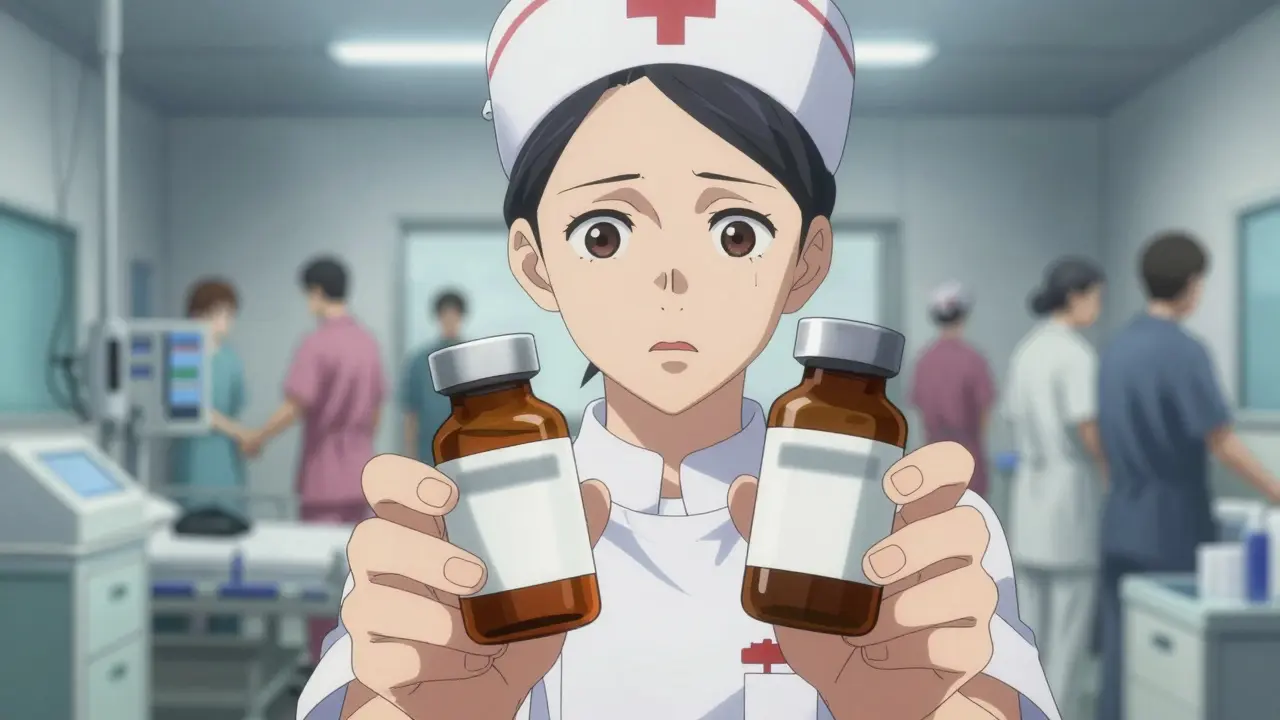
Imagine a busy hospital ward where a nurse is rushing to administer a critical dose of medication. They reach for a bottle that looks identical to the one they used yesterday, only to realize later that they've given a patient look-alike sound-alike drugs instead of the intended treatment. This isn't a rare nightmare scenario; it's a systemic failure that happens thousands of times a year globally. When two different medications look the same or sound similar, the margin for error shrinks, and for patients, the consequences can range from a harmless near-miss to a fatal outcome.
These errors are particularly sneaky with generic medications. Because different manufacturers produce the same generic drug, you might see varying colors, shapes, or packaging for the same chemical compound. When you combine that with names that are nearly identical, you create a perfect storm for mistakes. In fact, research suggests that about 1 in 4 medication errors are caused by this exact type of confusion.
What Exactly Are LASA Medications?
In the medical world, these are called LASA medications. LASA medications is a category of medicines that are confused because their names sound similar (phonetic) or their packaging and appearance look similar (orthographic). It's not just a case of a pharmacist misreading a handwritten note; it's often a failure of the system's design.
There are two main ways this happens: orthographic and phonetic errors. Orthographic errors occur when the names look similar on paper or a screen. For example, Hydroxyzine and Hydralazine look almost identical at a glance. Phonetic errors happen when drugs sound the same when spoken aloud. Think of Albuterol versus Atenolol. If a doctor gives a verbal order in a noisy ICU, it is incredibly easy to hear one and dispense the other.
Packaging also plays a massive role. When two different drugs come in the same shaped bottle with similar color schemes, the visual cues we rely on to prevent errors disappear. Data shows that over 10% of these errors are attributed specifically to the similar appearance of the packaging.
Why Generics Increase the Risk
Generic drugs are essential for making healthcare affordable, but they introduce a layer of complexity. Unlike a brand-name drug, which has a consistent look across all pharmacies, generics can vary by manufacturer. One pharmacy might stock a generic version of a drug in a blue pill, while another stocks it in a white pill. When you have multiple generics with similar names and varying appearances, the risk of a "pick error" in the pharmacy increases.
A classic example involves drugs like Valtrex (valacyclovir) and Valcyte (valganciclovir). Both start with "Val," both treat CMV-related conditions, and both are often prescribed to the same types of high-risk patients, such as transplant recipients. However, they are different drugs with different therapeutic purposes. The structural similarity in their names makes them a high-risk pair for any healthcare provider.
| Error Type | Cause | Example Pair | Primary Risk Point |
|---|---|---|---|
| Orthographic (Look-Alike) | Visual similarity in text or packaging | Nitroglycerin / Nitrofurantoin | Dispensing & Administration |
| Phonetic (Sound-Alike) | Similarity in pronunciation | Quinidine / Quinine | Prescribing (Verbal Orders) |
| Visual/Packaging | Similar bottle shape, color, or label | Generic Brand A / Generic Brand B | Pharmacy Storage & Picking |
Where the Breakdowns Happen
Medication errors don't just happen at the moment the pill is swallowed. They occur across the entire "medication use continuum." While we often blame the nurse at the bedside, the data tells a different story. Roughly 68% of medication errors happen during administration, but 24% start right at the prescribing stage. If a doctor selects the wrong drug from a dropdown menu because two names are listed next to each other, the pharmacy and the nurse are just following a flawed order.
In the UK, data from the National Reporting and Learning System showed that over 200,000 medication incidents occurred in a single year. While most are caught as "near misses," some result in severe harm or death. This proves that the issue isn't a lack of effort by staff, but a system that allows these errors to slip through. As Dr. David Bates from Harvard Medical School points out, this is a systems failure, not an individual failure.
Proven Strategies to Stop the Mistake
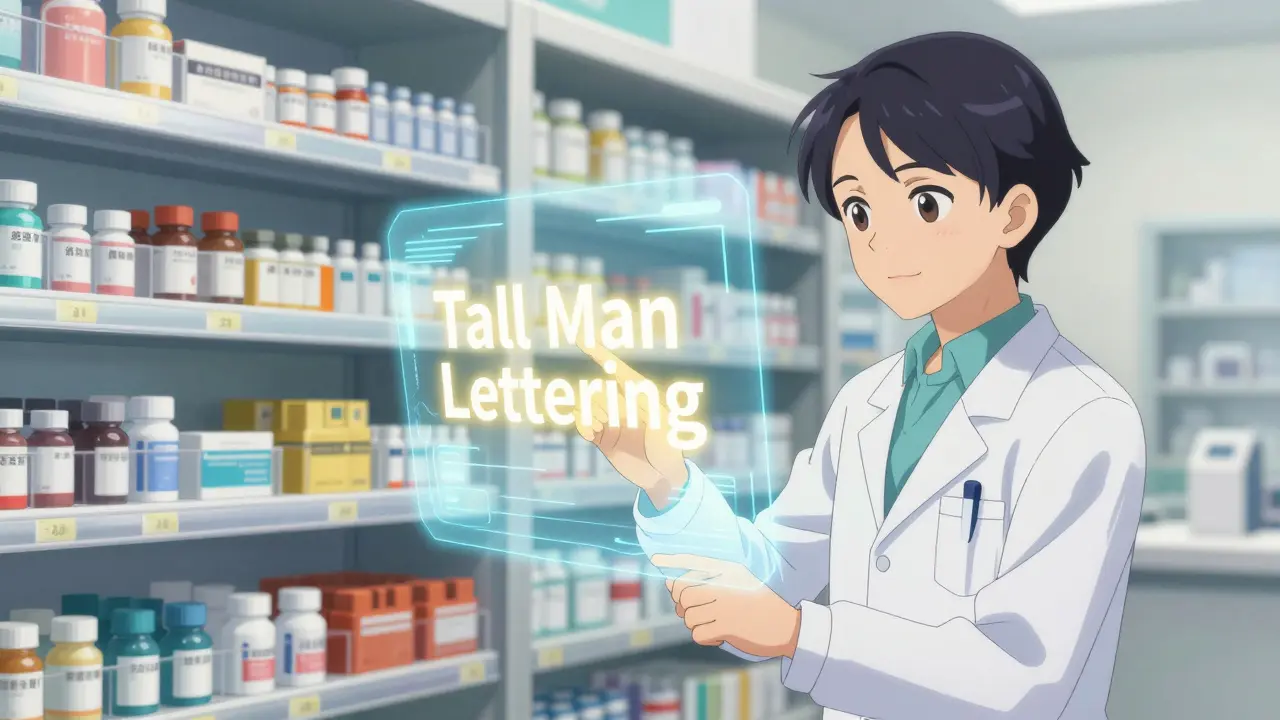
We can't rename every drug in the world, but we can change how we interact with them. One of the most effective low-tech solutions is "Tall Man Lettering." This involves capitalizing the unique parts of a drug name to make them stand out. Instead of writing prednisone and prednisolone, a pharmacy uses predniSONE and predniSOLONE. This simple visual cue has been shown to reduce LASA errors by up to 67% in some hospital systems.
Other practical interventions include:
- Physical Separation: Storing high-risk LASA pairs in different bins or on different shelves so a provider can't accidentally grab the wrong one.
- Barcode Scanning: Implementing a system where the medication and the patient's wristband must be scanned, triggering an alert if the drug doesn't match the order.
- Indication Requirement: Requiring prescribers to write the purpose of the drug (e.g., "for blood pressure") on the prescription, providing a second layer of verification.
The most exciting progress is happening with technology. AI-powered clinical decision support systems embedded in Electronic Health Records (EHRs) are now flagging potential LASA errors in real-time. In one trial, these systems reduced errors by 82% by alerting the doctor the moment they selected a drug that looks too similar to another common prescription for that patient's condition.
The Global Effort for a Safer System
The World Health Organization (WHO) has launched the "Medication Without Harm" challenge, aiming to slash preventable medication-related harm by 50% globally by 2025. This is a massive undertaking because it requires regulatory changes. For instance, the FDA has become much stricter, rejecting a significant number of new drug name applications specifically because they are too similar to existing drugs.
However, the battle with generics remains difficult because packaging standards aren't universal. To fight this, some hospitals are moving toward a "do not confuse" list-a living document that identifies the most dangerous pairs currently in their inventory and applies extra warnings to those specific labels.
Why are generic drugs more prone to LASA errors than brand names?
Generic drugs often have multiple manufacturers, meaning the same medication can come in different colors, shapes, or packaging depending on the pharmacy. This lack of standardization, combined with generic names that often share the same chemical prefixes, increases the chance of visual and phonetic confusion.
What is Tall Man Lettering and does it actually work?
Tall Man Lettering is a technique where the distinguishing parts of look-alike drug names are capitalized (e.g., predniSONE vs. predniSOLONE). It works by breaking the visual pattern and forcing the brain to notice the difference between two similar words, which has been shown to reduce errors by over 60% in some clinical settings.
Who is most at risk for LASA medication errors?
While anyone can be affected, vulnerable populations like pediatric patients, the elderly, and those in intensive care (ICU) are at higher risk. In these environments, medications are often administered quickly, and dosing errors can have much more severe consequences due to the patient's fragile health.
How can patients protect themselves from these errors?
Patients can ask their pharmacist to explain what the medication is for and what it looks like. If a generic medication looks different than the one they received previously, they should ask why. Confirming the drug's purpose at the time of dispensing is a powerful final check.
Are AI systems really better than human double-checks?
AI doesn't replace humans, but it catches the patterns humans miss. AI systems in EHRs can flag 98% of potential LASA errors in real-time, providing a safety net that doesn't suffer from fatigue or distraction, which are the primary causes of human error in busy hospitals.
Next Steps for Healthcare Providers
If you're managing a pharmacy or a clinical ward, the first step is a gap analysis. Review your current inventory against the Institute for Safe Medication Practices (ISMP) list of confused drug names. Identify which of those high-risk pairs you actually stock.
For those using digital systems, work with your IT department to ensure that LASA drugs aren't listed alphabetically next to each other in dropdown menus. Finally, foster a culture where "near-misses" are reported without punishment. If a nurse catches a LASA error before it reaches the patient, that is a goldmine of information that can be used to change the storage or labeling of that drug to prevent the next person from making the same mistake.