

Every year, millions of people reach for over-the-counter painkillers like ibuprofen or naproxen for a headache, back pain, or arthritis flare-up. But if you have heart failure, taking these common drugs could be putting your life at risk. The connection isn’t theoretical-it’s well-documented, urgent, and often overlooked. Even a few days of NSAID use can trigger dangerous fluid buildup, weight gain, and hospitalization in people with heart failure. And the worst part? Many patients don’t even realize they’re doing something harmful.
How NSAIDs Cause Fluid Retention
NSAIDs-non-steroidal anti-inflammatory drugs-work by blocking enzymes called COX-1 and COX-2. These enzymes help produce prostaglandins, chemicals that cause pain and inflammation. But prostaglandins also play a key role in kidney function. In healthy people, that’s fine. In someone with heart failure, it’s a ticking time bomb.
The kidneys rely on prostaglandins to maintain blood flow and regulate sodium and water balance. When NSAIDs shut down prostaglandin production, the kidneys respond by holding onto sodium and water. This isn’t just a minor side effect. It directly increases the volume of fluid in your bloodstream, forcing your already weakened heart to work harder. Think of it like trying to pump water through a clogged hose while someone keeps pouring more in. The pressure builds, and eventually, something gives.
Studies show that in heart failure patients, NSAIDs can reduce kidney blood flow by 20-30% and lower the glomerular filtration rate (GFR)-a key measure of kidney health. This leads to measurable fluid retention. Some patients gain 2-5 kilograms (4-11 pounds) in just 72 hours after taking a standard dose of ibuprofen. That’s not normal weight gain. That’s water pooling in the lungs, legs, and abdomen.
Why This Leads to Hospitalization
Heart failure patients are already on the edge. Their hearts can’t handle extra stress. When fluid builds up, it doesn’t just cause swelling-it triggers symptoms like shortness of breath, fatigue, and sudden weight gain. These are the red flags doctors look for when deciding whether someone needs to be admitted.
A 2022 study tracking over 100,000 people with type 2 diabetes in Denmark found that even short-term NSAID use-just 1 to 3 days-raised the risk of heart failure hospitalization by up to 88%. The highest risk came in the first week after taking the drug. Celecoxib, diclofenac, ibuprofen, and naproxen all carried this risk. No NSAID was safe.
Real-world stories back this up. One Reddit user shared how taking two 400mg ibuprofen tablets for a sore knee led to a 4.5 kg (10 lb) weight gain in under three days. He ended up in the ER with fluid around his lungs. Another patient, surveyed by the American Heart Association, said she didn’t know NSAIDs were dangerous until she was hospitalized after using naproxen for arthritis. Her doctor told her, “You didn’t have a heart attack-you had a drug reaction.”
All NSAIDs Are Risky-Even the “Safer” Ones
For years, people believed that COX-2 inhibitors like celecoxib (Celebrex) were safer for the heart. That turned out to be wrong. While they were designed to reduce stomach side effects, they do not spare the kidneys. In fact, the same 2003 review by Bleumink et al. that first linked NSAIDs to heart failure warned that “putative renal-sparing NSAIDs… have similar effects on renal function as the traditional NSAIDs.”
Today, guidelines from the European Society of Cardiology and the American Heart Association are clear: all NSAIDs should be avoided in heart failure patients. There is no “safe” choice. Even naproxen, sometimes cited as having a slightly lower risk, still carries a significant danger. One meta-analysis found its relative risk of worsening heart failure was 0.92-almost no better than the others. That’s not a green light. It’s a warning sign in disguise.
Who’s at Highest Risk?
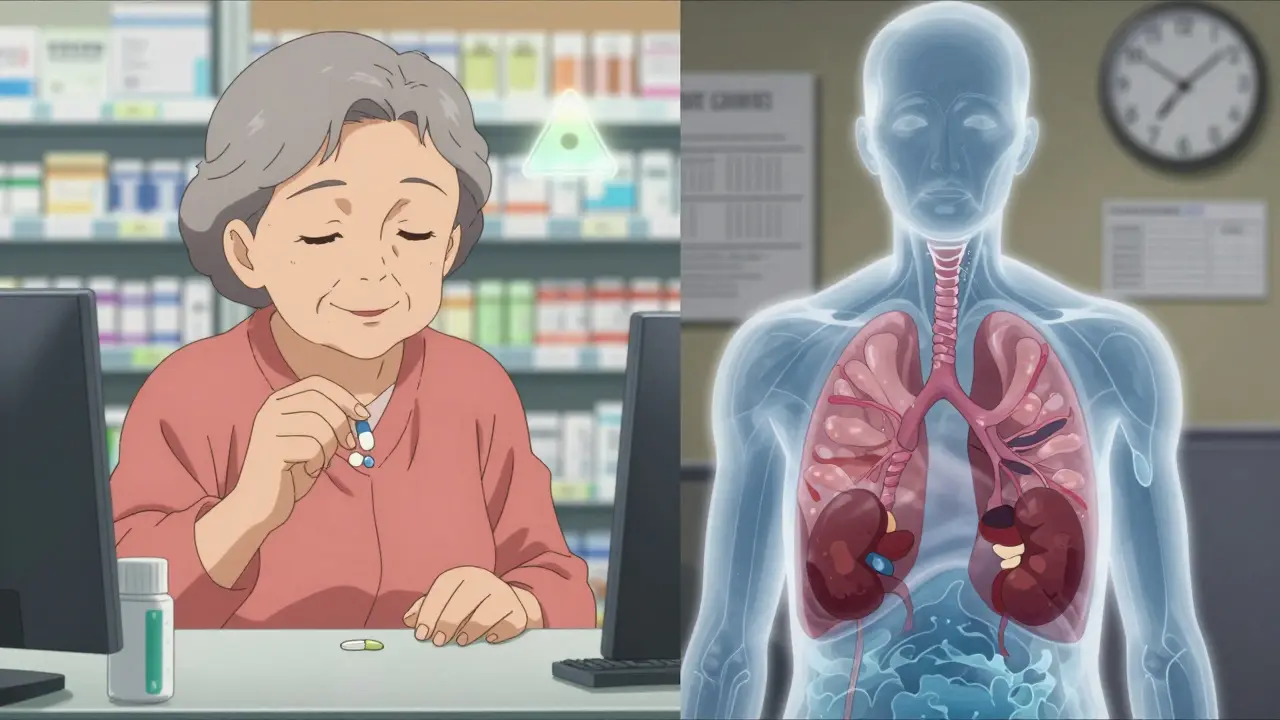
The danger isn’t equal for everyone. The elderly, people with type 2 diabetes, and those with reduced kidney function are hit hardest. Why? Because their kidneys are already working harder to compensate for poor heart function. When NSAIDs come in, they’re the final straw.
Studies show that over 15% of heart failure patients are still prescribed NSAIDs within a year of diagnosis. Among those with preserved ejection fraction (a type of heart failure where the heart pumps normally but can’t relax), that number jumps to over 22%. Many doctors still don’t screen for NSAID use during medication reviews. A 2021 survey found that only 43% of primary care physicians routinely ask heart failure patients about over-the-counter painkiller use.
And patients? Most think “over-the-counter” means “safe.” They don’t realize that the same pill they take for a toothache can undo weeks of heart failure management. Family members often don’t know either. The MedlinePlus patient guide says, “Family members can help you take care of yourself”-and that starts with knowing which drugs to avoid.
What Should You Take Instead?
If you have heart failure and need pain relief, acetaminophen (Tylenol) is the safest option. It doesn’t affect kidney blood flow or cause fluid retention. It won’t reduce inflammation like NSAIDs do, but it’s effective for pain and fever. The key is to stick to the recommended dose-no more than 3,000 mg per day-to avoid liver damage.
For chronic pain like arthritis, non-drug options matter. Physical therapy, heat packs, gentle movement, and weight management can reduce reliance on pills. In some cases, doctors may prescribe low-dose opioids or other pain medications-but only after careful evaluation.
And if you’re on diuretics (water pills) for heart failure? NSAIDs can make them useless. The fluid you’re trying to get rid of gets trapped again. It’s like turning off the drain while the faucet is still running.
What to Do If You’ve Taken NSAIDs
If you’ve taken an NSAID recently and notice sudden swelling in your legs, unexplained weight gain (more than 2 kg in 2-3 days), or worsening shortness of breath, contact your doctor immediately. Don’t wait. These symptoms can escalate fast.
Keep a log: note when you took the drug, how much, and when symptoms started. This helps your care team act quickly. In many cases, stopping the NSAID and adjusting diuretics can reverse the problem within days.
Also, review all your medications-including supplements and cold remedies. Some combination cold pills contain NSAIDs like ibuprofen or naproxen. Read labels. If it says “pain reliever” or “anti-inflammatory,” assume it’s risky.
Why This Problem Persists
Despite clear warnings, the problem continues. The global NSAID market is worth over $11 billion. Most sales are over-the-counter. You can buy them without a prescription, without a warning label that’s easy to understand. Even after the FDA updated labels in 2020 to include “increased risk of heart failure,” many people still don’t see the connection.
Healthcare systems aren’t keeping up. Many primary care clinics still lack protocols to screen for NSAID use in heart failure patients. Educational materials exist, but they’re not always handed out. A 2024 study found that heart failure patients exposed to NSAIDs within 30 days of hospital discharge had a 28% higher chance of being readmitted. That’s preventable.
And yet, change is coming. The American College of Cardiology is developing a mobile app for heart failure patients that will send alerts when they try to order or refill NSAIDs. It’s scheduled to launch in mid-2025. Until then, the responsibility falls on you-and your care team.
Final Takeaway
NSAIDs and heart failure don’t mix. Not even a little. There’s no safe dose, no safe duration, no safe type. The science is clear, the risks are real, and the consequences can be deadly. If you have heart failure, avoid all NSAIDs-including aspirin if you’re using it for pain (not heart protection). Talk to your doctor about alternatives. Educate your family. Read every label. Your heart can’t afford a mistake.
Can I take ibuprofen if I have heart failure?
No. Ibuprofen and other NSAIDs can cause fluid retention, raise blood pressure, and reduce kidney function in heart failure patients. Even a single dose can trigger worsening symptoms and hospitalization. Acetaminophen (Tylenol) is the safer choice for pain relief.
How quickly can NSAIDs cause fluid retention in heart failure?
Fluid retention can begin within 24 hours and become noticeable in 2-3 days. Some patients gain 2-5 kg (4-11 lbs) in under a week after taking NSAIDs. Symptoms like swelling, shortness of breath, and sudden weight gain are warning signs that require immediate medical attention.
Are COX-2 inhibitors like Celebrex safer for heart failure patients?
No. Despite earlier assumptions, COX-2 inhibitors like celecoxib have the same negative effects on kidney function and fluid balance as traditional NSAIDs. Studies confirm they increase the risk of heart failure hospitalization just as much. No NSAID is safe for heart failure patients.
What should I do if I accidentally took an NSAID?
Stop taking the NSAID immediately. Monitor for symptoms like swelling in the legs, sudden weight gain, or increased shortness of breath. Contact your doctor or cardiologist right away. They may adjust your diuretic dose or run tests to check your kidney function and fluid status. Do not wait to see if symptoms get worse.
Can I take aspirin if I have heart failure?
It depends. Low-dose aspirin (81 mg) taken for heart protection (to prevent clots) is generally safe and often recommended. But if you’re taking aspirin for pain or inflammation at higher doses (325 mg or more), it acts like an NSAID and can worsen heart failure. Always check with your doctor before using aspirin for anything other than prescribed cardiovascular protection.
Are there any NSAIDs that are considered safe for heart failure patients?
No. All NSAIDs-whether prescription or over-the-counter, traditional or COX-2 selective-carry the same risk of fluid retention, kidney strain, and heart failure worsening. Guidelines from major medical societies state that NSAIDs are absolutely contraindicated in all stages of heart failure. Avoid them completely.
Next Steps for Patients and Caregivers
- Keep a list of all medications and supplements you take-include over-the-counter drugs.
- Ask your doctor or pharmacist to review your medication list at every visit.
- Use acetaminophen (Tylenol) for pain, not ibuprofen, naproxen, or aspirin (unless prescribed for heart protection).
- Check labels on cold, flu, and arthritis products-they often contain hidden NSAIDs.
- Watch for sudden weight gain (more than 1-2 kg in 2-3 days) or swelling in ankles, legs, or abdomen.
- Teach family members what to look for and how to respond.



Reviews
I never realized how dangerous OTC painkillers could be until my mom got hospitalized after taking ibuprofen for her arthritis. She thought it was just a little pill. Now she keeps a list of safe meds on her fridge. I’m so glad this post exists. ❤️
Wow. Just wow. I mean, come on. People are still taking NSAIDs like they’re candy? 😅 This is why America’s healthcare system is falling apart-no one reads labels anymore. We need mandatory warning stickers that scream ‘DANGER’ in neon pink. 🚨
Oh, so now we’re treating people like fragile glass figurines because they have heart failure? 🤦♂️ Next you’ll tell me we should ban stairs and sunlight. I mean, sure, NSAIDs are risky-but so is breathing in a city with smog. Where’s the balance? Or are we just gonna panic about every molecule in the air now?
Interesting read. I’ve seen this in India too-people take painkillers like water. No one checks with doctors. But I wonder, is there data on how many people actually know they have heart failure before taking NSAIDs? Maybe the real issue is diagnosis, not the drug.
As a healthcare professional, I appreciate the clarity and evidence-based approach of this post. It is critical that patients and caregivers are educated on the pharmacological risks associated with non-prescription analgesics. I routinely counsel my patients on this very issue and recommend acetaminophen as the first-line option for pain management in heart failure. Consistency in messaging saves lives.
I just cried reading this. I took naproxen last winter. I thought I was fine. I gained 8 pounds in 4 days. My doctor said I was lucky. I didn’t even know. I’m telling everyone now. Please. Please. Please. Read the labels. Your heart is not a suggestion. It’s your life.
Same here. My aunt took celecoxib for her knee. Thought it was safe. Ended up in ICU. No one told her. We need to talk more about this. Simple. Clear. No jargon. Just facts. And tell your family. That’s all.
So let me get this straight-pharma companies know this but still sell it? And the FDA just slapped a tiny warning? That’s why I don’t trust medicine. This is all about profit. They don’t care if you die as long as you bought the pill. Wake up people. This is systemic.
NSAIDs? Pfft. I’ve been taking diclofenac for 15 years with heart failure. I’m still standing. So are 7 of my buddies. Maybe your data’s skewed? Or maybe you’re just scared of people being autonomous? 🤔 Science isn’t a cult. Sometimes the truth is messy. And sometimes people are just… resilient.
This is one of those posts that should be mandatory reading for every heart failure patient. I’ve shared it with my support group. No one should have to learn this the hard way. Knowledge is power. And power is survival.
Did you know the NSAID industry funds half the cardiology conferences? And the FDA’s warning label was delayed for 18 months? Coincidence? I think not. They’re using fear of lawsuits to keep this quiet. I’ve got sources. I’ve got documents. This is bigger than you think.
Imagine this: You’re 72. You’ve lived a full life. You take a pill for your back. You don’t think twice. Then-suddenly-you can’t breathe. Your legs swell. You’re rushed to the ER. Your daughter finds the ibuprofen bottle. She cries. You cry. And then you realize-you didn’t die from old age. You died from a label you never read. This isn’t a medical issue. It’s a tragedy waiting to happen to someone you love.
Let’s be real: if you’re taking NSAIDs for heart failure, you’re basically playing Russian roulette with your kidneys. 💀 The FDA’s warning? Too little, too late. I’ve seen 3 patients in my clinic this month alone. All of them said, ‘I didn’t know.’ Well, now you do. And if you still take it? You’re not just risking your life-you’re risking your family’s peace. This isn’t a suggestion. It’s a final notice.
Thank you for sharing this. I’m a caregiver for my father with HF, and this is exactly the kind of info we need. We’ve switched to Tylenol, started tracking weight daily, and now check every OTC label together. Small steps, but they matter. You’re not alone in this.
As a pharmacologist, I must emphasize that the COX-2 selectivity paradigm is fundamentally flawed in the context of renal hemodynamics. The prostaglandin-mediated afferent arteriolar vasodilation is non-redundant in the setting of RAAS activation, which is ubiquitous in HFpEF. Thus, the notion of ‘safer NSAIDs’ is a pharmacological fallacy perpetuated by marketing departments with vested interests in maintaining market share. The evidence is unequivocal: all NSAIDs are contraindicated. Period.