
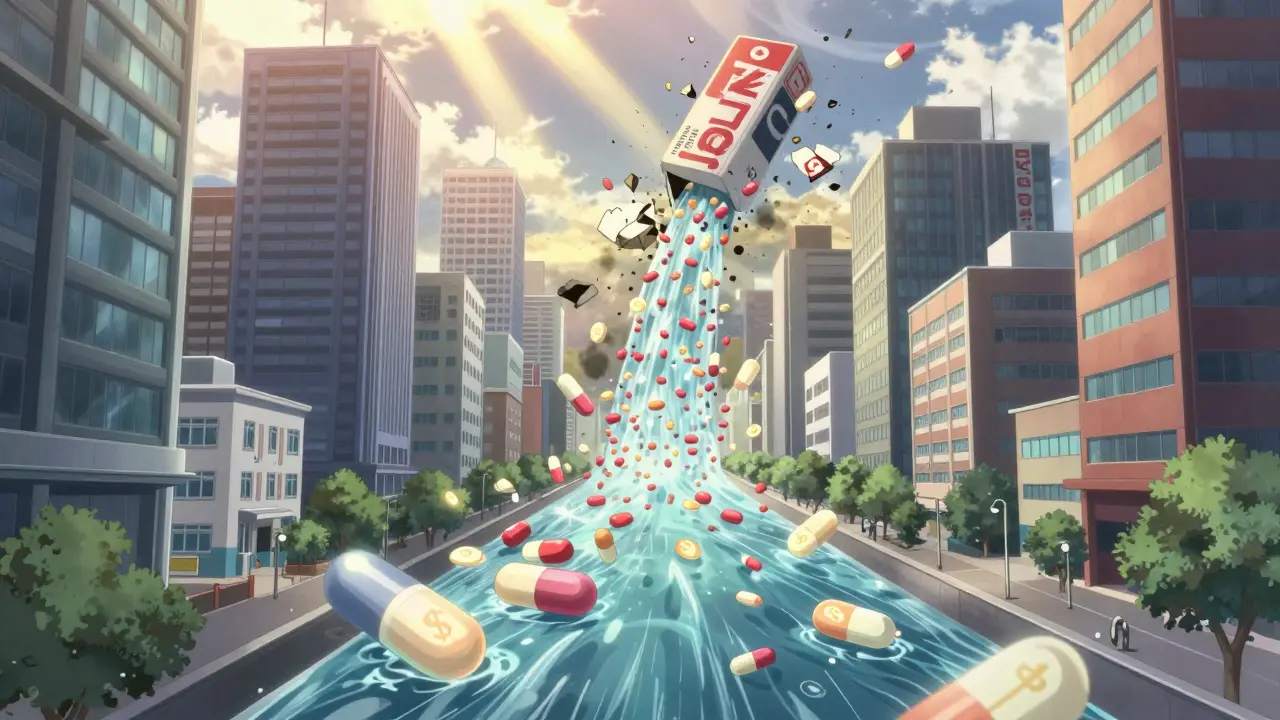
Every year, Americans fill over 3.9 billion prescriptions for generic medications. That’s nine out of every ten prescriptions written. And yet, these pills and capsules account for just 12% of total drug spending. Meanwhile, brand-name drugs-filling only 10% of prescriptions-consume 88% of the money spent on prescriptions. This isn’t a glitch. It’s the system working exactly as designed. And it’s saving the U.S. healthcare system hundreds of billions each year.
The Trillion-Dollar Engine Behind Generic Drugs
In 2024 alone, generic and biosimilar medications saved the U.S. healthcare system $467 billion. That’s not a typo. That’s nearly half a trillion dollars in one year. Over the last decade, from 2015 to 2024, those savings added up to $3.4 trillion. To put that in perspective: that’s more than the entire annual GDP of Canada or Australia. It’s enough to cover the cost of Medicare Part D for every senior in America for more than five years. This isn’t magic. It’s competition. When a brand-name drug’s patent expires, generic manufacturers step in. They don’t have to repeat expensive clinical trials. They just need to prove their version works the same way. That cuts development costs by 90%. And because multiple companies can make the same drug, prices drop fast. One study found that when five or more generic makers enter the market, prices fall by over 90% from the original brand price. Take metformin, the most common diabetes drug. The brand version, Glucophage, cost over $300 a month before generics. Today, a 90-day supply of generic metformin costs less than $10 at most pharmacies. That’s a 97% drop. And it’s not just one drug. The top 10 generic medications saved patients and insurers $89.5 billion in 2023. The top 10 by total savings-like atorvastatin for cholesterol and lisinopril for blood pressure-saved $127 billion that same year.Biosimilars: The Next Wave of Savings
Biosimilars are the next frontier. These are not exact copies like traditional generics-they’re highly similar versions of complex biologic drugs made from living cells. Drugs like Humira, Enbrel, and Herceptin used to cost $70,000 a year per patient. Now, biosimilars are cutting those prices by 30% to 50%. Since the first biosimilar hit the U.S. market in 2015, they’ve saved $56.2 billion. In 2024 alone, they saved $20.2 billion. And the pace is accelerating. More biosimilars are getting approved every year, and regulators are now designating some as “interchangeable,” meaning pharmacists can swap them for the brand without a doctor’s permission. That’s a game-changer. It’s like letting pharmacies choose the cheaper option automatically, just like with regular generics.Why the U.S. Leads the World in Generic Use
The U.S. uses generics at a rate of 90.2%-higher than any other developed country. In Europe, the average is 60% to 80%. Why? Because the U.S. built a system to make it happen. The 1984 Hatch-Waxman Act created a clear, fast track for generic approval. It balanced patent protection for innovators with a path for competitors to enter the market. That law is the reason generics exist in the volume they do today. But it’s not just about the law. It’s about how the system executes. Pharmacy Benefit Managers (PBMs) like Express Scripts and CVS Health design formularies that push patients toward generics. In 2023, one PBM alone saved $18.3 billion by favoring generics in its coverage rules. Medicare and Medicaid saved $142 billion and $62.1 billion respectively in 2024 just by using generics. States play a role too. California’s mandatory substitution law means pharmacists must switch a patient to a generic unless the doctor says no. Result? 98% generic use. Texas, with a more flexible approach, sits at 87%. The difference? Billions in savings.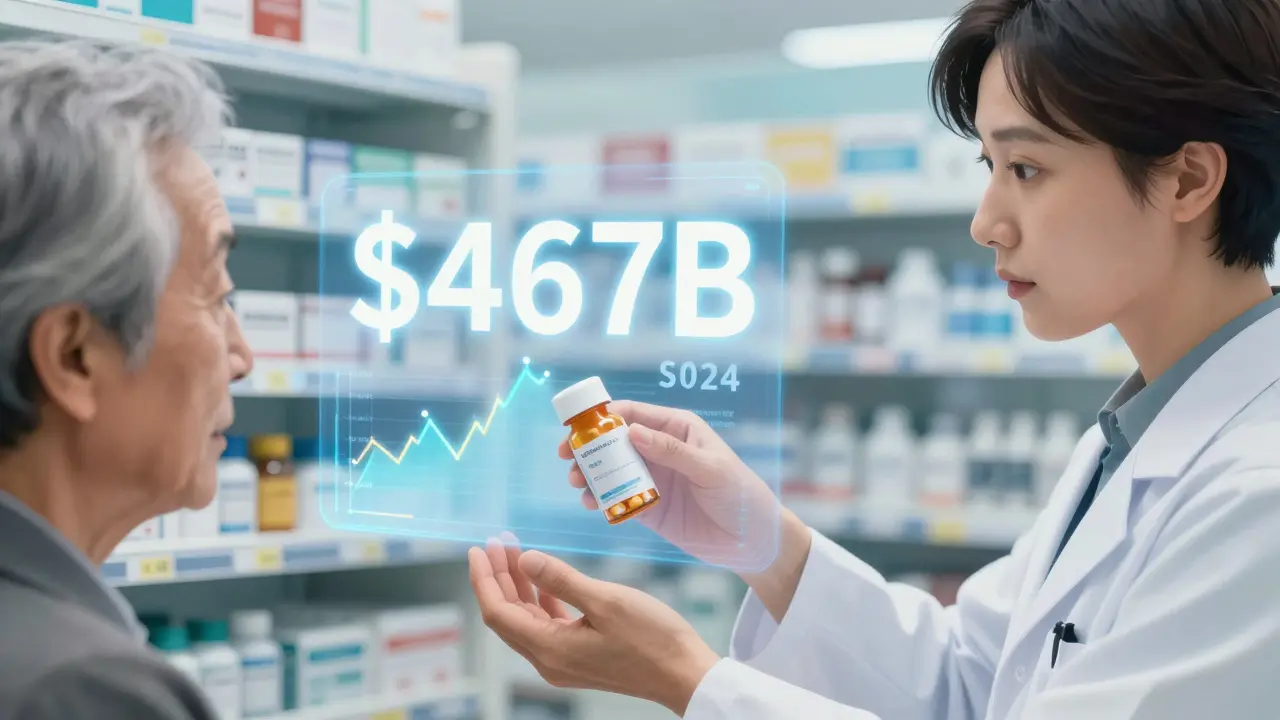
Where the System Still Fails
For all the savings, the system isn’t perfect. Big pharma has learned how to game it. One tactic: patent thicketing. Instead of one patent, a company files dozens-on packaging, dosing schedules, even minor chemical changes. This delays generics for years. A 2024 study found that just four brand-name drugs, protected by thickets of patents, cost the system over $3.5 billion in lost savings over two years. Another: pay-for-delay. A brand-name company pays a generic maker to stay off the market. The Federal Trade Commission estimates this costs consumers $12 billion a year. About $3 billion of that hits federal programs like Medicare. Then there’s product hopping. A company slightly changes a drug-say, switches from a pill to a capsule-and then pushes doctors to prescribe the new version. The old version’s patent expires, but the new one doesn’t. Patients get stuck paying more. These aren’t edge cases. They’re standard practice. The Congressional Budget Office says ending just these two tactics would save $2.9 billion over ten years.What Patients Really Experience
Most people who switch to generics don’t notice a difference. A Drugs.com analysis of 15,328 reviews showed 87% rated cost as “excellent” or “good.” And 89% of patients who switched due to cost said they were satisfied with the generic’s effectiveness. But some do notice. A Reddit thread from May 2024, with over 1,200 upvotes, shared stories of patients who felt generic versions didn’t work as well. One user reported migraines returning after switching from brand-name Topamax to its generic. Another said their anxiety meds felt “off.” Here’s the truth: for most drugs, generics are identical. But for a small subset-like seizure meds, thyroid drugs, or blood thinners-tiny differences in inactive ingredients or absorption rates can matter. That’s why doctors sometimes write “do not substitute” on prescriptions. It’s rare, but it happens. The bigger problem? Access. Even with generics, some patients still can’t afford them. Why? Because insurance plans sometimes don’t cover the cheapest version. Or they require prior authorization. Or the pharmacy doesn’t stock it. A 2023 survey found 42% of patients skipped doses because of cost. But among those who switched to generics, 89% said it helped.
The Future: More Savings, But More Challenges
The FDA approved 1,145 new generic drugs in 2024-up 7.3% from the year before. Specialty generics-like complex injectables and inhalers-are the fastest-growing segment. Over $24 billion in drug spending is still locked behind patents that will expire by 2025. That’s the next wave of savings. Legislation like S.1041, the Affordable Prescriptions for Patients Act, passed a key Senate committee in June 2024. If it becomes law, it would crack down on patent abuse and could save $7.2 billion a year. But threats remain. Drug shortages are rising. As of December 2024, 287 generic medications were in short supply-mostly antibiotics, heart meds, and anesthetics. That’s partly due to manufacturing consolidation. Ten companies now control 63% of the generic market, up from 51% in 2015. Fewer players mean less competition-and less price pressure. The IQVIA Institute projects that if current trends continue, generics and biosimilars will save $5.1 trillion between 2025 and 2034. That’s more than the entire U.S. federal budget for education and transportation combined.What This Means for You
You don’t need to be a policymaker to benefit. If you’re on a chronic medication-diabetes, high blood pressure, cholesterol, depression-ask your pharmacist: “Is there a generic?” If your doctor prescribes a brand, ask: “Is there a generic alternative?” Most of the time, the answer is yes. And the savings aren’t just on paper. They’re in your wallet. One patient saved $147 a month on average by switching to a generic, according to a 2023 survey. That’s over $1,700 a year. Enough to cover a month’s rent in many places. Generics aren’t a silver bullet. But they’re the most powerful tool we have to keep healthcare affordable. Without them, prescription drug costs would be twice as high. And millions of Americans would be forced to choose between their meds and their rent. The system works. But only if we use it.Are generic drugs really as effective as brand-name drugs?
Yes, for the vast majority of medications, generics are just as effective. The FDA requires them to have the same active ingredient, strength, dosage form, and route of administration as the brand. They must also be absorbed into the body at the same rate and to the same extent. In over 90% of cases, patients see no difference in results. A small number of drugs-like seizure medications or blood thinners-can be sensitive to minor formulation differences, which is why some doctors specify "do not substitute." But for most conditions, generics work exactly the same.
Why do some pharmacies charge more for generics than others?
Price differences come from how pharmacies negotiate with Pharmacy Benefit Managers (PBMs) and whether they participate in discount programs. Some pharmacies, especially large chains, offer $4 or $10 generic lists for common medications. Others may charge more if they don’t have volume discounts or if your insurance plan doesn’t cover the cheapest version. Always ask for the cash price-even if you have insurance. Sometimes paying out of pocket is cheaper than using your plan’s copay.
Can I ask my doctor to prescribe a generic instead of a brand?
Absolutely. In fact, it’s one of the smartest things you can do for your budget. Most doctors automatically prescribe generics unless there’s a medical reason not to. But if you’re unsure, just ask: "Is there a generic version of this?" or "Would a generic work just as well?" Doctors are trained to prioritize cost-effective care, and they’ll usually agree. You’re not being cheap-you’re being smart.
Why do some insurance plans push brand-name drugs over generics?
Sometimes it’s not about cost-it’s about rebates. Insurance companies and PBMs get kickbacks from drugmakers when they steer patients toward more expensive brand-name drugs. Even if a generic is cheaper, the plan might make more money by covering the brand. This is why your copay might be lower for a brand than a generic. Always check your plan’s formulary or call your insurer to see which version is truly the least expensive for you.
How do biosimilars differ from regular generics?
Regular generics are exact copies of small-molecule drugs made from chemicals. Biosimilars are copies of complex biologic drugs made from living cells-like proteins or antibodies. Because they’re made from living tissue, biosimilars can’t be exact copies, but they must be highly similar in structure and function. They’re approved through a stricter process than regular generics. They’re also more expensive to develop, which is why they’ve taken longer to catch on. But once they do, they cut prices dramatically-for example, reducing the cost of drugs like Humira by 30% to 50%.


Reviews
Generics are why I can actually afford my blood pressure meds. I used to skip doses because the brand cost $200 a month. Now I pay $7. I don’t care if it’s called something different as long as it works.
i never thought about how much money generics save the whole system like that. its crazy that 90% of prescriptions are generic but they only cost 12% of the total. wow. i guess i just assumed they were cheap because they were bad. turns out i was wrong.
It is truly remarkable, and indeed, profoundly commendable, that the United States has achieved a 90.2% utilization rate of generic medications, thereby establishing itself as a global leader in pharmaceutical cost containment. The Hatch-Waxman Act of 1984 was not merely legislation; it was a visionary framework that balanced innovation with accessibility. Furthermore, the emergence of biosimilars represents a quantum leap in therapeutic affordability, particularly for patients requiring biologic agents such as Humira and Enbrel. The cumulative savings of $3.4 trillion over the past decade are not merely statistical-they are lifelines.
It’s funny how we treat medicine like a product you buy at the store. Like, yeah, the active ingredient is the same… but what if your body just… reacts differently? Not because it’s ‘all in your head’-but because biology is messy. I’ve seen people switch to generics and feel like a different person. Not worse. Just… off. Like their brain forgot how to be calm. I don’t think we talk enough about that.
And then there’s the quiet part: sometimes the cheapest option isn’t the one your body can actually use. We need to stop pretending it’s all just math.
Still… I’m glad we have generics. I just wish we had more compassion for the people who don’t fit the 89%.
One thing people don’t mention enough is how PBMs influence what gets prescribed. I work in a clinic and we see it all the time-insurance pushes a brand because the PBM gets a rebate, even when the generic is cheaper for the patient. It’s messed up. We have to ask patients: ‘Did you check the cash price?’ More times than not, they’re paying more with insurance.
Also, the shortage issue is real. Last month we ran out of generic levothyroxine for two weeks. Patients were terrified. We had to scramble. Fewer manufacturers means less competition means more risk.
We need more generic makers, not fewer.
People act like generics are some kind of miracle, but let’s be honest-this is just capitalism doing what it does best: exploiting loopholes. The system isn’t saving money-it’s shifting the burden. Patients still can’t afford meds. Pharmacists are forced to choose between stocking generics or keeping their jobs. And the big pharma guys? They’re still getting rich off patent thicketing and pay-for-delay schemes. This isn’t a win. It’s a shell game.
i didn’t know biosimilars were a thing. so they’re like generics but for fancy drugs? that’s cool. so if humira costs 70k and the copy costs 40k, that’s still a lot. but better than nothing i guess.
Let me get this straight-somebody made a billion dollars off a pill that costs 5 cents to make, and now we’re supposed to cheer because someone else made a copy? This isn’t healthcare. This is a horror show where the villains wear lab coats and the heroes are pharmacists handing out $4 prescriptions. And don’t even get me started on the ‘do not substitute’ patients. Those people are being thrown under the bus while the system calls it ‘efficiency.’
Generics aren’t saving us. They’re just making the pain less visible.
Back home in Nigeria, we don’t even have this debate. If you can’t afford the brand, you don’t take it. Period. Here, you’ve got a system that tries to fix the broken with more broken. Generics? Great. But why do we need a 20-page form just to get a $10 pill? Why do insurance companies get kickbacks to push the expensive stuff? This ain’t innovation. This is a circus with doctors in clown shoes.
I love that you’re talking about savings-but let’s talk about dignity too. A man shouldn’t have to choose between his medicine and his child’s school lunch. That’s not a system. That’s a failure dressed up in spreadsheets.
just read this whole thing and i’m blown away. i had no idea the us leads the world in generic use. i thought europe was ahead. and the part about california making pharmacists switch to generics unless the doc says no? that’s genius. why isn’t this everywhere? also i just learned what ‘product hopping’ is and now i’m mad. someone literally changed the pill shape to keep charging more? that’s not innovation, that’s cheating. and the fact that 42% of people skip doses because of cost? that’s not a healthcare problem. that’s a moral crisis.
we need to fix this. not just for money. for people.