
Every year, millions of people take herbal supplements thinking they’re harmless because they’re "natural." But here’s the truth: herbal supplements aren’t harmless. They’re powerful. And when mixed with prescription drugs, they can turn a simple treatment into a life-threatening situation.
In Australia, as in the U.S. and Europe, more than one in four adults uses herbal products like ginkgo, garlic, or St. John’s wort. Many of them are also on blood thinners, heart meds, antidepressants, or diabetes drugs. And most don’t tell their doctor. That’s not negligence-it’s ignorance. And it’s dangerous.
How Herbal Supplements Interfere With Your Meds
Your body doesn’t see "natural" and "synthetic" as different. It sees chemicals. And herbal supplements are full of them. Some of these chemicals change how your body processes drugs-either by speeding up their breakdown or slowing it down. This isn’t theory. It’s measured, documented, and deadly.
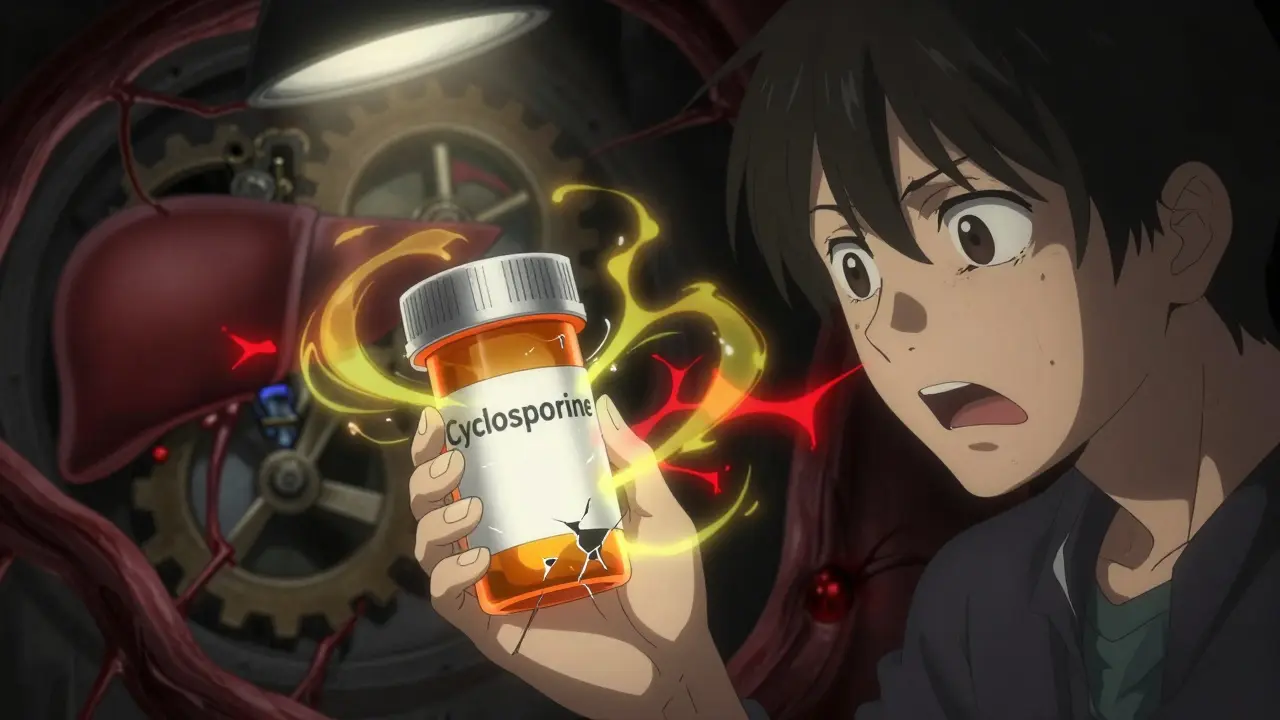
The liver uses a group of enzymes called cytochrome P450 to break down most medications. One enzyme, CYP3A4, handles about half of all prescription drugs. St. John’s wort? It turns this enzyme into a hyperactive machine. The result? Drugs like cyclosporine (for organ transplants), oral contraceptives, and HIV medications get cleared out of your body too fast. Studies show cyclosporine levels can drop by 57%. That’s not a glitch-it’s organ rejection waiting to happen.
On the flip side, goldenseal and garlic can block CYP3A4 and CYP2D6. That means drugs like dextromethorphan (in cough syrups) or metoprolol (for high blood pressure) build up in your blood. One study found dextromethorphan levels spiked by 50% in people taking goldenseal. That’s enough to cause hallucinations, seizures, or even respiratory failure.
Then there are the pharmacodynamic interactions-when herbs and drugs do the same thing to your body. Danshen, a Chinese herb used for heart health, thins the blood. So does warfarin. Together? They can cause bleeding so severe you end up in the ER. A 2012 study showed danshen cuts platelet activity by 30%. That’s not a minor effect. That’s a medical emergency waiting for the right trigger.
The Top 5 Dangerous Herbs and What They Do
Not all herbs are equal. Some are low-risk. Others? They’re ticking time bombs. Here are the five with the clearest, most dangerous interactions:
- St. John’s wort: The king of interactions. It reduces levels of at least 15 major drug classes. HIV meds? Down 40-80%. Birth control? Failed in over a dozen documented pregnancies. Digoxin? Levels drop 25%. One 2018 JAMA commentary called it "the most clinically significant herb-drug interaction we know."
- Ginkgo biloba: Often taken for memory. But it inhibits platelet function and can double bleeding risk when combined with warfarin or aspirin. A 2009 meta-analysis of 1,200 patients showed a 30% increase in bleeding incidents. One hematologist in Sydney reported three bleeding cases in a single year-all from patients who never mentioned ginkgo.
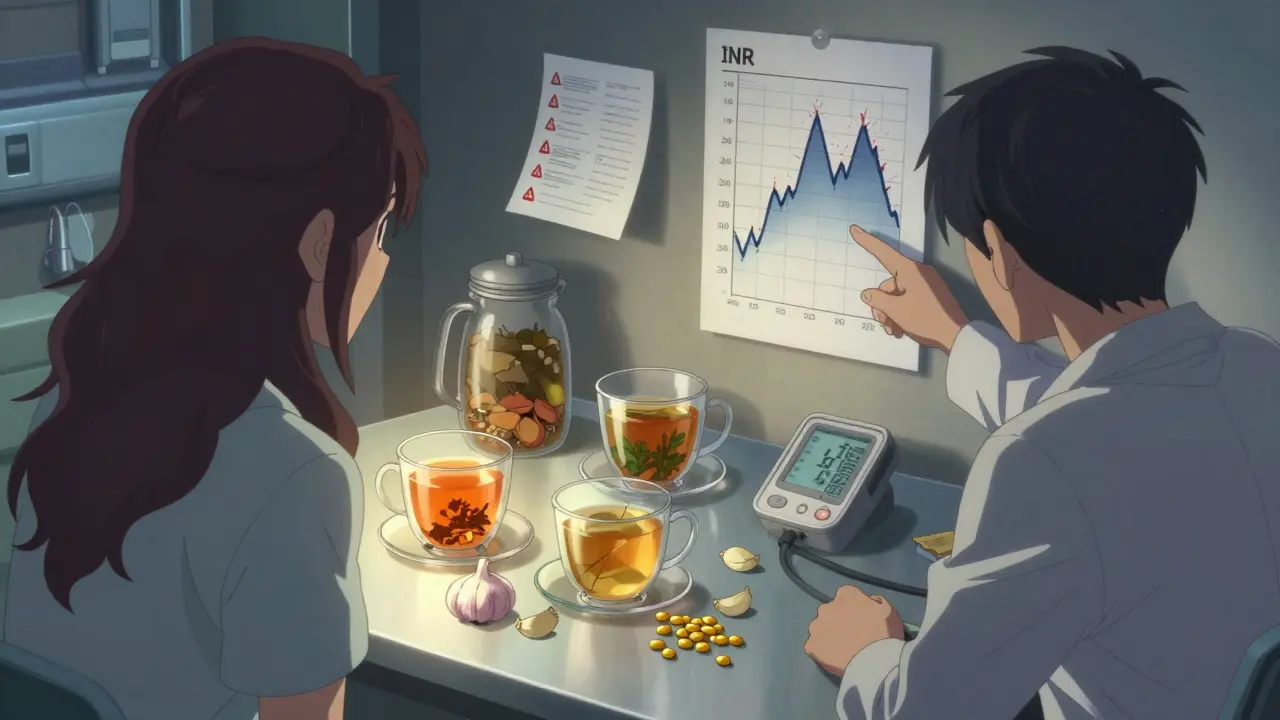
- Garlic: Popular for heart health. But it induces CYP3A4, which slashes the effectiveness of saquinavir (an HIV drug) by 51%. It also thins the blood. Patients on warfarin who take garlic daily often see their INR drop unpredictably, leading to clots or strokes.
- Danshen (Salvia miltiorrhiza): Used in traditional Chinese medicine for circulation. But it increases bleeding risk and can cause irregular heart rhythms when taken with digoxin. A 2023 Mayo Clinic alert noted a 35% higher risk of arrhythmia in patients using both.
- Hawthorn: Marketed for mild high blood pressure. But when paired with beta-blockers or digoxin, it can drop systolic pressure by 15 mmHg or more. One patient in a 2024 forum shared that their systolic pressure hit 85 mmHg after combining hawthorn with lisinopril. They needed emergency care.
Why Nobody Talks About This
Doctors don’t ask. Patients don’t tell. And the system doesn’t help.
A 2016 study of 299 hospital patients in Israel found that 25% were taking herbal supplements-but doctors missed it in 72% of cases. Why? Because they asked, "Are you taking supplements?" and got a "No." But if they asked, "Are you drinking any teas, or taking any herbs, roots, or powders?"-they caught 35% more users.
Patients assume supplements are safe because they’re sold in health food stores. A 2023 survey found 77% believe "natural" means "safe." Meanwhile, only 15% of supplement labels include interaction warnings. The FDA doesn’t require it. The 1994 Dietary Supplement Health and Education Act (DSHEA) lets products hit shelves without proving safety or interaction risks.
And it’s getting worse. The global herbal supplement market hit $104.8 billion in 2023. In the U.S. alone, there are over 23,000 herbal products on the market. Only a fraction have been studied for interactions. A 2024 review estimated that 40-60% of dangerous combinations are still undocumented.
What You Should Do Right Now
If you take any prescription medication and use herbal supplements, here’s what you need to do:
- Make a list of everything you take-prescription, over-the-counter, vitamins, teas, powders, tinctures. Don’t leave anything out. Even "just chamomile tea every night."
- Bring it to your doctor or pharmacist. Don’t wait for them to ask. Say: "I take these herbs. I’m on these meds. Can they clash?"
- Check with a pharmacist. Pharmacists are trained for this. At Mayo Clinic, they spend an average of 12 minutes per patient reviewing supplement-drug combos. St. John’s wort? That’s 18 minutes. They know the risks. Use them.
- Stop if you feel odd. Unexplained bruising, dizziness, skipped heartbeats, or sudden changes in how your meds work? Stop the herb. Call your provider. Don’t assume it’s "just a side effect."
There’s no such thing as a "safe" herb if you’re on medication. The idea that natural equals safe is a myth built on marketing, not science. Herbs are drugs. And drugs have side effects-even when they come from a plant.
What’s Changing? And What’s Still Missing
There’s progress. The NIH spent $12.7 million in 2023 on herb-drug interaction research. The FDA released draft guidance in 2023 requiring new botanical drugs to prove interaction safety. The European Medicines Agency now requires full interaction studies for herbal medicines. And AI tools like the University of California’s Herb-Drug Interaction Prediction Engine can now predict new risks with 87% accuracy.
But here’s the gap: Only 3% of primary care providers routinely screen for these interactions. Most don’t know the names of the herbs their patients take. And patients still think it’s not worth mentioning.
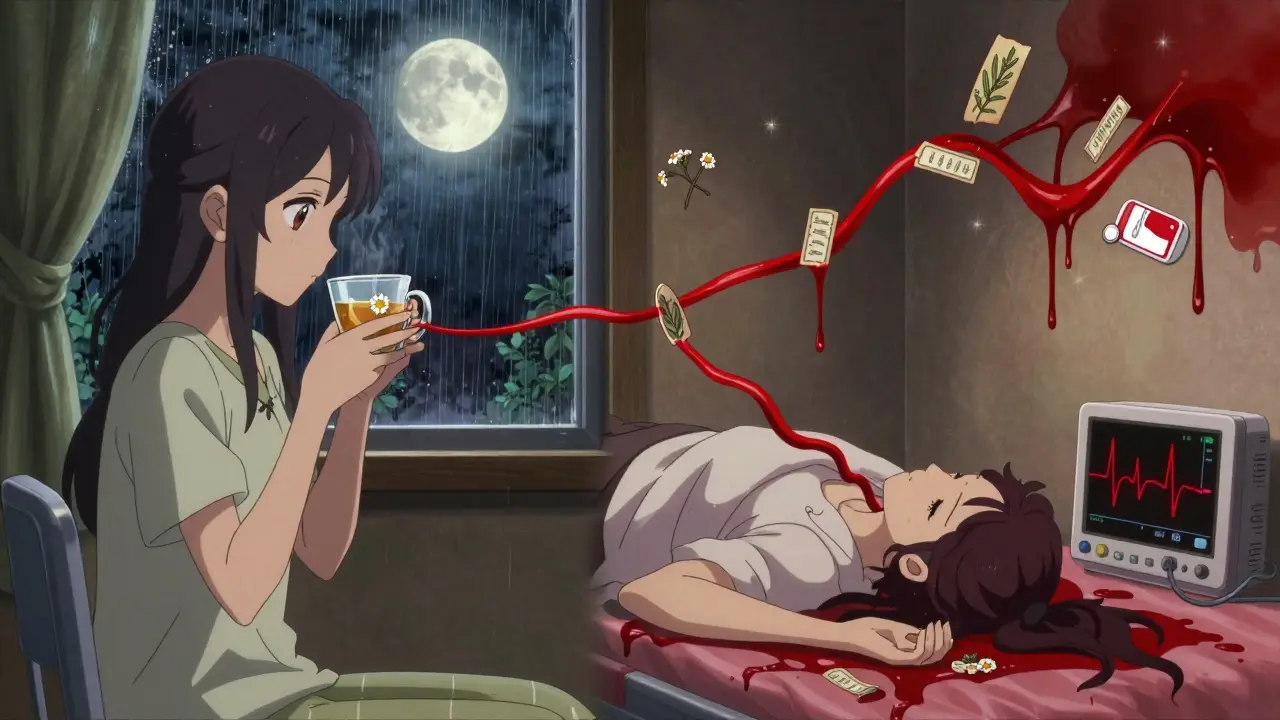
Until that changes, people will keep getting hurt. A woman in Sydney stopped her blood thinner because she started drinking green tea for weight loss. Her INR dropped. She had a stroke. Her doctor never asked about tea.
It doesn’t have to be this way. But it will be-unless you speak up.
Can herbal supplements really cause serious harm when taken with prescription drugs?
Yes. Herbal supplements can cause life-threatening interactions. For example, St. John’s wort can reduce the effectiveness of blood thinners, birth control, and transplant medications by up to 80%. Danshen can increase bleeding risk when taken with warfarin. Ginkgo biloba has been linked to multiple cases of internal bleeding in patients on anticoagulants. These aren’t rare cases-they’re documented in clinical studies and reported by hospitals worldwide.
Which herbal supplements are the most dangerous to combine with medications?
St. John’s wort is the most dangerous, with over 15 major drug interactions. Ginkgo biloba increases bleeding risk with blood thinners. Garlic can reduce HIV drug effectiveness. Danshen can trigger irregular heart rhythms when taken with digoxin. Goldenseal can dangerously raise levels of drugs like metoprolol and dextromethorphan. Hawthorn can cause dangerously low blood pressure when combined with heart medications. These are not theoretical risks-they’ve caused hospitalizations and deaths.
Why don’t supplement labels warn about drug interactions?
In the U.S. and Australia, herbal supplements are regulated as food, not drugs. Under the 1994 DSHEA law, manufacturers don’t need to prove safety or interaction risks before selling products. Only 15% of supplements include interaction warnings, even though many contain active compounds that affect the liver and bloodstream. The FDA doesn’t require testing for interactions before products hit shelves.
Should I stop taking herbal supplements if I’m on medication?
Don’t stop without talking to your doctor or pharmacist. Some herbs are safe with your meds. Others aren’t. The key is knowing which ones you’re taking and how they interact. For example, milk thistle and saw palmetto have low interaction risk. But St. John’s wort, ginkgo, and garlic carry high risk. A pharmacist can review your list and tell you what’s safe and what to avoid.
How can I talk to my doctor about herbal supplements without sounding silly?
Say this: "I take [name of herb] for [reason]. I’m on [medication]. I want to make sure they don’t clash." Most doctors will appreciate the honesty. A 2021 study found that using visual aids-like pictures of common herbs-increased patient disclosure by 47%. Don’t assume your doctor knows. They’re not trained to ask. You have to lead.
Are there any herbal supplements that are generally safe with medications?
Some have low interaction risk: milk thistle (for liver support), saw palmetto (for prostate), American ginseng (in moderate doses), and valerian (for sleep, though it may add to sedatives). But "low risk" doesn’t mean "no risk." Even these can interact in sensitive individuals or with high doses. Always disclose everything. Never assume safety.
Final Thought: Your Body Doesn’t Care What You Call It
It doesn’t matter if it’s a pill, a capsule, or a tea. Your liver treats them all the same. If something changes how your body handles a drug, it’s a drug interaction. And those can kill you.
Don’t let the word "natural" fool you. The safest choice isn’t the one that sounds gentle. It’s the one you’ve checked with a professional.


Reviews