
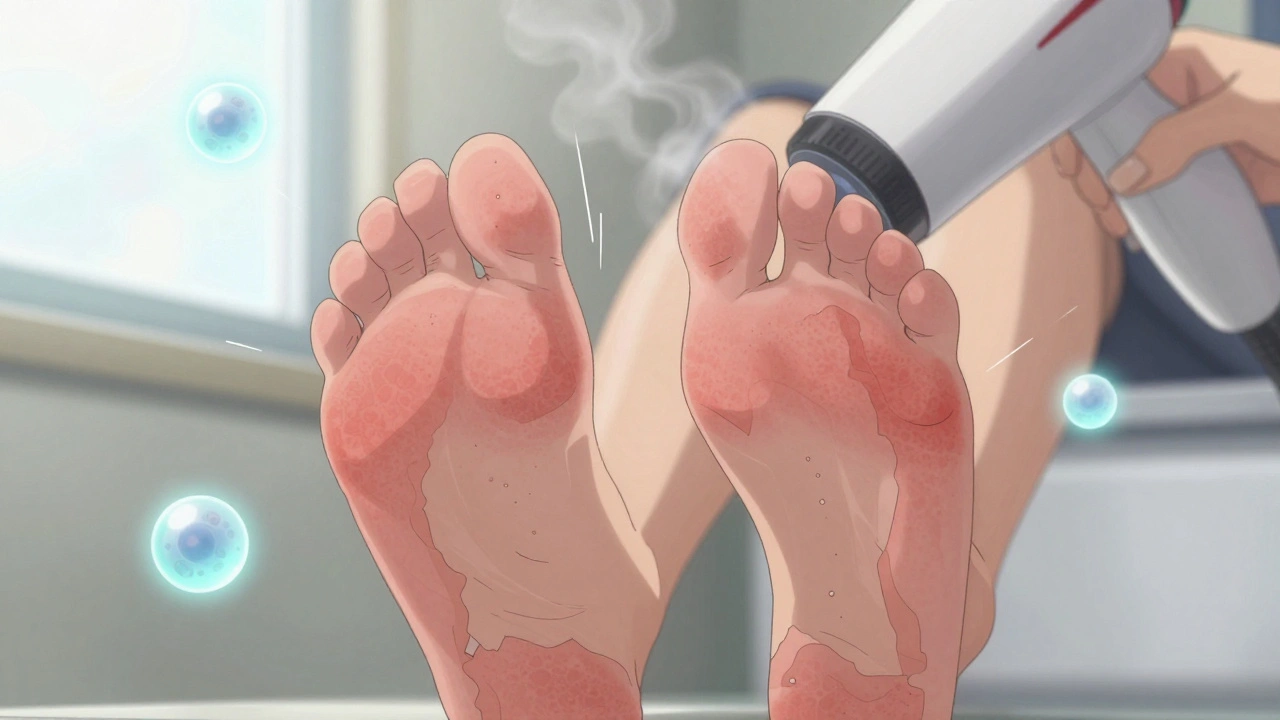
Almost everyone knows someone who’s had athlete’s foot - the itchy, peeling skin between the toes, the burning sensation after wearing shoes all day, the stubborn rash that won’t go away no matter how much you scrub. It’s not a sign of poor hygiene. It’s a common fungal infection called tinea pedis, and it affects about 1 in 5 people worldwide. The good news? You don’t need a doctor’s visit to treat it. Over-the-counter antifungal treatments work well - if you use them right.
What Exactly Is Athlete’s Foot?
Athlete’s foot is caused by fungi called dermatophytes that thrive in warm, damp places. Your feet, especially between the toes, are the perfect breeding ground. These fungi feed on dead skin cells, and once they take hold, they spread quickly. You don’t have to be an athlete to get it. Wearing tight sneakers, walking barefoot in locker rooms, or even sharing towels can spread the infection.OTC Antifungal Options: What’s Actually on the Shelf?
You’ll find dozens of products in the pharmacy aisle, but only a few active ingredients really matter. The most common ones are:- Terbinafine (Lamisil AT) - 1% cream or spray
- Clotrimazole (Lotrimin AF) - 1% cream, lotion, or spray
- Miconazole (Micatin) - 2% cream or powder
- Tolnaftate (Tinactin) - 1% cream, spray, or powder
- Undecylenic acid - 25% powder or liquid
Each works differently. Terbinafine kills the fungus directly. Clotrimazole and miconazole stop it from growing. Tolnaftate interferes with fungal cell development. Undecylenic acid creates an environment the fungus can’t survive in.
Not all are created equal. A 2007 review of 50 clinical trials found terbinafine cured 83% of cases, compared to 74% for clotrimazole and just 67% for tolnaftate. That’s why most podiatrists recommend terbinafine as the first choice for mild to moderate infections.
Terbinafine vs. Clotrimazole: Which One Should You Pick?
If you’re standing in front of the shelf wondering which bottle to grab, here’s the real difference:| Active Ingredient | Brand Examples | Application Frequency | Treatment Duration | Cure Rate | Best For |
|---|---|---|---|---|---|
| Terbinafine | Lamisil AT | Once daily | 1-2 weeks | 83% | Mild to moderate infections, fast relief |
| Clotrimazole | Lotrimin Ultra | Twice daily | 2-4 weeks | 74% | Mixed infections, itching relief |
| Tolnaftate | Tinactin | Twice daily | 4 weeks | 67% | Interdigital infections, prevention |
| Miconazole | Micatin | Twice daily | 2-4 weeks | 70% | Moist, sweaty feet |
Terbinafine wins for speed and simplicity. One application a day for two weeks. Clotrimazole takes longer but works better if you have a mixed infection - say, fungus plus a bit of yeast. Tolnaftate is cheaper and great for prevention, but don’t count on it for stubborn cases.
How to Apply Antifungal Creams (So They Actually Work)
Here’s where most people mess up. Applying the cream isn’t enough. You have to apply it correctly.- Wash your feet with soap and water - especially between the toes.
- Dry them completely. Use a clean towel, and then blow-dry on low heat for 30 seconds. Moisture is the enemy.
- Apply a thin layer of cream to the affected area and a 1-inch border around it. Fungi spread beyond what you can see.
- Don’t rub it in like lotion. Just spread it gently.
- Apply to both feet, even if only one looks infected. The fungus is probably on both.
- Continue treatment for at least a week after symptoms disappear. Stopping early is the #1 reason it comes back.
People often think, “It doesn’t itch anymore, so I’m done.” That’s a mistake. The fungus is still alive. A 2023 patient survey showed 63% of treatment failures happened because people quit too soon - an average of 4 days before they should’ve.
Formulations: Creams, Sprays, Powders - Which One?
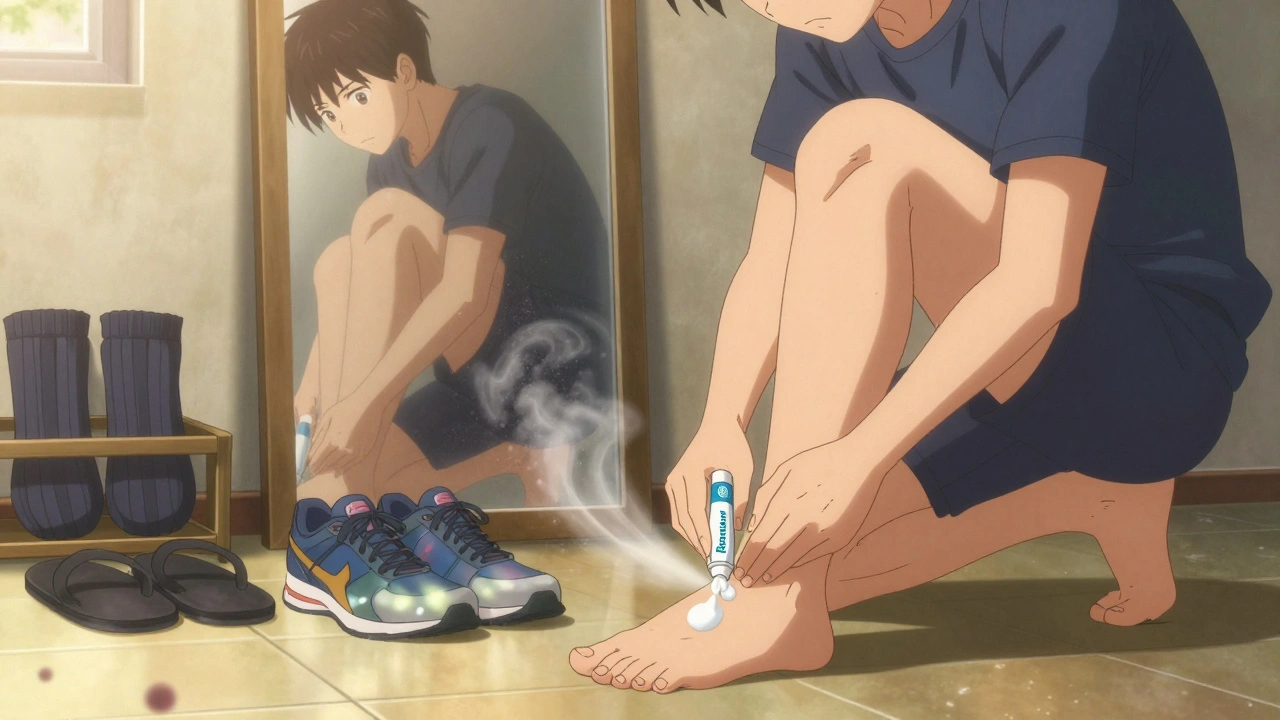
The right form makes a big difference:- Creams work best for dry, flaky skin on the soles or sides of the feet. They stay on longer and penetrate better.
- Sprays are great for hard-to-reach spots, especially if you have trouble bending down. They’re also less messy.
- Powders are ideal for sweaty feet or between the toes. They absorb moisture and help prevent recurrence. Tolnaftate powder is the most cost-effective option for daily use - about $9 for a 30g container.
Many people use a combo: cream during the day, powder in shoes at night. The Mayo Clinic now recommends this approach for active people who sweat a lot.
Prevention: The Real Secret to Never Getting It Again
Treating athlete’s foot is half the battle. Preventing it is the other half.- Change your socks at least twice a day - cotton or moisture-wicking material only.
- Rotate your shoes. Don’t wear the same pair two days in a row. Fungi live in damp shoes for weeks.
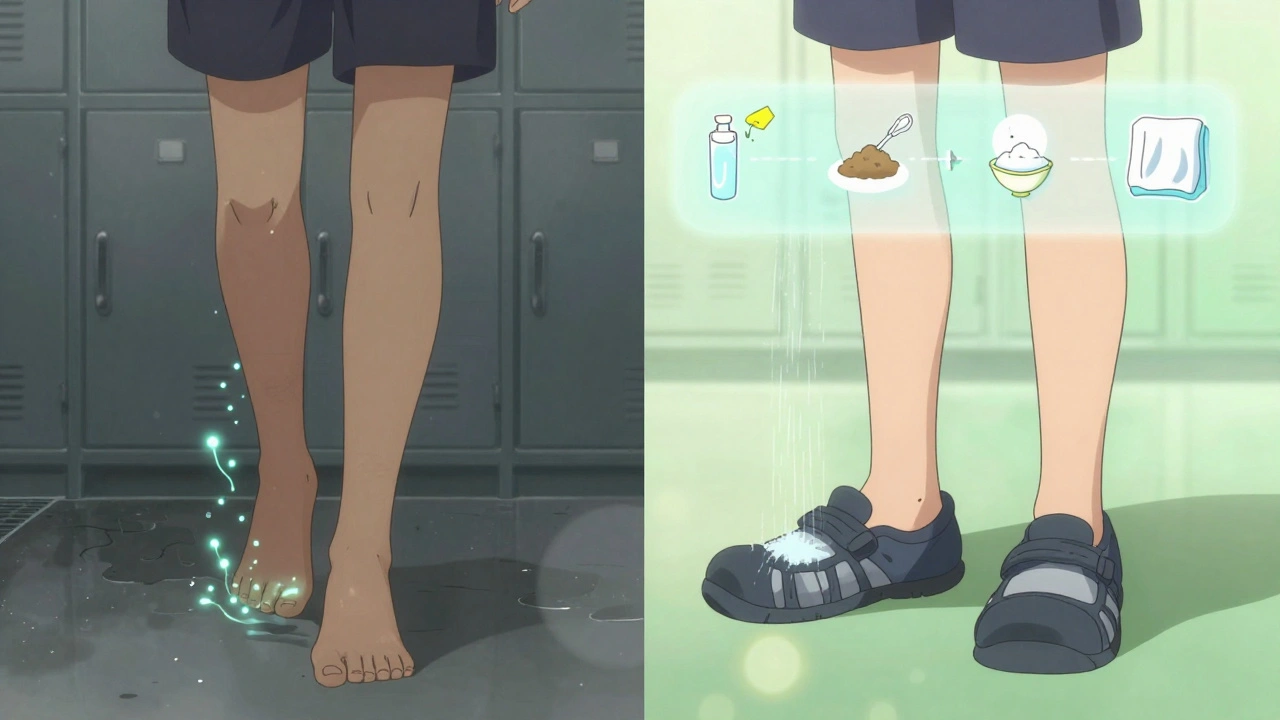
- Wear flip-flops in public showers, pools, and locker rooms. That alone cuts your risk by 85%.
- Use antifungal powder in your shoes every day, even when you’re not infected. It reduces recurrence by 63%.
- Use a separate towel for your feet. Don’t share it with anyone. Wash it after every use.
Most people think prevention only matters when they’re infected. It doesn’t. Seventy percent of recurring cases happen because people stop using powders or changing socks once the itch is gone.
When to See a Doctor
OTC treatments work for 85% of cases. But if you’re still dealing with it after two weeks of consistent use, it’s time to call your doctor. Other red flags:- Pus, swelling, or increased redness - could mean a bacterial infection
- The rash covers more than 70% of your foot
- You’re diabetic or have a weakened immune system
- You keep getting it back every few months
Doctors can prescribe oral antifungals like terbinafine pills (250mg daily for two weeks), which clear stubborn infections faster than creams. They can also prescribe stronger topical treatments like ciclopirox, which works on resistant strains.
What Not to Do
Avoid these common mistakes:- Applying too much cream - it doesn’t help and can irritate skin
- Using steroid creams (like hydrocortisone) without antifungals - they make fungal infections worse
- Wearing tight, non-breathable shoes during treatment
- Skipping days because you’re “too busy” - consistency beats intensity
One Reddit user, ActiveRunner87, shared: “Terbinafine cleared my mild athlete’s foot in 6 days - but I had to dry my feet with a hairdryer after every shower. Missed one day, and it set me back two.”
Future of Treatment
Newer treatments are coming. Nanoemulsion formulas are in clinical trials and could cut treatment time to just 3-5 days by delivering the drug deeper into the skin. Some new OTC products now combine antifungals with dimethicone - a barrier that keeps moisture out. But for now, the old standbys still work best if used right.Final Takeaway
Athlete’s foot isn’t a big deal - unless you ignore it. The right OTC treatment, applied correctly and consistently, will clear it up in days. But if you want it to stay gone, you need to change your habits. Dry your feet. Change your socks. Treat your shoes. Don’t wait until it comes back to start being careful.Can I use athlete’s foot cream on other parts of my body?
Some OTC antifungals like clotrimazole and miconazole are approved for use on other fungal skin infections like jock itch or ringworm. But athlete’s foot creams are formulated for the thick skin of the feet. For other areas, use a product labeled for that specific condition. Never use foot cream on your face or genitals unless directed by a doctor.
How long does it take for athlete’s foot to go away?
With terbinafine, most people see improvement in 3-5 days and full clearance in 1-2 weeks. Clotrimazole and tolnaftate take longer - usually 2-4 weeks. But symptoms disappearing doesn’t mean the fungus is gone. Always finish the full course of treatment, even if your skin looks normal.
Is athlete’s foot contagious?
Yes. The fungus spreads through direct contact with infected skin or contaminated surfaces like shower floors, towels, and shoes. It’s more likely to spread in warm, damp environments. To prevent spreading, avoid walking barefoot in public areas, don’t share footwear, and wash your socks and towels in hot water.
Can I wear shoes while using athlete’s foot cream?
Yes, but choose breathable shoes made of leather or mesh. Avoid tight, synthetic sneakers. If you’re using cream, let it dry for 10-15 minutes before putting on socks and shoes. For extra protection, sprinkle antifungal powder inside your shoes daily.
Why does my athlete’s foot keep coming back?
Most recurrences happen because treatment was stopped too early, or preventive habits weren’t maintained. Fungi can survive in shoes for months. If you don’t treat your shoes, change socks daily, or keep your feet dry, the infection will return. Use antifungal powder in your shoes every day, even after symptoms are gone, for at least a month.
Are natural remedies like tea tree oil effective?
Some studies show tea tree oil has mild antifungal properties, but it’s not strong enough to reliably cure athlete’s foot. It might help with minor itching, but don’t rely on it as your main treatment. Stick with FDA-approved OTC antifungals - they’ve been tested in thousands of patients and proven to work.



Reviews