
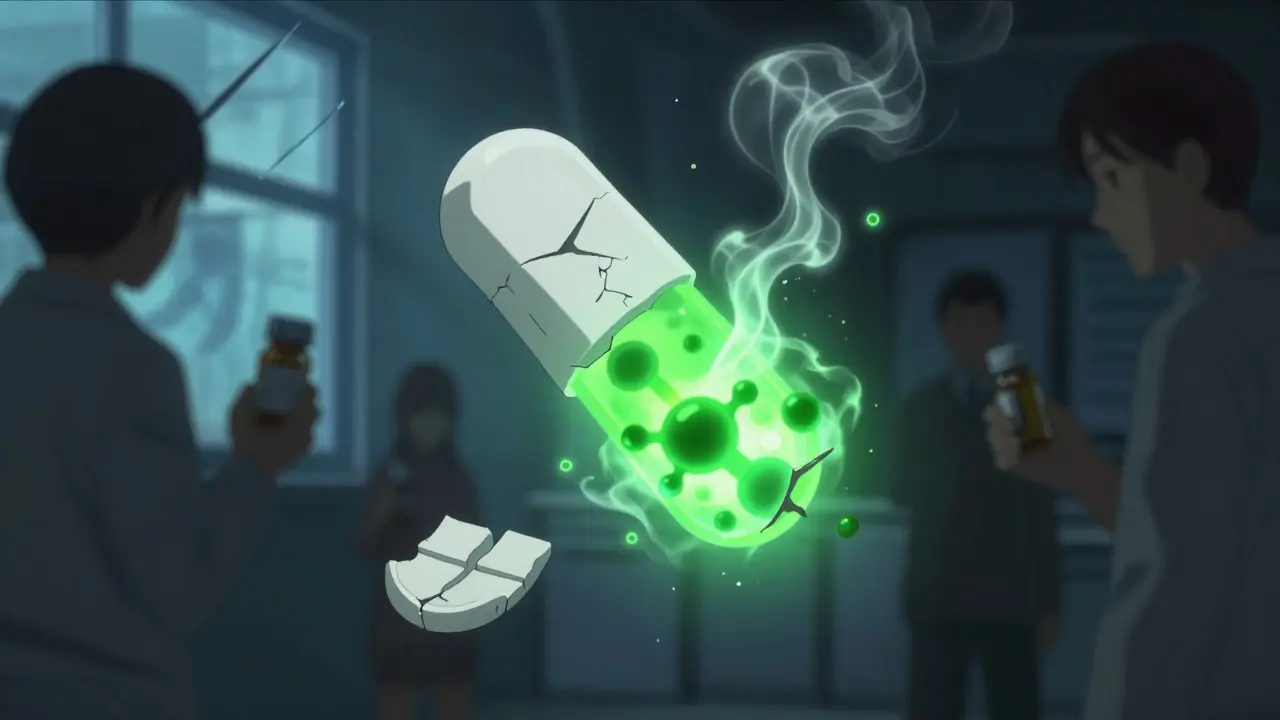
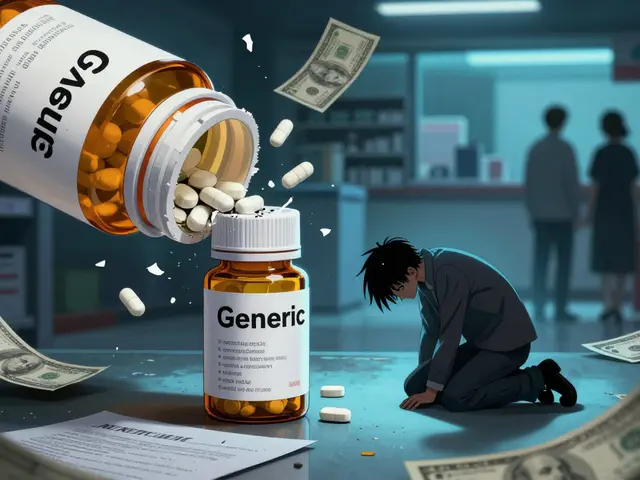
Since 2018, a quiet but dangerous problem has shaken the generic drug industry: nitrosamine contamination. These chemicals, once considered minor lab curiosities, are now known to be potent carcinogens found in pills millions of people take daily. What started with a single recall of valsartan has ballooned into over 500 FDA actions targeting everything from blood pressure meds to antidepressants and diabetes drugs. For patients, it’s not just about missing a prescription-it’s about trusting that the medicine in your bottle won’t slowly harm you over time.
What Are Nitrosamines and Why Do They Matter?
Nitrosamines are a group of chemicals formed when certain amines react with nitrites under heat, pressure, or acidic conditions. They’re not added intentionally-they’re accidental byproducts of manufacturing or storage. The most common ones found in drugs are NDMA (N-nitrosodimethylamine) and NDEA (N-nitrosodiethylamine). The International Agency for Research on Cancer classifies them as probable human carcinogens. Even tiny amounts matter: the FDA sets acceptable daily intake limits as low as 26.5 nanograms per day for NDEA. That’s less than a grain of salt in a bathtub of water.
These aren’t theoretical risks. Studies show long-term exposure increases cancer rates in animals. For humans, the risk is cumulative. Someone taking metformin for 10 years with trace nitrosamine levels might not feel sick today, but their lifetime cancer risk could rise. That’s why regulators treat this like a silent countdown clock.
How It All Started: The Valsartan Recall That Changed Everything
In July 2018, the FDA announced a voluntary recall of certain lots of valsartan, a common blood pressure medication. The culprit? NDMA. The contamination traced back to a single Chinese manufacturer that changed its synthesis process to cut costs. That change created the perfect chemical environment for nitrosamine formation. Within weeks, similar issues popped up in losartan and irbesartan. By the end of 2018, ten products had been pulled from U.S. shelves.
What made this different from past recalls was the scale and scope. It wasn’t one bad batch. It was a systemic flaw in how generic drugs were made. Manufacturers had never tested for these impurities because they weren’t required. Once the FDA started looking, they found nitrosamines in unexpected places: ranitidine (Zantac), metformin, duloxetine, varenicline, and even antibiotics. By mid-2025, over 40 specific drug products had been recalled, and more than 500 total actions were taken against APIs containing unsafe levels.
The Hidden Culprits: It’s Not Just the Active Ingredient
Early on, everyone focused on the active pharmaceutical ingredient (API). But by 2022, the FDA started seeing contamination patterns that didn’t make sense. How could a drug made in a clean facility still test positive for nitrosamines? The answer: packaging.
Blister packs, bottle liners, and adhesives made with secondary amines were reacting with nitrites in the air or from excipients like magnesium stearate. One case study showed a generic antibiotic tablet failing safety tests because the blister film’s adhesive released amines that combined with nitrite impurities in the filler. Another manufacturer traced NDEA formation to a single batch of magnesium stearate from one supplier. Once they switched suppliers, three different ARB products cleared testing.
Even storage conditions matter. Heat and humidity during shipping can trigger reactions in poorly sealed containers. What seemed like a manufacturing problem turned into a supply chain nightmare.
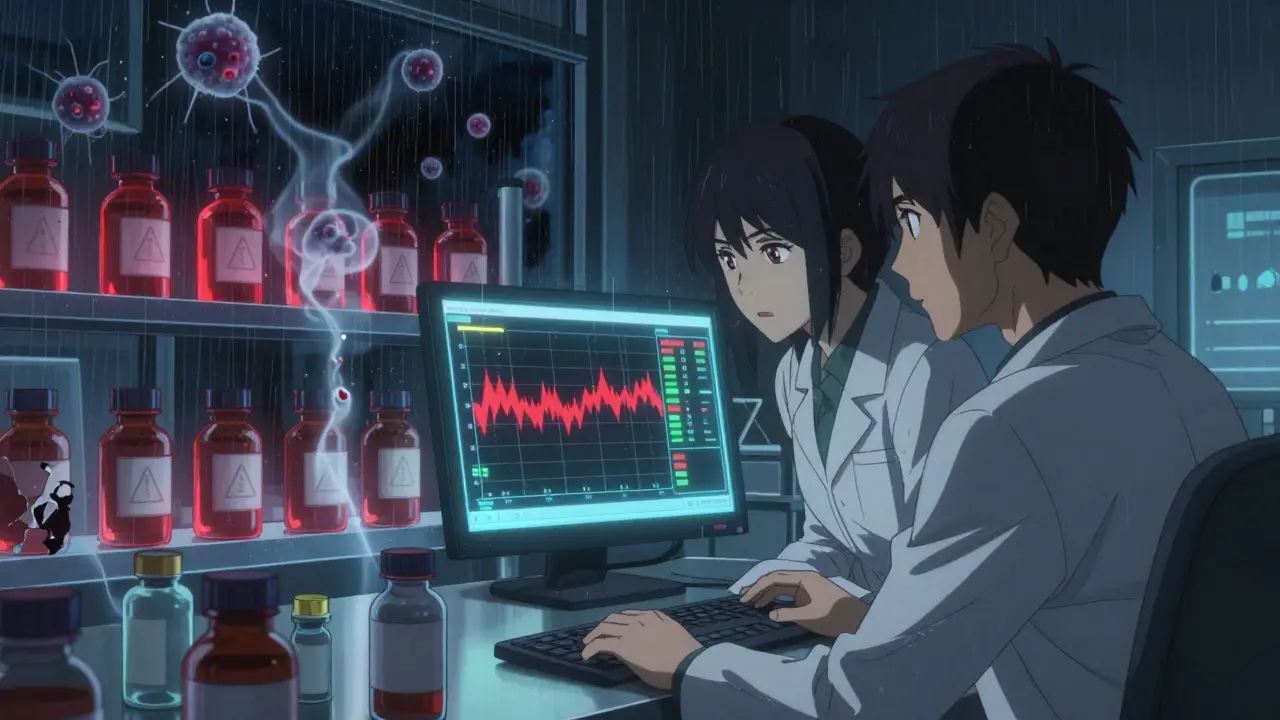
FDA’s Evolving Rules: From Deadline to Deadline Extension
In August 2023, the FDA dropped its toughest guidance yet: compound-specific acceptable intake limits for nitrosamine drug substance-related impurities (NDSRIs). For drugs like varenicline and duloxetine, the limit was set at 96 ng/day. For NDEA, it was 26.5 ng/day. Manufacturers had to test every batch, validate methods capable of detecting parts per billion, and prove their reformulated versions stayed clean over the drug’s shelf life.
Originally, the deadline for full compliance was August 1, 2025. But in June 2025, the FDA quietly changed course. Instead of requiring full compliance by that date, they now accept detailed progress reports. Manufacturers must still act, but they can show steps taken-like testing protocols, supplier audits, or reformulation plans-without having finished the job.
This shift wasn’t weakness. It was realism. As FDA’s Lilun Murphy warned in October 2025, nitrosamine mitigation takes time, money, and expertise. Small generic makers don’t have labs that can detect 0.3 ng/mL. They can’t afford $2 million in upgrades overnight. The FDA recognized that pushing harder would cause drug shortages, not safer ones.
Who’s Getting Hit the Hardest?
The crisis has reshaped the generic drug market. Big players like Teva, Fresenius Kabi, and Sun Pharma have spent millions building internal testing labs, hiring chemists, and auditing suppliers. They’ve turned compliance into a competitive edge. Smaller manufacturers? Many can’t afford the $500,000 to $2 million annual cost of nitrosamine control programs. Some have shut down. Others have been bought out.
One process engineer on Reddit described spending 18 months and $2 million just to fix nitrosamine issues in their metformin line. They had to redesign the entire drying process, replace three excipients, and revalidate every batch for two years. Meanwhile, a European API supplier spent 14 months switching magnesium stearate suppliers after one contaminated batch caused three different ARB products to fail.
Success stories are rare but powerful. One company caught a potential nitrosamine risk during development, swapped out a risky amine-based excipient, and launched a clean product-no recall, no headlines. That’s now the gold standard.
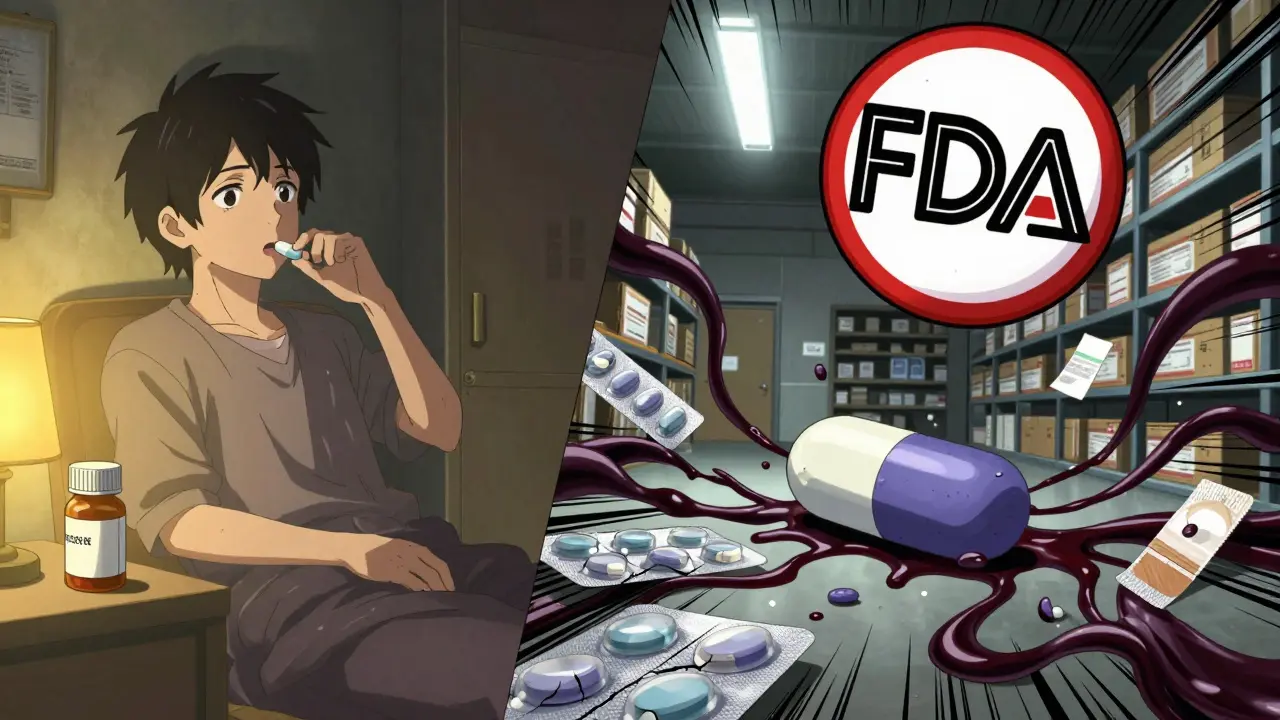
Global Differences: Who’s Doing What?
The U.S. leads in enforcement. The FDA has issued over 500 actions. The European Medicines Agency (EMA) has issued 32 recalls through mid-2025. Health Canada, the UK’s MHRA, and Japan’s PMDA have each handled 5-15 cases. But the U.S. is the only one requiring compound-specific limits for NDSRIs. The EMA still uses broader thresholds. That means a drug approved in Europe might still be banned in the U.S.
That creates a patchwork. A generic manufacturer in India might make one version for the U.S. market with stricter controls and another for Europe with older methods. Patients in different countries get different safety guarantees. The FDA’s approach is more precise, but it’s also more burdensome. Critics say it’s driving up drug prices and reducing access to affordable meds.
What This Means for You
If you take a generic drug-especially for high blood pressure, diabetes, depression, or smoking cessation-you should know this: your medicine is safer now than it was in 2019. But safety isn’t guaranteed forever. The FDA still finds new cases. Last fall, a Vyvanse generic was recalled for NDSRI contamination.
Here’s what you can do:
- Check the FDA’s Drug Recalls page monthly. Search by drug name.
- If your prescription suddenly changes brand or looks different, ask your pharmacist why. It might be a reformulation.
- Don’t stop taking your medicine without talking to your doctor. The risk of uncontrolled hypertension or diabetes is far greater than the small chance of nitrosamine exposure.
- Store pills in cool, dry places. Avoid leaving them in hot cars or humid bathrooms.
Manufacturers are improving. Testing is better. But the problem isn’t solved. Nitrosamines are still forming in ways we don’t fully understand. The FDA says this will remain a top priority for years. That means more recalls, more reformulations, and more questions.
What’s Next?
Experts predict nitrosamine testing will expand to more drug classes. Insulin, antivirals, and even over-the-counter painkillers could be next. The FDA is already studying how nitrosamines form in combination products and during long-term storage.
For manufacturers, the pressure won’t ease. They’re being pushed to build systems that prevent contamination before it happens-not just detect it after the fact. That means redesigning entire supply chains, not just tweaking one step.
For patients, the message is simple: stay informed, stay calm, and keep taking your meds. The system is flawed, but it’s also adapting. The same regulators who missed this problem in 2018 are now the ones forcing change. It’s not perfect. But it’s progress.

Reviews
Wow, i had no idea this was even a thing. my blood pressure med changed last month and i thought it was just a new batch. now im kinda freaked out but also relieved theyre testing for it. thanks for laying this out.
So basically Big Pharma is poisoning us with cheap shortcuts and the FDA just says "eh, we'll get to it"? 😒🩸💀
Oh great. So now my $4 metformin is a Russian roulette pill with a side of cancer? Thanks, capitalism. At least the FDA's 'progress reports' are more entertaining than the actual drug labels.
This is a classic case of systemic risk creep. The API supply chain is a complex network with latent chemical interactions that weren't modeled in legacy QA protocols. The FDA's shift to phased compliance acknowledges the NDSRI mitigation lifecycle-validation, sourcing, process redesign, and stability testing-all require time and capital investment. Small manufacturers are being squeezed, but the alternative-drug shortages-is worse. We need harmonized global standards, not patchwork regulations.
People should just stop taking generics. It's not that hard to pay a little more for brand names. If you can't afford it, you shouldn't be on the medicine in the first place. Safety first.
Honestly, I’m glad this is getting attention. I’ve been taking lisinopril for 8 years and never thought twice. But now I check the FDA site every month, store my pills in the fridge (yes, really), and ask my pharmacist if anything changed. Small steps, but it helps me sleep better.
It’s ironic. We demand cheap medicine, then act shocked when corners get cut. The real question isn’t whether nitrosamines are dangerous-it’s whether we’re willing to pay for the systems that prevent them. We’ve outsourced safety to the lowest bidder and now we’re surprised the bidder cut the wire.
Hey everyone-just wanted to say if you're worried, you're not alone. I talked to my doc and we switched me to a different generic brand with a better audit trail. Also, I started keeping a little log of my meds and batch numbers. It’s a small thing, but it helps me feel in control. You got this 💪
It’s pathetic. The FDA’s "progress reports" are a corporate loophole dressed as policy. Anyone who thinks this is "realism" is either on the payroll or hasn’t read the actual toxicology data. If you can’t meet a 26.5 ng/day limit, you shouldn’t be manufacturing pills. Period.
I just found out my dad’s diabetes med was recalled last year and he never told anyone. He was too scared to switch. I’m going to take him to the pharmacy tomorrow and get him on a new batch. I wish more people knew this stuff wasn’t just "noise."
For those asking how to check: go to fda.gov/drugs/drug-safety-and-availability/drug-recalls, search your med name, and filter by "active" recalls. Also, look for the lot number on the bottle-it’s usually a 6-8 digit code. If it’s not listed, call the manufacturer’s hotline. They’re required to answer.
I used to work in a lab that tested these. The equipment needed to detect parts per billion costs more than my car. Most small labs just skip it. This isn’t negligence-it’s impossibility. The system is broken, and no one wants to fix it because it’s too expensive.
They’re testing for nitrosamines in insulin now? I’m 67 and on three generics. I don’t care if it costs $10 more-I want to know my pills won’t kill me slowly. Why is this even a debate? People are dying from hypertension because they skipped doses thinking the new bottle was "the same."
From an API perspective, the real bottleneck is excipient sourcing. Magnesium stearate isn’t just a filler-it’s a chemical reactor. Once you eliminate one amine source, another pops up in the coating or blister pack. The industry needs a unified excipient registry with traceable nitrosamine risk profiles. Until then, we’re playing whack-a-mole.
As a Canadian pharmacist, I must say: our regulatory framework is less stringent, and the consequences are palpable. We have patients receiving U.S.-approved formulations from India, unaware they are not subject to the same limits. This is not merely a pharmacological issue-it is a matter of global health equity. The FDA’s rigor, while burdensome, is ethically superior. We must not dilute standards in the name of accessibility.