
Statin Myopathy Risk Assessment Tool
This tool helps you assess your risk of developing statin-induced myopathy based on the factors discussed in the article. It's not a medical diagnosis but can help you have a more informed conversation with your doctor.
Millions of people take statins every year to lower cholesterol and protect their hearts. But for a significant number of them, the benefits come with a painful trade-off: muscle pain, weakness, and fatigue that don’t go away. This isn’t just a minor annoyance. It’s a real condition called statin-induced myopathy, and it’s more common - and more complex - than most doctors let on.
What Exactly Is Statin Myopathy?
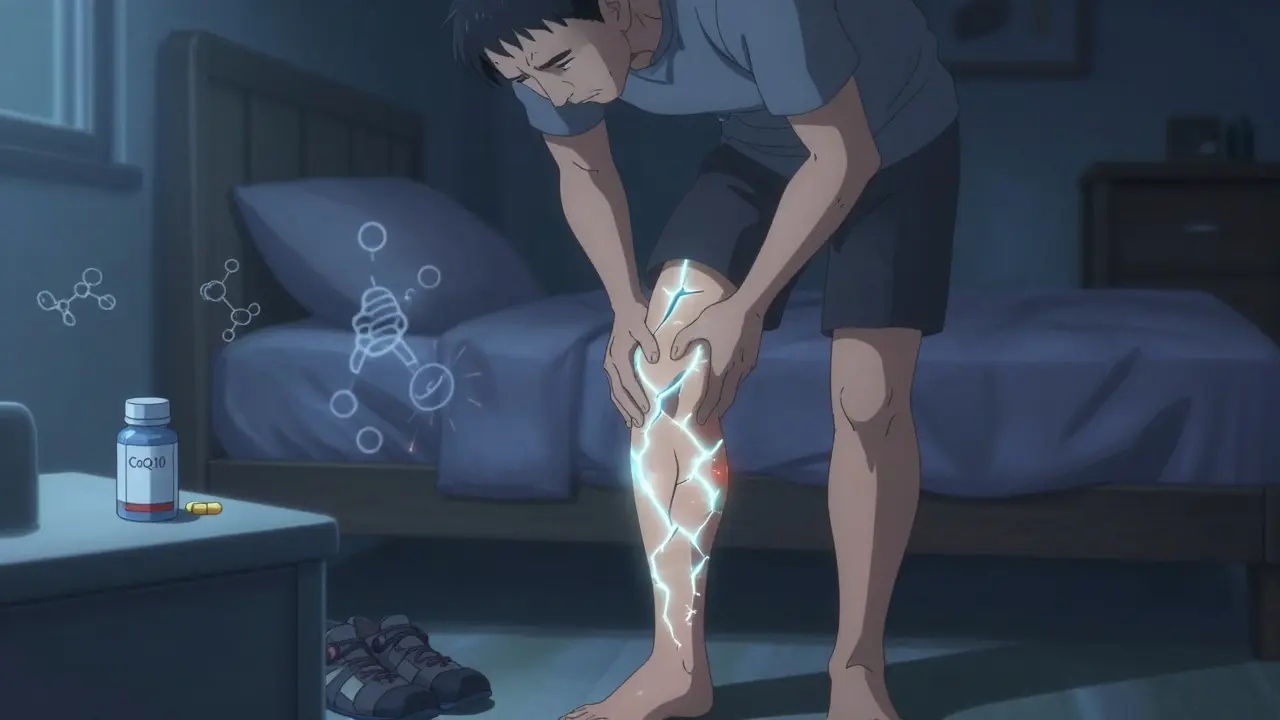
Statin myopathy isn’t one single problem. It’s a group of muscle-related side effects caused by cholesterol-lowering drugs like atorvastatin, simvastatin, and rosuvastatin. Symptoms include soreness, cramps, tiredness, and sometimes real muscle weakness. These usually show up within the first six months of starting the medication. For most people, the discomfort is mild. But for 1 in 10 to 1 in 3 users, it’s bad enough to make them stop taking the drug entirely.
The scary part? Many people don’t realize their muscle pain is linked to statins. They blame aging, overexertion, or the flu. But when you stop the statin, the pain often fades within a few weeks. That’s a key clue - if symptoms improve after stopping, it’s likely statin-related.
The Science Behind the Pain
For years, doctors thought statin myopathy was just about low CoQ10. That made sense - statins block the same pathway that makes CoQ10, a compound your muscles need for energy. But newer research shows it’s far more complicated.
A 2019 study in the Journal of the American College of Cardiology found that statins cause a specific molecular glitch in skeletal muscle. They make a protein called FKBP12 fall off a calcium channel called RyR1. That channel normally holds calcium tightly inside muscle cells. When FKBP12 leaves, calcium leaks out like a broken faucet. This flood of calcium triggers a chain reaction: enzymes activate, muscle cells start breaking down, and inflammation follows.
This doesn’t happen in the heart. That’s why statins protect your heart without wrecking your muscles - most of the time. But in some people, this leak becomes severe enough to cause real damage. Muscle biopsies from patients with statin myopathy show 2.3 times more calcium sparks than healthy muscle tissue.
Then there’s the CoQ10 angle. Studies show statins cut CoQ10 levels in muscle tissue by up to 40% after just four weeks. That means less energy production, more oxidative stress, and more fatigue. It’s like running a car on low fuel - it still runs, but it sputters.
And there’s a third, rarer culprit: autoimmunity. About 5-10% of persistent cases involve the body making antibodies against HMG-CoA reductase - the very enzyme statins block. This turns the side effect into an autoimmune disease called anti-HMGCR myositis. It’s rare - affecting only 0.02% of statin users - but it’s serious. These patients often need steroids or immunosuppressants to recover.
Who’s Most at Risk?
Not everyone who takes statins gets muscle pain. But some groups are far more vulnerable:
- People over 65 - aging muscles are less resilient
- Women - hormonal differences may play a role
- Those with kidney or liver disease - slower drug clearance
- People taking other meds like fibrates, cyclosporine, or certain antibiotics - drug interactions boost statin levels
- Those with thyroid problems - hypothyroidism increases muscle sensitivity
- People with a genetic variant in the SLCO1B1 gene - this affects how the liver processes statins
Even your lifestyle matters. Sedentary people are more likely to develop symptoms than those who stay active. One Mayo Clinic study found that patients who walked 150 minutes a week had nearly half the muscle pain of those who didn’t move.

What Happens When You Stop Statins?
Stopping statins can be tempting when muscles hurt. But it’s risky. A 2022 American Heart Association survey showed that 31% of patients with muscle symptoms reduced their statin use - and their risk of heart attack or stroke jumped by 25% over five years.
That’s why doctors don’t just say, “Stop the drug.” They follow a step-by-step process:
- Confirm it’s statin-related: Stop the statin for 4 weeks. If pain fades, it’s likely linked.
- Rechallenge: Try a lower dose or switch to a different statin. About 40% of people tolerate a different statin.
- Test CK levels: Creatine kinase (CK) is a muscle enzyme. If it’s more than 10 times normal, it’s a red flag.
- Rule out other causes: Thyroid issues, vitamin D deficiency, or overtraining can mimic statin myopathy.
Only about 0.1-0.5% of users develop true rhabdomyolysis - the dangerous form where muscle breaks down so badly it damages kidneys. But even mild myopathy can derail your health.
What Can You Do? Proven Strategies
If you’re dealing with statin muscle pain, you’re not stuck. Here’s what actually works, backed by clinical data:
1. Try CoQ10 Supplementation
Take 200 mg of CoQ10 daily. In one randomized trial, 78% of patients with statin myopathy saw improvement. It doesn’t fix everything - but it helps enough that many doctors now recommend it as a first step.
2. Move More - But Don’t Overdo It
Exercise isn’t the enemy. A 2023 JUPITER trial subanalysis found that people who walked 30 minutes a day, five days a week, had 32% lower CK levels and 41% fewer symptoms than sedentary users. The secret? Regular movement seems to stabilize the RyR1 calcium channel, reducing those damaging calcium leaks.
3. Switch to a Different Statin
Not all statins are equal. Pravastatin and fluvastatin are less likely to cause muscle issues than simvastatin or atorvastatin. Lower doses also help. Many people tolerate 10 mg of atorvastatin instead of 40 mg.
4. Consider Non-Statin Options
If statins keep causing trouble, there are alternatives:
- Ezetimibe: Lowers LDL by 15-20% with almost no muscle side effects.
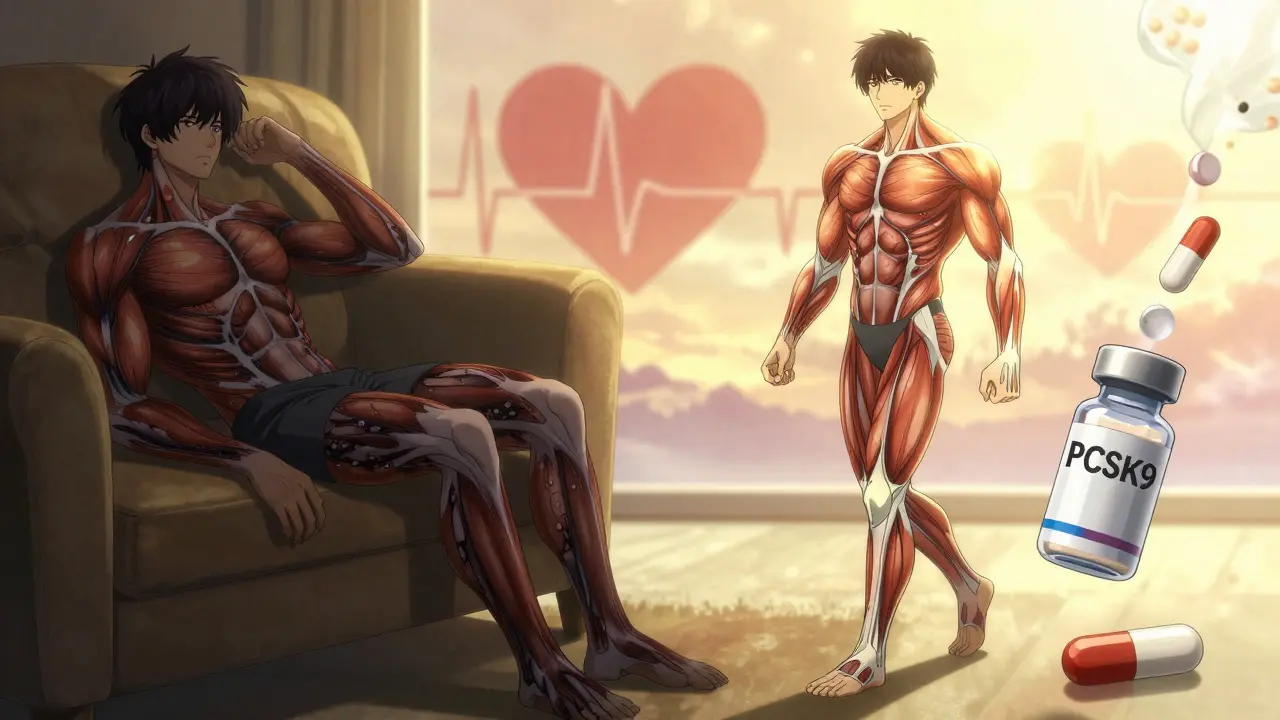
- PCSK9 inhibitors (evolocumab, alirocumab): Injectable drugs that slash LDL by 60%. Muscle side effects are only 3.7% - even lower than placebo in some trials.
- Bempedoic acid: A newer oral drug that works in the liver, not the muscle. Muscle pain rates are similar to placebo.
PCSK9 inhibitors cost about $5,850 a year - way more than $12 for generic atorvastatin. But for people who can’t tolerate statins, they’re life-changing.
5. For Autoimmune Myositis: Immunosuppressants
If you have anti-HMGCR antibodies, you need more than supplements. Standard treatment is methotrexate (25 mg/week) plus prednisone (40 mg/day, then tapered). About 68% of patients go into remission within six months. Early diagnosis is critical - the longer it goes untreated, the harder it is to reverse.
The Bigger Picture
Statins are one of the most prescribed drugs in the U.S. - nearly 39 million people take them. But adherence drops from 85% to 65% in the first year, mostly because of muscle pain. That’s not just a patient problem. It’s a public health issue.
Doctors are finally catching up. The American College of Cardiology now says: Don’t assume muscle pain is just “normal.” Test it. Manage it. Don’t give up on statins - just find the right path.
New drugs are coming. Two experimental statins (STT-101 and STT-202) are in early trials and show 70% less muscle penetration - meaning they lower cholesterol without hitting muscle tissue. If they work, they could change everything.
What to Do Right Now
If you’re on a statin and feel muscle pain:
- Don’t quit cold turkey. Talk to your doctor.
- Start CoQ10 (200 mg/day) and keep moving - even a daily walk helps.
- Ask for a CK blood test.
- Request a trial of a different statin or lower dose.
- If pain persists after 4 weeks off the drug, ask about anti-HMGCR antibody testing.
Statins save lives. But they shouldn’t cost you your mobility. You don’t have to choose between a healthy heart and pain-free muscles. The tools to fix this are here - you just need to ask for them.
Can statins cause permanent muscle damage?
In most cases, no. Muscle pain and weakness from statins usually reverse within weeks of stopping the drug. But in rare autoimmune cases (anti-HMGCR myositis), untreated inflammation can lead to lasting muscle weakness. Early diagnosis and immunosuppressive treatment can prevent this.
Does CoQ10 really help with statin muscle pain?
Yes - for many people. Studies show about 35-78% of patients with statin myopathy improve with 200 mg of CoQ10 daily. It doesn’t work for everyone, but it’s low-risk and often helps with fatigue and soreness. Most doctors now recommend it as a first-line support.
Can I take statins again after stopping due to muscle pain?
Many people can - but not always. About 40% of patients tolerate a different statin, and 65% do well on a lower dose. A careful rechallenge, under medical supervision, is the best way to find out. Never restart without talking to your doctor first.
Is exercise safe if I have statin myopathy?
Yes - and it’s recommended. Moderate exercise like brisk walking helps stabilize the calcium channels in muscle cells, reducing the leaks that cause pain. Studies show exercisers have 41% fewer symptoms than sedentary users. Avoid intense weightlifting or sudden bursts, but daily movement is protective.
Are there statins that don’t cause muscle pain?
Some are less likely. Pravastatin and fluvastatin have lower rates of muscle side effects than simvastatin or atorvastatin. Newer non-statin options like ezetimibe, bempedoic acid, and PCSK9 inhibitors have muscle side effect rates close to placebo. Talk to your doctor about switching if statins are causing trouble.
How do I know if I have the autoimmune form of statin myopathy?
If your muscle pain persists after stopping statins for 4-8 weeks, and you’ve tried CoQ10 and exercise without improvement, ask your doctor for an anti-HMGCR antibody test. This rare form affects 5-10% of persistent cases and requires immunosuppressive treatment, not just dose changes.

Reviews
Been on atorvastatin for 3 years and my legs felt like concrete. Started 200mg CoQ10 and started walking daily - within 3 weeks, I could climb stairs again. No magic pill, just dumb consistency.
Don’t quit statins unless you’ve tried the basics. Your heart will thank you.
The molecular mechanism described here - FKBP12 dissociation from RyR1 - is the most compelling explanation I’ve seen. It’s not just CoQ10 depletion. It’s a calcium leak cascade. This isn’t anecdotal; it’s biophysics.
Yet most GPs still treat it like a placebo-controlled side effect. We need better diagnostics before we dismiss patients as ‘just sensitive.’
My uncle took simvastatin and couldn’t even lift his coffee cup. Doc told him it was ‘just aging.’ He stopped it cold turkey - two weeks later, he was gardening again. CoQ10 didn’t help him, but ditching the pill did.
Don’t let doctors gaslight you. Your body talks - listen.
AMERICA NEEDS TO STOP LETTING BIG PHARMA CONTROL OUR HEALTH 😤
Statins are a scam wrapped in a patent. CoQ10 is $5 on Amazon. Why are we paying $200 for pills that poison us? 🇺🇸💊
It’s critical to distinguish between myalgia, myopathy, and rhabdomyolysis. The CK threshold for concern is >10x ULN, not subjective discomfort. Many patients confuse transient soreness with true myopathy.
Additionally, SLCO1B1 genotyping is underutilized - a single SNP can predict myopathy risk with >80% sensitivity. Primary care lacks the infrastructure to implement this routinely.
so i tried the coq10 thing and honestly? it kinda worked? not like magic but my legs stopped feeling like wet noodles after walks. also started walking 20 mins a day. no more ‘i’m 45 and can’t get off the couch’ crap.
doc said ‘maybe it’s placebo’ but i don’t care if it’s placebo if my body feels better.
Have you considered that your muscle pain may be psychosomatic? Statins are among the most studied drugs in history. The incidence of true myopathy is less than 0.5%. Your symptoms may be more related to anxiety about medication side effects than physiological damage.
Perhaps a consultation with a behavioral health specialist would be more beneficial than supplementing with CoQ10.
Exercise stabilizes RyR1 channels - that’s not just anecdotal. A 2023 JUPITER subanalysis showed a 41% reduction in symptoms with 150 minutes of moderate aerobic activity per week.
Don’t treat statin myopathy as a reason to sit still. Movement is the most underprescribed therapy in cardiology. Walk. Don’t just survive - adapt.
My dad’s from rural Georgia - never heard of CoQ10 until he got his statin pain fixed. Now he takes it with his coffee every morning and says it’s ‘like the old days.’
But here’s the thing: he didn’t know about the genetic test. If you’re of European descent and your family’s got heart issues, ask your doc about SLCO1B1. It’s not fancy - just smart.
Statins are a mind control tool by the CDC and WHO to keep us docile. They lower cholesterol but also drain your energy so you don’t question the system. CoQ10? That’s just a placebo to make you feel better while they keep poisoning you.
And don’t get me started on PCSK9 inhibitors - those are for rich people who want to live forever while the rest of us get generic pills and silence.
People who stop statins because of muscle pain are irresponsible. Heart disease kills more women than breast cancer. If you can’t tolerate the side effects, you’re not a victim - you’re a danger to yourself and your family.
Stop whining. Take your medicine. Or don’t complain when you’re on the table at 62.
i was on rosuvastatin in delhi and got so weak i couldnt carry my groceries. tried coq10 - nothing. switched to pravastatin - boom, back to normal. doc said ‘indians are more sensitive’ but i think it’s just the type of statin.
also, my CK was normal but still felt like i had lead in my legs. so maybe the science is still catching up?
statins are the reason my neighbor’s 78-year-old grandma can’t squat to pee anymore. she’s been on them since 2010. doc says ‘it’s just aging’ - nah, it’s the damn pills.
CoQ10? sure, try it. but the real fix? kick the statin to the curb and eat avocado toast like a normal human. cholesterol ain’t the devil, bro.
Wow. So the solution to a drug side effect is… take another drug? CoQ10, then a different statin, then PCSK9 inhibitors costing $6k a year.
Remind me again why we don’t just… not take the statin in the first place? I mean, if it’s this much of a headache, maybe the risk-benefit isn’t as clear as Big Pharma says.
Edward, you’re not wrong - but you’re missing the point. Statins prevent 1 in 4 heart attacks in high-risk people. We’re not talking about 80-year-olds with perfect cholesterol. We’re talking about diabetics, smokers, people with family history.
It’s not about ‘not taking the statin.’ It’s about finding the version that doesn’t wreck your legs. That’s the real win.