

Medication & Food Interaction Checker
How This Works
This tool helps you understand how common foods might affect your medications. Select a medication or food below to see important interactions and timing recommendations based on the article.
Select a medication or food to see interaction details.
Have you ever taken a pill with breakfast and felt worse afterward? Or noticed your blood thinner isn’t working as well after eating a big salad? You’re not alone. What you eat doesn’t just fill your stomach-it can change how your medicine works, sometimes dangerously. Food doesn’t just help you feel better. It can make your meds less effective, more toxic, or trigger side effects you didn’t expect.
Why Food Changes How Your Medicine Works
Your body doesn’t treat medicine like a separate thing. It’s all connected. When you eat, your digestive system wakes up. Stomach acid changes. Blood flow shifts. Enzymes kick into gear. All of this can interfere with how your body absorbs, breaks down, or uses your medication.There are three main ways food messes with meds:
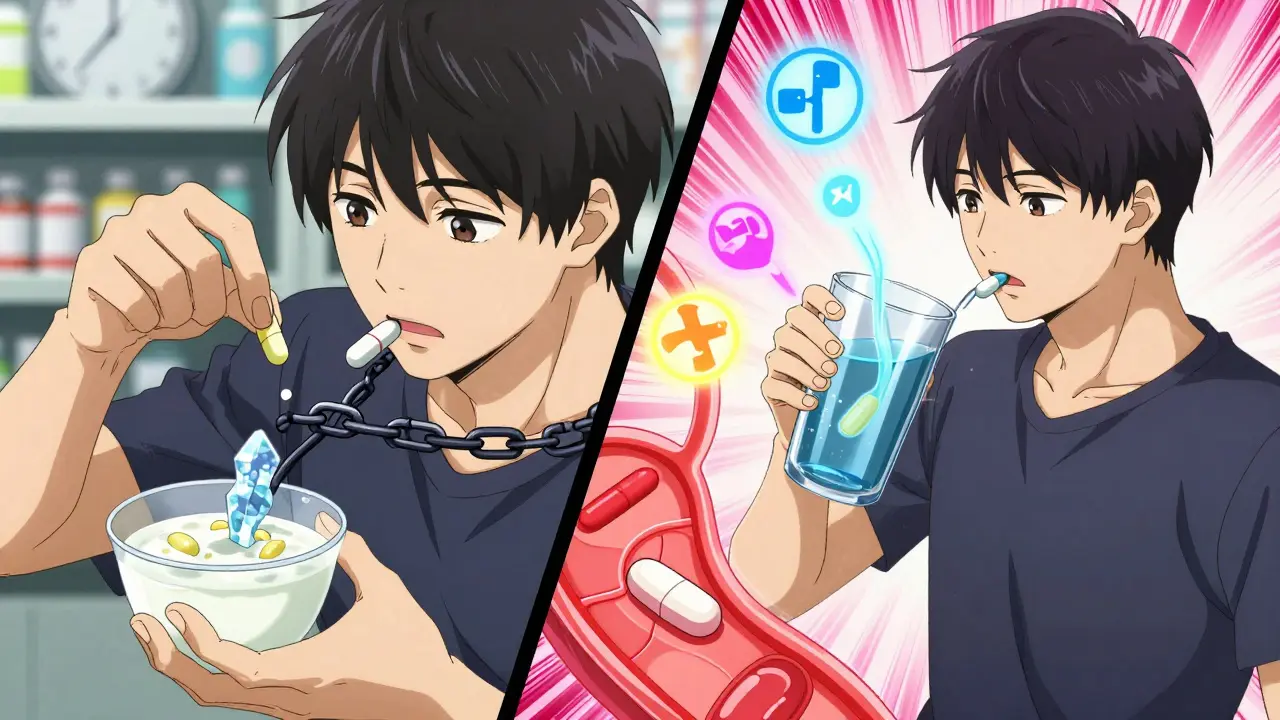
- Absorption: Food can block your body from soaking up the drug properly. Calcium in milk, for example, sticks to antibiotics like tetracycline and stops them from entering your bloodstream.
- Metabolism: Some foods, like grapefruit juice, shut down liver enzymes that normally break down drugs. That means the drug builds up in your blood-sometimes to dangerous levels.
- Effect: Certain foods directly fight or boost what the drug is trying to do. Vitamin K in spinach cancels out warfarin’s blood-thinning power. Alcohol can make sedatives or painkillers dangerously strong.
It’s not just about what you eat. It’s about when you eat it. Taking a pill 10 minutes after a meal might be fine for one drug but ruin another. The difference between 30 minutes and 2 hours can mean the difference between a medicine working-or failing.
Top 5 Food-Medication Risks You Can’t Ignore
Some interactions are rare. Others are common-and deadly if you don’t know about them.
1. Grapefruit Juice and Statins
One glass of grapefruit juice can triple the amount of simvastatin or atorvastatin in your blood. That doesn’t just mean more muscle pain. It can lead to rhabdomyolysis-a condition where muscle tissue breaks down and can cause kidney failure. This isn’t a myth. The American Heart Association says grapefruit interactions cause over 1,100 emergency room visits every year in the U.S. alone. And it’s not just grapefruit. Seville oranges, pomelos, and some limes do the same thing.
2. Dairy and Antibiotics
Milk, yogurt, and cheese aren’t just bad for your stomach when you’re on antibiotics-they’re bad for the antibiotic itself. Calcium binds to tetracycline, doxycycline, and ciprofloxacin, cutting absorption by up to 75%. That means the infection might not clear. You could end up needing a stronger drug, or worse, a longer illness. The rule? Take these antibiotics 2 hours before or 4 hours after any dairy product.
3. Leafy Greens and Blood Thinners
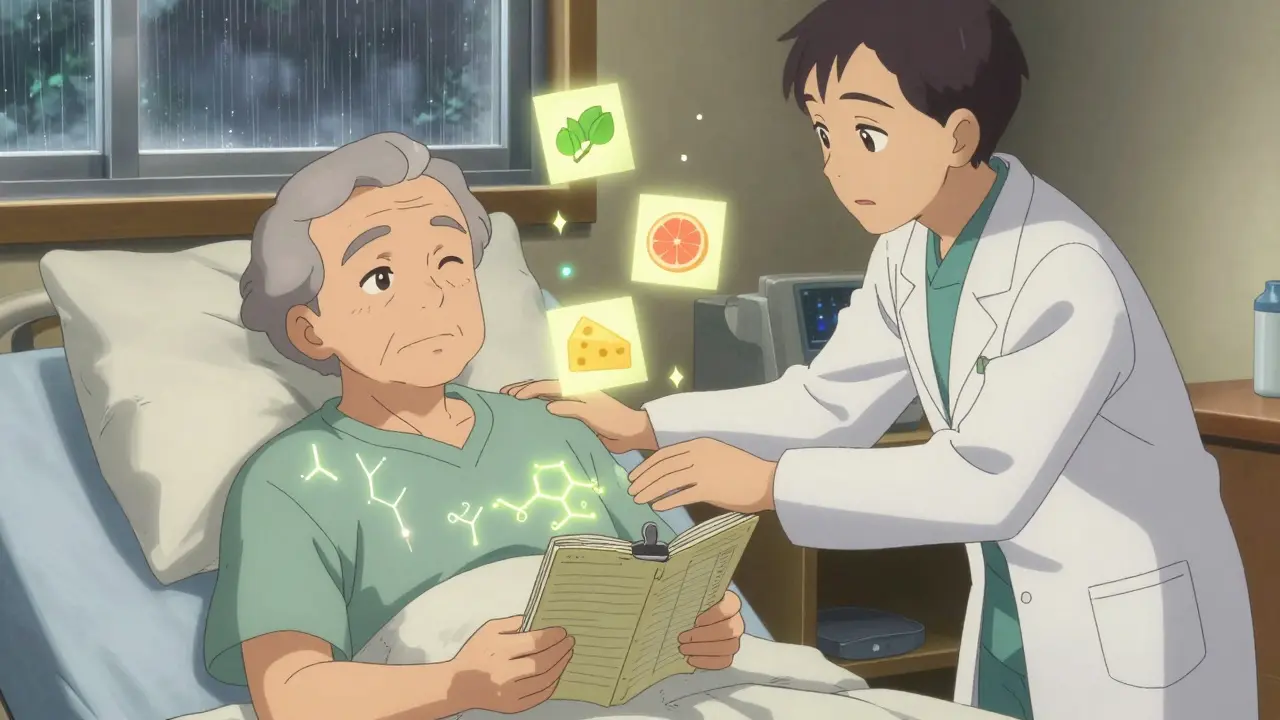
Warfarin (Coumadin) works by blocking vitamin K, which your body needs to form clots. If you suddenly eat a big bowl of kale or spinach-both packed with vitamin K-you’re undoing the drug’s effect. One cup of cooked kale has over 480 micrograms of vitamin K. That’s enough to throw your INR levels off track. But here’s the catch: it’s not about avoiding greens. It’s about keeping your intake steady. If you eat spinach every day, your doctor can adjust your dose. If you eat it one week and skip it the next? That’s when you risk clots or bleeding.
4. NSAIDs and Empty Stomachs
People think ibuprofen or naproxen are safe because they’re over-the-counter. But taking them without food increases your risk of stomach ulcers by 3.7 times. A 5-year Mayo Clinic study found 15% of people who took NSAIDs on an empty stomach developed ulcers. With food? That drops to 4%. Food doesn’t make the painkiller stronger-it just protects your stomach lining.
5. Tyramine and MAO Inhibitors
If you’re on an MAO inhibitor for depression (like phenelzine or tranylcypromine), you must avoid aged cheeses, cured meats, soy sauce, and tap beer. These foods contain tyramine, which can cause a sudden, dangerous spike in blood pressure. A single serving of blue cheese can trigger a hypertensive crisis-headache, chest pain, stroke risk. This isn’t a warning you can ignore. It’s a life-or-death rule.
When to Take Your Pills: Empty Stomach vs. With Food
Doctors say “take on an empty stomach” all the time. But what does that actually mean?
“Empty stomach” means no food for at least one hour before, and two hours after taking the pill. That’s not a suggestion. That’s science. A University of Connecticut study showed that taking levothyroxine (thyroid medicine) just 30 minutes before breakfast cut its effectiveness by 34%. Wait 60 minutes? You get the full dose. That’s the difference between feeling tired all day and having normal energy.
Some drugs need food to work. Griseofulvin (for fungal infections) and diazepam (Valium) absorb 25-35% better with a high-fat meal. Omeprazole (for acid reflux) works best when taken 30-60 minutes before your first meal. If you take it after eating, it won’t block acid as well.
Here’s a simple rule: If your pill label says “take on an empty stomach,” wait 60 minutes before eating. If it says “take with food,” eat something light-like toast or yogurt-right before or right after. Don’t wait an hour. Don’t skip it.
What Most Patients Get Wrong
People think they know how to take their meds. But the data says otherwise.
- 68% don’t understand what “empty stomach” means.
- 54% have no idea grapefruit can be dangerous with their pills.
- 41% believe all meds should be taken with food to avoid stomach upset.
That last one is dangerous. Some meds, like levothyroxine or certain antibiotics, become useless if taken with food. Others, like NSAIDs, become dangerous if taken without it. There’s no one-size-fits-all rule.
And it’s not just about food. Caffeine can make stimulants like Adderall too strong. Alcohol can turn sedatives into a coma risk. Even herbal teas like St. John’s Wort can interfere with antidepressants and birth control.
How to Stay Safe: A Simple Daily Plan
You don’t need to memorize every interaction. Just follow this:
- Check every new prescription. Ask your pharmacist: “Is there anything I should avoid eating or drinking with this?” Don’t assume it’s safe.
- Use a medication log. Write down what you take, when, and what you ate. Apps like MyMedSchedule (from NIH) can build a personalized schedule based on your meals.
- Keep vitamin K steady. If you’re on warfarin, eat about the same amount of greens every day. Don’t go from salad every day to none for a week.
- Never mix grapefruit. If your pill has even a small warning about grapefruit, avoid it completely. No exceptions.
- Set phone reminders. Take your pills at the same time every day, linked to a routine-like brushing your teeth or making coffee.
Studies show that patients who use visual schedules reduce food-drug errors by 47%. That’s not magic. It’s just being clear.
What’s Changing in 2025
Things are getting better. Starting January 1, 2025, all Medicare Part D beneficiaries starting a new high-risk medication must get food-drug interaction counseling from their pharmacist. That’s 12.7 million seniors getting clearer instructions.
The FDA now requires all new drug labels to include specific food interaction warnings-not just vague phrases like “avoid alcohol.” Now you’ll see: “Take 1 hour before breakfast,” or “Avoid grapefruit juice.”
And pharmacists are finally getting better tools. Genetic tests for CYP3A4 enzyme activity can now tell if you’re a “slow metabolizer”-meaning even a small amount of grapefruit could be risky. If you’re on a statin and drink grapefruit juice regularly, this test might save your life.
It’s not about fear. It’s about control. You’re not powerless. You can manage this. You just need to know what to look for.
Can I take my medication with water instead of food?
Yes, water is almost always safe. In fact, it’s the best choice when taking pills on an empty stomach. Avoid juice, milk, or coffee unless your doctor says otherwise. Some medications, like certain antibiotics, can bind to minerals in water if it’s hard (high in calcium or magnesium), but this is rare. Tap water is fine for nearly all drugs.
What if I forget and eat with my medicine?
Don’t panic. Don’t double up. Just note what happened and move on. If it was a one-time mistake with a non-critical drug (like ibuprofen), it’s unlikely to cause harm. But if you took levothyroxine with coffee or grapefruit juice with simvastatin, call your pharmacist or doctor. They’ll tell you if you need to adjust your next dose or monitor for side effects.
Are herbal supplements safe with my meds?
No. Supplements like St. John’s Wort, garlic, ginkgo, or green tea can interact with medications just like food. St. John’s Wort can make birth control fail, antidepressants less effective, or blood thinners dangerous. Always tell your doctor or pharmacist what supplements you take-even if you think they’re “natural.”
Can I drink alcohol while on medication?
It depends. With some drugs, like antibiotics or painkillers, even one drink can cause dizziness, nausea, or liver damage. With others, like SSRIs, moderate alcohol is okay-but still not recommended. The safest answer? Avoid alcohol unless your doctor says it’s fine. And even then, keep it to one drink.
Do children and older adults have different risks?
Yes. Older adults often take multiple medications and may have slower digestion or kidney function, making interactions more likely and more dangerous. Children’s bodies process drugs differently too. Always check dosing and food rules for age-specific instructions. Never assume adult guidelines apply to kids or seniors.
Final Tip: Talk to Your Pharmacist
Your pharmacist knows more about your meds than your doctor does. They see every prescription you fill. They know which ones are risky with food. And they’re paid to answer your questions-no appointment needed.
Next time you pick up a new prescription, ask: “What should I avoid eating or drinking with this?” Write it down. Keep it with your meds. That one question could prevent a hospital visit-or worse.

Reviews
Just took my levothyroxine with my morning coffee like always. Guess I’ve been doing it wrong for years. Thanks for the wake-up call. Going to switch to water now.
Bravo. This is the kind of lucid, meticulously curated health literacy we desperately need in an era of TikTok ‘cures’ and Instagram ‘biohackers.’ The grapefruit-statins interaction alone warrants a public service announcement in every pharmacy. 🙌
It’s alarming how many patients conflate ‘food helps with stomach upset’ with ‘food improves drug efficacy.’ The pharmacokinetic implications are non-trivial. Absorption barriers, enzyme inhibition, and first-pass metabolism are not negotiable variables. This post correctly emphasizes the necessity of precise timing and dietary consistency.
I used to think my doctor was being overly cautious about the spinach and warfarin thing. Then I had a scare with a weird bruise and realized-this isn’t about diet trends. It’s about keeping your body in balance. Sometimes the simplest rules are the ones that save your life.
OMG YES 🙏 I’ve been telling my mom for years not to take her blood pressure med with grapefruit juice and she finally listened after reading this. She’s been fine since! Also, setting phone alarms linked to brushing teeth? Genius. I’m stealing that. 😊
As a clinical pharmacist, I see this daily. The CYP3A4 polymorphism data is particularly critical-patients with slow-metabolizer phenotypes are at exponentially higher risk with grapefruit and statins. We’re now integrating pharmacogenomic screening into our pre-discharge med reviews. If your med list includes a statin + grapefruit, flag it immediately. This isn’t anecdotal-it’s evidence-based pharmacotherapy.
Thank you for articulating this with such precision. The distinction between ‘take on an empty stomach’ and ‘take with food’ is one of the most frequently misunderstood instructions in outpatient care. Your breakdown of timing windows-30 minutes versus 60 minutes-reflects the nuanced science behind bioavailability. This should be mandatory reading for all patients on chronic therapy.
My grandma started using a pill organizer with meal cues after this. She used to forget half her meds. Now she takes them right after her coffee or with lunch, depending on the label. It’s made such a difference. Thank you for making this so clear.