

Medication and Supplement Timing Calculator
Calculate safe spacing between your supplements and medications to avoid absorption problems. The calculator uses evidence-based guidelines from the article to recommend minimum spacing times.
Many people take calcium and iron supplements to support bone health or fight anemia. But what if taking them at the wrong time could make your medication useless-or leave you still deficient? This isn’t theoretical. It’s happening every day to people who don’t know how these minerals interact with common drugs.
Why Calcium and Iron Fight for Absorption
Your gut doesn’t have enough space for every mineral that shows up at once. Both calcium and iron use the same transporters in your small intestine to get absorbed. When you take them together, they compete. The one with higher concentration wins. That means if you swallow a calcium pill with your iron tablet, your body might absorb barely half of the iron you paid for. A 1991 study from the American Journal of Clinical Nutrition showed that just 600 mg of calcium-roughly the amount in two Tums tablets-cut iron absorption by up to 62%. Even more concerning? This happens whether you take them with food or on an empty stomach. For women, who need 18 mg of iron daily, regular calcium intake with meals makes it nearly impossible to meet that need without extra help. And it’s not just supplements. Foods high in calcium-like milk, yogurt, or fortified orange juice-can do the same thing. If you take your iron pill with breakfast that includes dairy, you might as well have left the pill on the counter.Antibiotics and Mineral Supplements: A Dangerous Mix
Some medications don’t just compete-they bind. Fluoroquinolones (like ciprofloxacin) and tetracyclines (like doxycycline) are antibiotics that latch onto calcium, iron, and aluminum like magnets. Once bound, they can’t be absorbed. Your body thinks they’re just minerals passing through. This isn’t a minor inconvenience. If you’re on antibiotics for a serious infection and you’re also taking calcium for osteoporosis or iron for anemia, you might not get enough drug into your bloodstream to kill the bacteria. The result? A lingering infection, a longer recovery, or even antibiotic resistance. The rule is simple: never take these antibiotics within 2 to 4 hours of any calcium, iron, or antacid supplement. Pharmacist Alesiani puts it bluntly: “If you’re taking antibiotics for an infection, but you’re also taking calcium supplements, it can block the absorption. You may not get the levels you need.”Stomach Acid Matters More Than You Think
Iron needs acid to dissolve. Non-heme iron-the kind in supplements and plant foods-only gets absorbed when stomach acid breaks it down into a form your gut can grab. That’s why doctors tell you to take iron on an empty stomach: more acid, better absorption. But what if you’re on a heartburn medication? Proton pump inhibitors like omeprazole (Prilosec) or pantoprazole (Protonix), and even H2 blockers like famotidine (Pepcid), lower stomach acid dramatically. Studies show this can cut iron absorption by 30-50%. It’s not just supplements-your food iron becomes less usable too. Calcium carbonate, the most common form of calcium supplement, works the same way. It’s an antacid. So if you take it with iron, you’re not just competing-you’re neutralizing the environment iron needs to survive.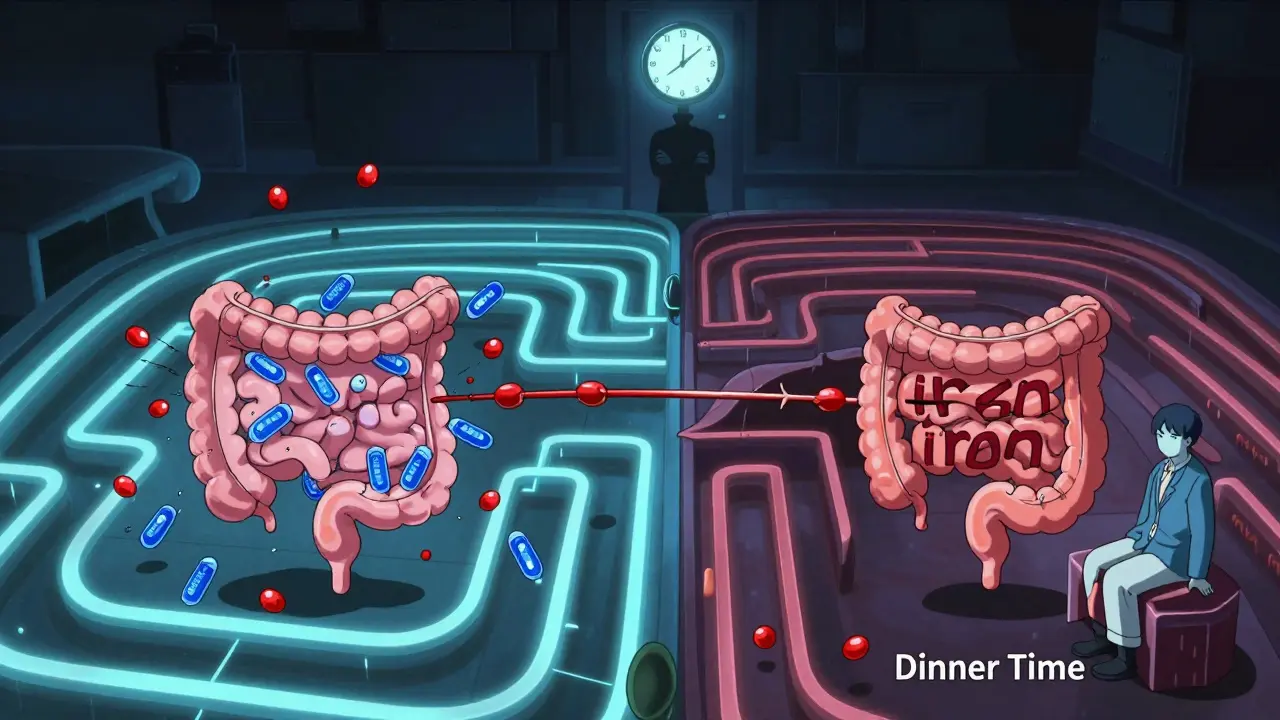
Thyroid and Bone Medications Are Also at Risk
Levothyroxine, the go-to drug for hypothyroidism, is another casualty. Calcium, iron, and even magnesium can block its absorption. A 2025 update from University Hospitals Cleveland Medical Center warns that taking these supplements within hours of thyroid medication can lead to under-treated hypothyroidism-fatigue, weight gain, cold intolerance, and more. Bisphosphonates, used for osteoporosis (like alendronate/Fosamax), are equally sensitive. They need to be taken on an empty stomach with plain water. If you take them with calcium or iron, they won’t absorb. The drug sits in your gut, useless. And if you lie down too soon after, you risk serious esophageal irritation.How to Take Them Right: A Clear Timeline
You don’t have to stop taking supplements. You just need to space them out. Here’s what works:- Iron: Take on an empty stomach, 1 hour before or 2 hours after meals. If stomach upset happens, take it with a small amount of food-but avoid dairy, calcium, or antacids.
- Calcium: Take with food. It absorbs better this way. Spread doses throughout the day if taking more than 500 mg at once.
- Antibiotics: Wait at least 2 hours before or 4 hours after taking calcium, iron, or antacids.
- Thyroid medication: Take first thing in the morning with water. Wait 30-60 minutes before eating or taking any supplement.
- Bisphosphonates: Take with a full glass of water, 30-60 minutes before breakfast. Stay upright for at least 30 minutes. Don’t take calcium or iron for at least 2 hours after.
For people who need both iron and calcium: take iron in the morning on an empty stomach, and calcium at dinner. That’s a 6-8 hour gap. It’s not ideal, but it’s the best way to get both absorbed.
Boost Iron Absorption-Without the Side Effects
Iron alone is hard on the stomach. Nausea, cramps, constipation-up to half of people can’t tolerate it. But there’s a fix: vitamin C. The same 1991 study showed vitamin C can boost iron absorption by up to 300%. Taking 100-200 mg of vitamin C with your iron pill (or drinking a glass of orange juice) makes a huge difference. It turns poorly absorbed iron into something your body can use. No need for fancy supplements. A single orange or a slice of bell pepper will do. Just avoid taking vitamin C with calcium-it doesn’t help calcium absorb any better.
Watch for Hidden Dangers
Some side effects are obvious. Black stools? Normal when taking iron. But tarry, red-streaked stools? That’s a red flag. It could mean bleeding in your gut. See a doctor immediately. Liquid iron supplements can stain your teeth. Use a straw. Brush with baking soda or hydrogen peroxide if stains stick. And if you have kids? Iron overdose is the #1 cause of fatal poisoning in children under 6. Keep bottles locked up. If a child swallows even one pill, call poison control right away.What About Diet?
Food matters. A meal high in iron (like spinach or lentils) but low in calcium (no dairy) lets your body absorb 28% of the iron. Add calcium (a glass of milk), and absorption drops to 55% less. Your diet isn’t just fuel-it’s a chemical environment. Avoid coffee, tea, and red wine with iron-rich meals. The tannins in them block absorption. Wait at least an hour after eating to drink them.What If You’re Already Deficient?
If you’re low on iron and take calcium daily, you might be stuck in a cycle. Your supplement isn’t working. Your diet isn’t enough. You feel tired. You think it’s stress. But it’s the timing. Talk to your doctor. Ask for a serum ferritin test-it shows your iron stores, not just your blood count. If you’re still low despite taking supplements, your timing might be the issue. Your pharmacist can help too. Bring your full list of supplements and meds. They’ll spot conflicts you didn’t even know existed.Can I take calcium and iron together if I space them 2 hours apart?
No. Even 2 hours apart isn’t enough. Calcium and iron compete for the same transporters, and calcium can linger in your gut longer than you think. Experts recommend at least 4 hours between doses, and ideally, take them at opposite ends of the day-iron in the morning on an empty stomach, calcium at night with food.
Does taking iron with food always reduce absorption?
Yes, but not always dramatically. Taking iron with food reduces absorption by about 40-60%. However, if you have stomach upset, it’s better to take it with a small amount of non-dairy food (like toast or rice) than to stop taking it entirely. Pair it with vitamin C to help offset the loss.
Can I take iron with vitamin D or magnesium?
Vitamin D doesn’t interfere with iron absorption. Magnesium can, but only in large doses (over 400 mg). If you’re taking a daily magnesium supplement (like 200 mg), it’s usually fine to take iron at the same time. But if you’re taking high-dose magnesium for constipation, space it out by 2 hours.
Why do some iron supplements say "take on empty stomach" but also cause nausea?
Because iron is hard on the stomach. The best absorption happens without food, but that’s not always tolerable. If nausea hits, try taking it with a small snack (like crackers) that’s low in calcium and fiber. Avoid dairy, whole grains, and coffee. You can also switch to a gentler form like iron bisglycinate, which causes fewer side effects.
Is it safe to take calcium and iron supplements long-term if I space them out?
Yes, as long as you’re following the timing rules. Long-term use of both is common-especially for postmenopausal women and those with anemia. The key is consistency. Take iron at the same time every day, and calcium at a different time. Track your doses. Talk to your doctor every 6 months to check your levels.


Reviews
I used to take my iron with breakfast until I started feeling like a zombie. Turns out, my yogurt was sabotaging me. Once I switched to taking iron at 6 a.m. with a glass of OJ and calcium at dinner? Energy came back. No more afternoon crashes. I wish I’d known this sooner.
Also, the vitamin C tip? Game changer. I just crush a chewable tablet with my iron now. No more nausea. Simple. Effective.
I’m a nurse and I see this every day. Patients come in with low ferritin, take their supplements religiously, and still feel awful. When we go through their routine-breakfast with yogurt, iron at noon with a calcium pill, levothyroxine with coffee-it all clicks.
One elderly woman I worked with had been on iron for 8 months with no improvement. We changed her schedule: iron at 6 a.m. with water and orange juice, calcium at 8 p.m. with dinner. Her ferritin jumped 40 points in six weeks. No dosage change. Just timing.
It’s not magic. It’s physiology. And it’s so easy to fix if you’re willing to adjust. Small habits, big results. You don’t need to be perfect-just consistent.