Drug Bioavailability Estimator
1. Select Drug Properties
2. Add Biological Barriers
3. Lifestyle Factors
Estimated Bioavailability
Ever wonder why some pills work instantly while others seem to do nothing at all? Or why your doctor insists you take a specific medication on an empty stomach? It isn't just about timing; it's about a complex biological obstacle course. When you swallow a pill, it has to survive a gauntlet of acid, mucus, and enzymes before it even reaches your bloodstream. For people with digestive issues, this course becomes even more unpredictable, often leading to gastrointestinal medications failing to reach the levels needed to actually treat the disease.
The Biological Gauntlet: Why Absorption is Hard
Most of us prefer tablets or capsules because they're convenient. In fact, about 70-80% of all drugs are delivered this way. But the gut is designed to keep things out, not let them in. The first major hurdle is the Enteric Epithelium, which is the lining of the intestine. This lining isn't just a passive wall; it uses efflux transporters-essentially biological pumps-to push foreign substances back out into the gut before they can enter the blood. One of the most notorious pumps is P-glycoprotein, which can significantly lower the amount of a drug that actually makes it into your system.
Then there's the "mucus blanket." Depending on where you are in the gut, this layer ranges from 100-500 micrometers in the stomach down to 10-100 micrometers in the small intestine. For a drug molecule, this is like trying to swim through thick syrup. If the drug is hydrophilic (water-loving) or too large-generally anything over 500 Daltons in molecular weight-it often gets stuck in the mucus or blocked by tight junctions in the intestinal lining, leading to bioavailability as low as 1% without specialized help.
The pH Rollercoaster and Transit Time
Your digestive tract is a chemistry lab with constantly changing levels. In the duodenum, the pH is around 4-5, but as the drug moves toward the lower ileum, it becomes much more alkaline, reaching pH 8. This shift is critical because many drugs only dissolve or become absorbable at specific pH levels. If a drug is designed to release in the colon but the pH changes too quickly, it might release too early or not at all.
Timing also plays a huge role. Think of the small intestine as the primary absorption hub, offering a massive surface area of 250-300 square meters thanks to tiny folds called villi. If the drug moves too fast-as happens with some types of diarrhea-it doesn't have enough time to be absorbed. Conversely, if it moves too slowly, the drug might degrade before it hits the target site. For instance, certain B vitamins rely on active transport, meaning they need specific "gates" to open. If the transit time is off, those gates are missed.
| Drug Property | Typical Bioavailability | Primary Absorption Mechanism | Common Challenge |
|---|---|---|---|
| Small Lipophilic (<500 Da) | 70-100% | Passive Diffusion | First-pass metabolism |
| Hydrophilic / Large Molecules | <1% | Paracellular / Active Transport | Mucus barrier & tight junctions |
| Modified-Release (Delayed) | Variable | pH-Dependent Trigger | Premature release in inflammation |
The "First Pass" and the Food Factor
Even if a drug successfully crosses the intestinal wall, it isn't home free. It first hits the Liver via the portal vein. This is known as first-pass metabolism. The liver acts like a security checkpoint, breaking down a huge percentage of the drug before it ever reaches the rest of the body. Some compounds see up to 90% of their concentration wiped out in this single step.
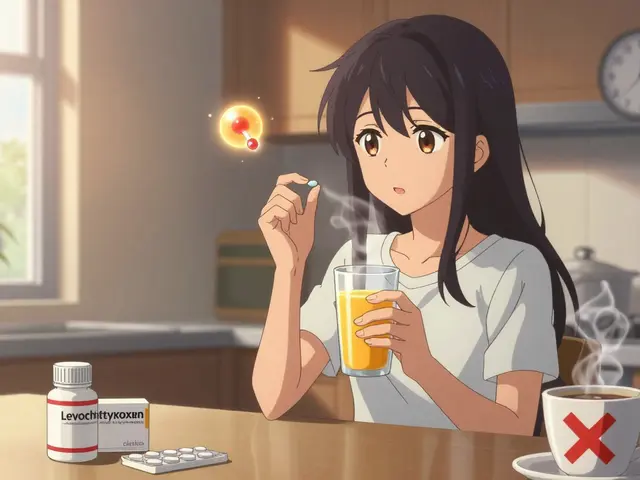
Food adds another layer of complexity. A fatty meal can slow down gastric emptying by 2 to 4 hours. While this sounds minor, it can slash the peak plasma concentration of a drug by 30-50%. This is exactly why medications like levothyroxine must be taken on an empty stomach-food literally blocks the path to the bloodstream.
When Disease Changes the Rules
For people with chronic conditions, the "standard" rules of absorption often fly out the window. In patients with Ulcerative Colitis, the inflammation of the colon can make the tissue less permeable. For example, those taking immediate-release mesalamine often show 25-40% lower bioavailability than healthy people because the diseased tissue can't absorb the drug effectively.
It gets even trickier with conditions like Short Bowel Syndrome. Because these patients have a physically shorter absorption area, extended-release medications-which are designed to release slowly over a long distance-might pass right through the system without ever being absorbed. This is why some patients require 2-3 times the standard dose just to see a therapeutic effect.
Modern treatments also introduce new variables. GLP-1 receptor agonists (like semaglutide) are designed to slow down the gut to help with blood sugar and weight loss. However, this slow-down can reduce the absorption of other medications by 15-30%. For drugs with a "narrow therapeutic index"-where a small change in dose can be the difference between working and being toxic-this can be dangerous.
Solving the Problem: New Tech and Enhancers
Science is fighting back with "absorption enhancers." These are compounds like sodium caprate or chitosan derivatives that temporarily open up those tight junctions in the gut or shut down the efflux pumps. Some of these can boost absorption by 20% to 200%, depending on the drug.
We're also seeing a shift toward Nanocarriers. By wrapping a drug in liposomes or polymeric nanoparticles, pharmacists can shield the drug from enzymes and help it slide through the mucus layer. In preclinical tests, these nanocarriers have increased the bioavailability of poorly soluble drugs by up to 3.5 fold.
The future is moving toward personalization. Instead of one-size-fits-all dosing, researchers are testing capsule-based sensors that measure the actual pH and pressure inside a patient's gut in real-time. This would allow doctors to adjust dosages based on how a specific person's body is reacting that day, rather than relying on a generic label.
Why do some GI drugs need to be taken on an empty stomach?
Food, especially high-fat meals, slows down the speed at which the stomach empties its contents into the small intestine. This delay can lower the peak concentration of the drug in your blood by 30-50%, making the medication less effective or delaying its onset of action.
Can inflammatory bowel disease (IBD) make my meds stop working?
Yes. Inflammation can damage the intestinal lining and change its permeability. For example, in ulcerative colitis, the absorption of certain drugs like mesalamine can drop by 25-40% compared to a healthy gut, meaning you might need a different formulation or a dosage adjustment.
What is "first-pass metabolism"?
First-pass metabolism happens when a drug is absorbed from the gut and sent straight to the liver via the portal vein. The liver processes the drug before it reaches systemic circulation; in some cases, up to 90% of the drug is broken down here, which is why some medications cannot be taken orally.
How do nanocarriers improve drug delivery?
Nanocarriers, such as liposomes or polymeric nanoparticles, protect the drug from being destroyed by stomach acid and enzymes. They also help the drug penetrate the thick mucus layer of the gut, which can increase the amount of drug reaching the bloodstream by 1.5 to 3.5 times.
Do GLP-1 medications affect other pills I take?
Yes, GLP-1 receptor agonists slow down gastrointestinal motility. This can reduce the absorption of concomitant drugs by 15-30%, which is particularly concerning for medications that require very precise levels in the blood to be safe and effective.
What to do if you suspect absorption issues
If you're taking a medication but not seeing the expected results, don't just increase the dose on your own. Instead, talk to your pharmacist or gastroenterologist about a few specific possibilities:
- Formulation Change: Ask if a liquid suspension or a different release profile (e.g., immediate vs. delayed) would work better for your specific disease location.
- Timing Adjustments: Verify if your medication is affected by food or other supplements (like calcium or antacids) that might be blocking absorption.
- Blood Level Monitoring: For high-stakes drugs, ask for therapeutic drug monitoring (TDM) to see if the drug is actually reaching therapeutic levels in your blood.
- Addressing Motility: If you're on a GLP-1 agonist or have a motility disorder, discuss how this might be altering the peak time of your other medications.