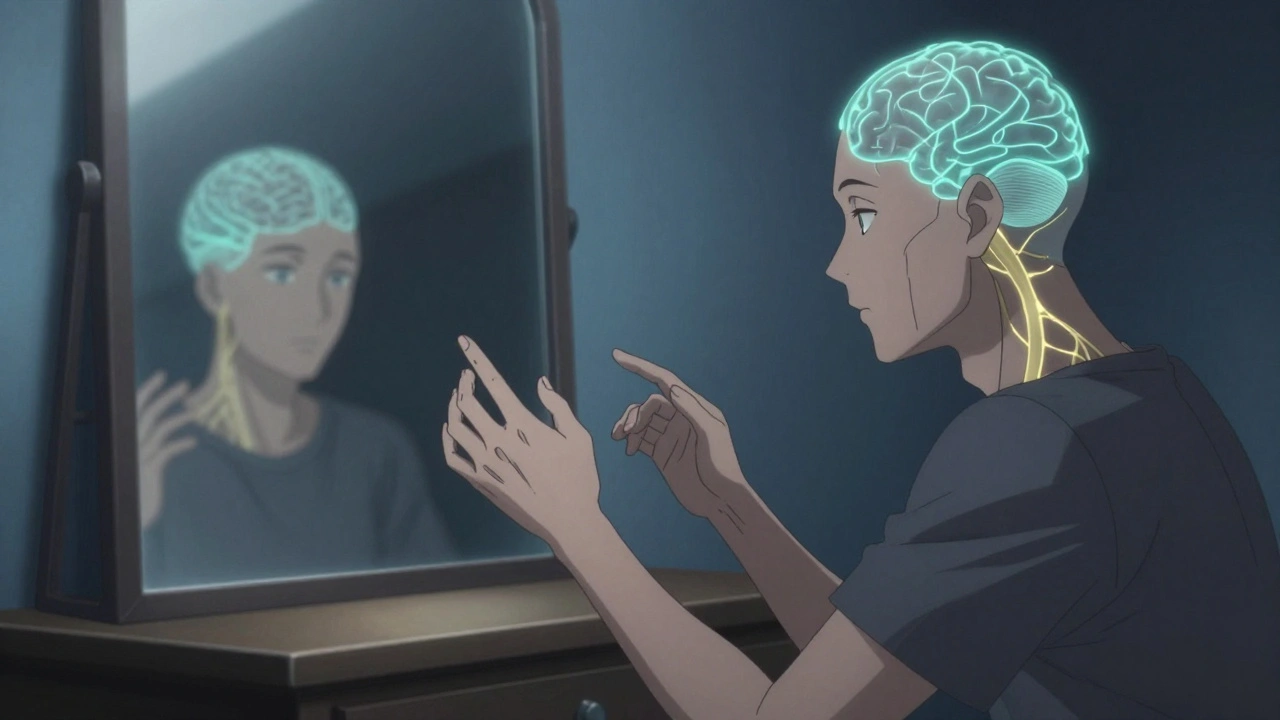
Mirror Therapy: How Visual Feedback Helps Rehabilitate Pain and Movement
When your brain thinks your limb is moving—even when it isn’t—that’s the core idea behind mirror therapy, a non-invasive rehabilitation technique that uses visual feedback to retrain the brain’s perception of movement and pain. Also known as mirror visual feedback, it’s been used since the 1990s to help people with phantom limb pain, stroke survivors, and those with complex regional pain syndrome. The setup is simple: a mirror placed vertically to reflect the healthy limb, making the brain believe the affected limb is moving normally. No drugs, no surgery—just a mirror and the brain’s own ability to adapt.
This isn’t magic. It’s neuroscience. When someone loses a limb, the brain’s map of that body part doesn’t vanish—it gets confused. The same thing happens after a stroke: the brain stops receiving signals from the paralyzed side, but still expects movement. Mirror therapy tricks the visual cortex into thinking movement is happening, which helps reduce pain signals and slowly rebuilds neural pathways. Studies show it works best when used daily over several weeks, especially for people who still have some sensation in the affected limb. It’s also been paired with physical therapy to speed up recovery in patients with arm weakness after stroke. The technique doesn’t fix the damage, but it rewires how the brain interprets it.
You won’t find mirror therapy in every clinic, but it’s gaining traction because it’s cheap, safe, and works where other treatments fail. People with chronic pain from nerve injuries, carpal tunnel, or even arthritis have reported relief after trying it at home. It’s not a cure-all, but for those stuck in a loop of pain and immobility, it’s one of the few tools that gives back control. The posts below cover real-world applications—from how to set up a mirror at home to how it compares to other neuromodulation techniques. You’ll also find stories from patients who used it after amputation or stroke, and what actually made a difference in their recovery. If you’ve been told there’s nothing else you can do, these stories might change that.