
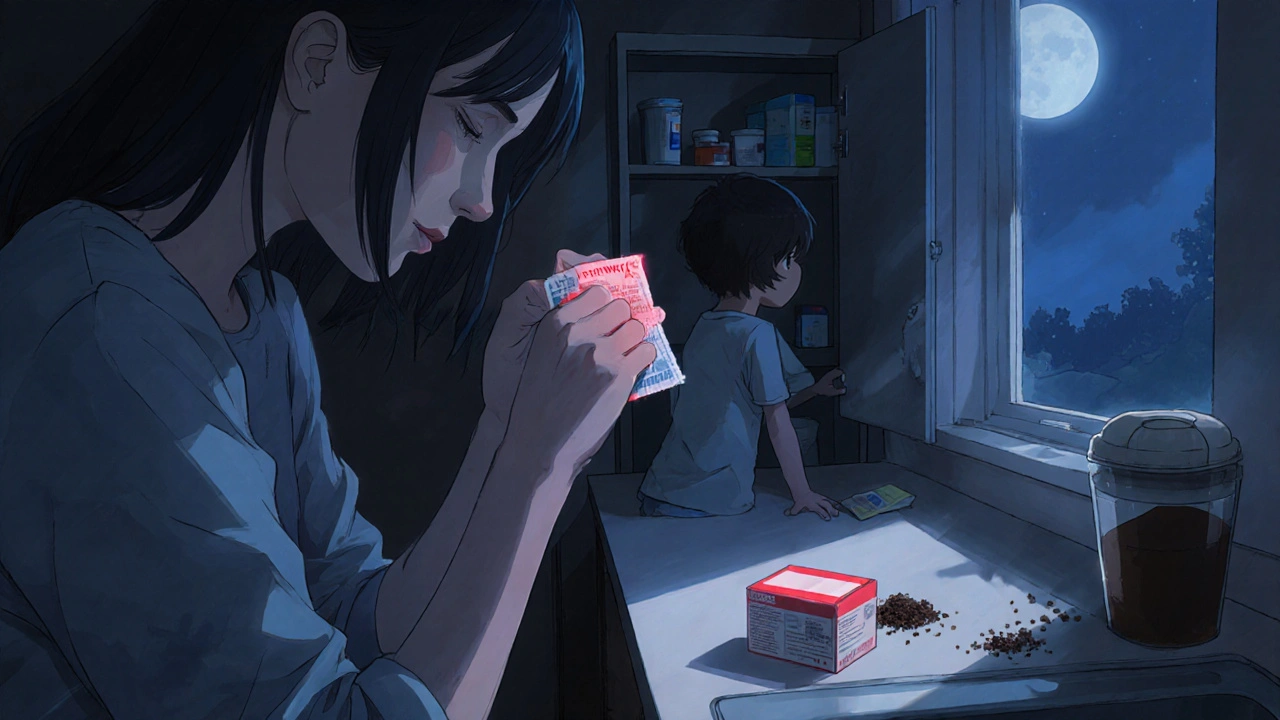
Most people think flushing pills down the toilet is a bad idea. And for the vast majority of medications, it is. But there’s a small, critical exception - one that could save a child’s life. The FDA has a short list of medications that, under very specific conditions, should be flushed immediately if you can’t get them to a take-back program. This isn’t about convenience. It’s about preventing death.
Why Flushing Is Usually a Bad Idea
You’ve probably heard it before: don’t flush medications. That’s because pharmaceuticals in water systems can harm fish, wildlife, and even drinking water over time. The EPA and environmental scientists have spent decades studying this. They’ve found traces of drugs in rivers and lakes across the country. That’s why most disposal guidelines say: throw meds in the trash, mix them with coffee grounds or kitty litter, seal them in a bag, and toss it. But here’s the problem with that advice - for some drugs, it’s not enough. A single fentanyl patch, left in the trash, can kill a toddler who finds it. A single dose of methadone or oxymorphone can be fatal to someone who doesn’t need it. These aren’t just strong painkillers. They’re deadly in the wrong hands. And kids, pets, and even curious teens don’t know the difference between a pill and candy.The FDA Flush List: What’s on It?
The FDA’s Flush List is not long. It’s only 15 active ingredients, and each one is tied to a specific, high-risk medication. As of April 2024, these are the only medications the FDA says you should flush if no take-back option is available:- Buprenorphine - found in SUBOXONE, SUBUTEX, BELBUCA, BUTRANS, ZUBSOLV, BUAVAIL
- Fentanyl - in ABSTRAL, ACTIQ, DURAGESIC patches, FENTORA, ONSOLIS
- Hydromorphone - specifically EXALGO extended-release tablets
- Meperidine - brand name DEMEROL
- Methadone - DOLOPHINE, METHADOSE
- Morphine - ARYMO ER, AVINZA, EMBEDA, KADIAN, MORPHABOND ER, MS CONTIN, ORAMPH SR
- Oxymorphone - OPANA and OPANA ER
- Tapentadol - NUCYNTA, NUCYNTA ER
- Sodium oxybate - XYREM, XYWAV
- Diazepam rectal gel - DIASTAT, DIASTAT ACUDIAL
- Methylphenidate transdermal system - DAYTRANA
What About Fentanyl Patches? There’s a Special Rule
Fentanyl patches are especially dangerous. They still contain potent doses of the drug even after they’ve been used. If you throw one in the trash, it can stick to the bottom of a bag, get picked up by a child or pet, and cause a fatal overdose. The FDA’s guidance is clear: fold the patch in half, sticky sides together, then flush it immediately. Don’t wait. Don’t try to wash off the adhesive. Don’t cut it. Just fold it, flush it. This prevents accidental exposure and reduces environmental contamination compared to leaving it in the trash. This isn’t theoretical. Between 2010 and 2022, the FDA recorded 217 accidental fentanyl exposures in children - nine of them fatal. One user on Reddit reported finding a used fentanyl patch stuck to a playground slide. That’s not a rare event. It’s a preventable one.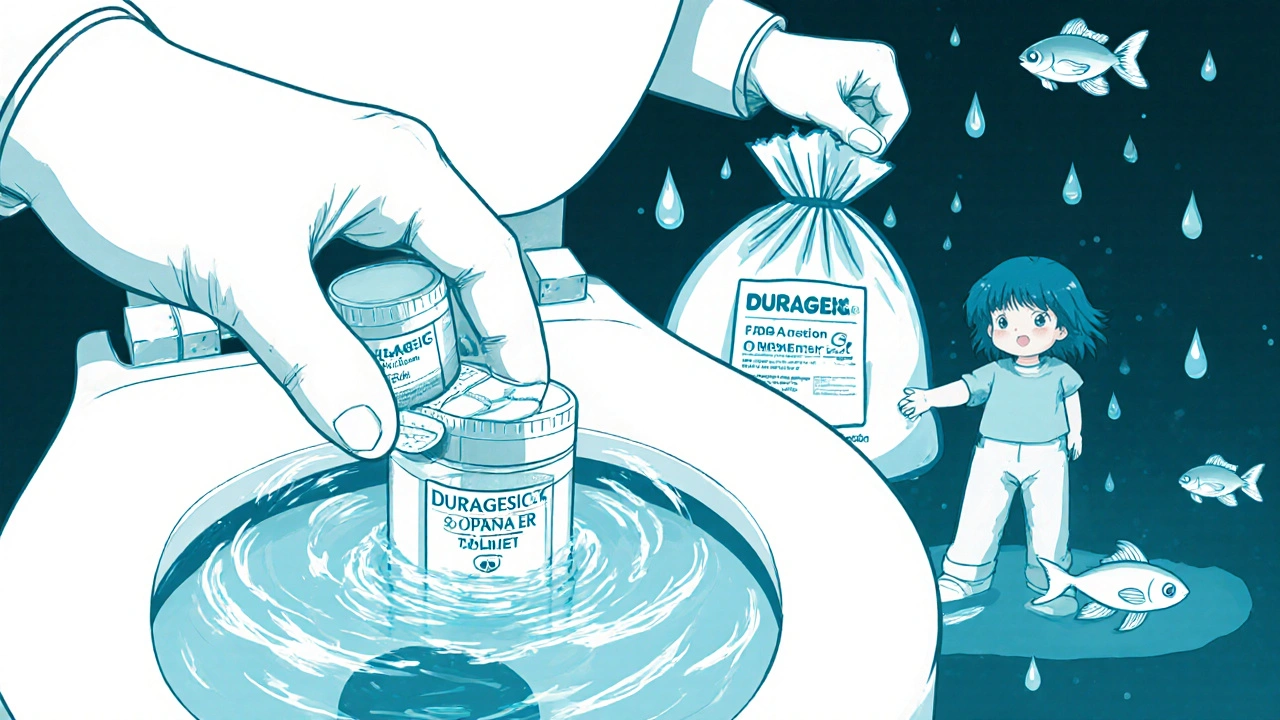
What Should You Do First? Always Check for Take-Back Options
The FDA’s number one rule is this: use a drug take-back program whenever possible. Flushing is the last resort. There are over 12,000 authorized take-back locations across the U.S. - pharmacies, hospitals, police stations, and community centers. The DEA runs National Take Back Days twice a year (April and October), but you don’t have to wait. Use the DEA’s online locator to find year-round drop-off sites near you. But here’s the hard truth: 78% of patients told pharmacists they didn’t know where to take old meds. Rural areas are especially underserved - one take-back site for every 50,000 people. In those cases, flushing may be the only way to keep someone safe.What If Your Medicine Isn’t on the List?
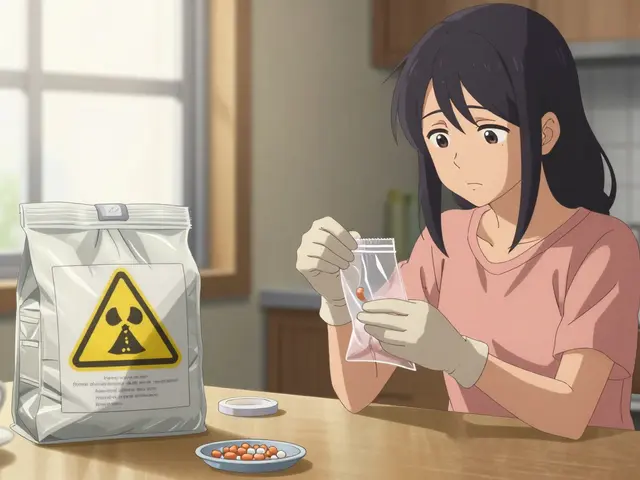
If your medication isn’t on the FDA Flush List - do not flush it. Instead:- Remove the pills from their original bottle.
- Mix them with something unappetizing - used coffee grounds, cat litter, or dirt.
- Put the mixture in a sealed plastic bag or container.
- Toss it in your household trash.
- Before throwing away the empty bottle, scratch off or tear up any labels with your name, prescription number, or doctor’s info.
Why Doesn’t the EPA Like This?
The EPA doesn’t want you flushing anything. They regulate hazardous waste, and pharmaceuticals fall under that. Hospitals, nursing homes, and pharmacies are strictly forbidden from flushing meds. But the EPA understands the FDA’s position: for households with children or pets, the risk of accidental overdose outweighs the environmental risk for these specific drugs. In 2022, the EPA published a report titled “The Limited Role of the FDA’s Flush List.” Their message was clear: this is a narrow exception, not a green light. They still encourage take-back programs and warn that flushing anything else contributes to water pollution.What’s Changing? The Future of Medication Disposal
The FDA is actively reviewing the Flush List. In early 2024, they announced they’re evaluating whether to add new transdermal formulations after 17 cases of accidental buprenorphine exposure in 2023. They’re also considering removing three drugs from the list because newer versions have abuse-deterrent features that make them safer in the trash. The Bipartisan Infrastructure Law gave $15 million to expand take-back programs. Between 2021 and 2023, the number of registered collection sites grew by 37%. More pharmacies are now offering year-round drop-off bins. And by 2025, nearly all prescription labels will include clear disposal instructions - no more guessing. Environmental scientists at the USGS still detect trace amounts of Flush List drugs in waterways, but at levels thousands of times lower than what’s needed for a human dose. The real danger isn’t in the water - it’s in the trash can.What to Do Right Now
If you’re reading this and have old medications at home, here’s your action plan:- Check your medicine cabinet. Find any pills or patches on the FDA Flush List.
- Call your local pharmacy or visit the DEA’s website to find the nearest take-back location.
- If you can’t get there within a day or two - and you have kids, pets, or visitors who might rummage through your trash - flush the medication immediately.
- For fentanyl patches: fold them in half, sticky sides together, then flush.
- For everything else: mix with coffee grounds, seal in a bag, throw in the trash, and remove labels.
Can I flush any prescription drug if I don’t have a take-back option?
No. Only medications on the FDA’s official Flush List should be flushed - and even then, only if you can’t get them to a take-back program. Flushing any other drug contributes to water pollution and is against EPA guidelines. Always check the list first.
What if I accidentally flushed a drug not on the list?
If you flushed a medication not on the FDA list, don’t panic. One-time accidental flushing won’t cause major environmental harm. But from now on, follow the proper disposal method: mix with coffee grounds or kitty litter, seal in a bag, and throw it in the trash. Remove personal info from the bottle first.
Are over-the-counter drugs like ibuprofen or Tylenol on the flush list?
No. Over-the-counter pain relievers like ibuprofen, acetaminophen, and aspirin are not on the FDA Flush List. They should be disposed of by mixing with an unappealing substance and throwing them in the trash. Flushing them is unnecessary and harmful to the environment.
How do I know if my medication is on the FDA Flush List?
Check the medication’s packaging - many now include disposal instructions. You can also search the FDA’s official website for the current Flush List. If you’re unsure, ask your pharmacist. They have access to the most up-to-date guidelines and can confirm whether your drug is on the list.
Why does the FDA allow flushing at all if it harms the environment?
The FDA’s priority is preventing immediate harm to people. For drugs like fentanyl or methadone, one dose can kill a child. The environmental risk from flushing these specific drugs is far smaller than the risk of accidental overdose from leaving them in the trash. The FDA weighs human safety first - and only allows flushing for the most dangerous drugs when no other option exists.
Can I flush expired medications?
Only if they’re on the FDA Flush List and you can’t access a take-back program. Expiration doesn’t make a drug safer - expired opioids or benzodiazepines can still be deadly. If it’s on the list, flush it. If not, mix it with coffee grounds and throw it away.
What about liquid medications or inhalers?
Liquid medications and inhalers are not typically on the Flush List. For liquids, mix them with an absorbent material like cat litter or flour, seal in a container, and throw in the trash. Inhalers should never be punctured or thrown in the fire - return them to a pharmacy for safe disposal. Always check the label for specific instructions.
Do I need to flush the whole bottle or just the pills?
Only flush the medication - not the bottle. Empty the pills or patches out, flush them, then recycle or throw away the bottle after removing your personal information. Don’t flush plastic containers - they don’t break down and can clog pipes or harm wildlife.

Reviews
Just read this and immediately checked my medicine cabinet. Found an old fentanyl patch from my dad’s hospice care. Folded it up sticky-side together and flushed it right away. I know it feels weird to flush anything, but if it saves a kid from a tragic accident, it’s worth it. Thanks for laying this out so clearly.
Also, my local pharmacy has a take-back bin now - I didn’t even know that was a thing until today. Everyone should check theirs.
PS - if you’re scared to flush, just remember: the water system can’t bring someone back to life, but a trash can might kill them.
Stay safe out there.
Of course the FDA lets you flush deadly drugs. Next they’ll say it’s fine to dump chemotherapy into the ocean because ‘somebody might steal it.’
Wait wait wait - so you’re telling me the government is okay with poisoning our rivers… but only for opioids? 😳
What if they’re just using this as a cover to get rid of all the pills they don’t want us to have? 🤔
I heard the CDC is secretly tracking everyone who flushes meds. They’re building a database. I’m not even kidding. My cousin’s neighbor’s dog walker’s brother works at the EPA and he said -
…never mind. I’m just saying. Don’t trust them. 🕵️♀️💧
While the intent behind the FDA’s flush list is laudable, the environmental implications remain nontrivial. The presence of bioactive pharmaceutical compounds in aquatic ecosystems, even at trace concentrations, may induce endocrine disruption in non-target species over time. That said, the risk-benefit calculus for high-potency opioids - particularly transdermal formulations - appears to favor immediate disposal via flushing in households with children or vulnerable populations. The EPA’s 2022 report corroborates this as a narrowly circumscribed exception. One must distinguish between systemic policy and emergency mitigation.
So let me get this straight - you’re telling me I should flush my dad’s pain patches because a toddler might find them… but I can’t flush my expired ibuprofen because a fish might get a headache? 🤡
Someone’s got a death wish for salmon.
I live in a rural area with no take-back sites for 40 miles. I’ve got two kids, a dog, and a cabinet full of old meds. This post saved me from panic. I flushed the fentanyl patch last week - felt awful, but slept better knowing my son couldn’t find it. Thank you for the clarity. The EPA can’t stop me from choosing life over pollution right now.
And yes, I mixed the rest with coffee grounds. And put the bottle in the recycling after scrubbing off the label. Small steps.
Thank you for providing such a meticulously researched and compassionate overview. The distinction between environmental stewardship and acute public safety is not often articulated with such nuance. It is imperative that public health messaging prioritize human life without dismissing ecological responsibility - and this framework achieves that balance. I will be sharing this with my community health group. The inclusion of practical, step-by-step guidance is particularly valuable for elderly and low-literacy populations.
Just flushed my mom’s old Opana ER after finding it under her bed. She passed last year and I kept it ‘just in case’… dumb. I didn’t know it was on the list. Now I know. Also mixed everything else with kitty litter and tossed it. Took me 20 minutes but I feel way better. My cat doesn’t even care. 🐱
Pro tip: Use a Sharpie to black out the bottle labels. Don’t just scratch. It’s easier than you think.
Big thanks for this. I’m a nurse and I’ve seen too many ER cases from kids finding meds. I always tell families: if you’re unsure, flush the patch. Fold it. Don’t think. Just do it. 🙏
Also - if you’re worried about the environment, support your local take-back program. Donate a few bucks. Volunteer. It’s the real solution. Flushing is just damage control.
USA always doing things wrong. In India we just throw all medicines in the river. No one dies. Everyone is strong. Why you make so much problem? Your country too soft. You flush one pill and cry like baby. In my village we eat expired pills for breakfast. No problem. Your FDA is joke. 🤦♂️
My grandma used to say, ‘Better safe than sorry.’ This is one of those times. I had no idea fentanyl patches were still active after use. I thought they were empty. I’m so glad I read this. I flushed two yesterday. Took me five seconds. No guilt. Just peace of mind. Thanks for the clear instructions - and for not making people feel stupid for not knowing.