
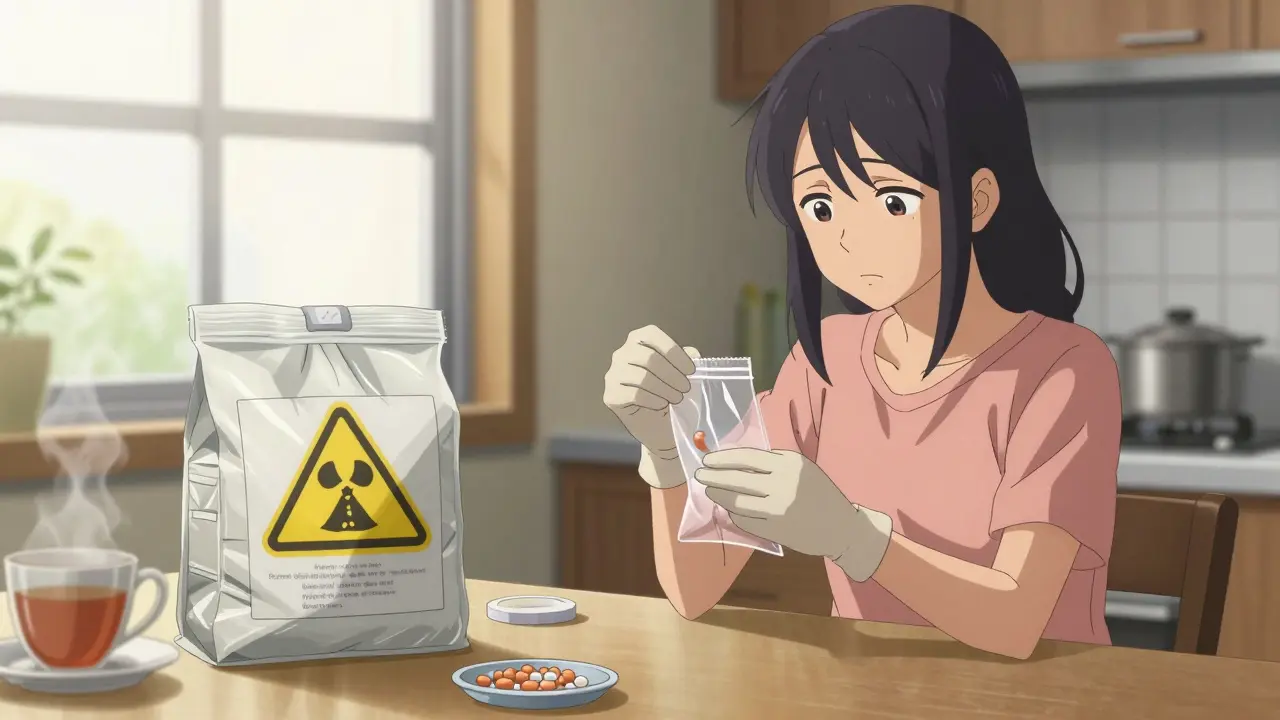
When you or a loved one is receiving chemotherapy at home, the focus is often on treatment, side effects, and recovery. But there’s one critical part of the process that rarely gets talked about: how to dispose of chemotherapy medication safely. Unlike regular pills or painkillers, chemotherapy drugs don’t just disappear after use. They remain dangerous - even in tiny amounts - and can harm children, pets, waste workers, and the environment if not handled correctly.
Every year, thousands of families in the U.S. and Australia manage chemotherapy at home. It’s convenient, less stressful, and often more affordable than hospital visits. But with that convenience comes responsibility. Improper disposal isn’t just a mistake - it’s a risk. The American Cancer Society says active chemotherapy drugs can stay in urine, sweat, or vomit for up to 72 hours after treatment. That means your toilet, sink, trash bin, or recycling bin could become a hidden hazard if you’re not following the right steps.
Why Chemotherapy Waste Is Different
Flushing old antibiotics? Maybe. Throwing expired ibuprofen in the trash with coffee grounds? Fine. But chemotherapy? Never. These drugs are designed to kill fast-growing cells - which is why they fight cancer. But they don’t know the difference between a tumor and a healthy cell. That’s why even a small amount of leftover liquid, a used patch, or a single pill can cause serious harm.
Chemotherapy drugs are classified as cytotoxic and genotoxic. That means they can damage DNA, affect fertility, and increase cancer risk in people who aren’t even being treated. The Environmental Protection Agency found detectable levels of cyclophosphamide - a common chemo drug - in 67% of U.S. waterways. That’s not from hospitals. That’s from homes.
The FDA explicitly says: do not flush chemotherapy drugs. Even if the drug label says “flush if no take-back option is available,” that rule does NOT apply to chemo. The same goes for pouring it down the drain or mixing it with kitty litter like you would with regular meds. Those methods are unsafe and illegal under EPA guidelines.
What You Need to Dispose of Chemotherapy Safely
Proper disposal isn’t complicated - but it does require specific tools and steps. Most oncology clinics provide these materials when treatment begins. If they didn’t, ask for them. Here’s what you’ll need:
- Disposable nitrile gloves (minimum 0.07mm thickness) - always wear these when handling any chemo-related items
- Two leak-proof plastic bags (at least 1.5 mil thick) - one inside the other
- Yellow hazardous waste container - often provided by your pharmacy or hospital
- Sealable zip-ties or heat-sealing tool - for closing the inner bag
- Dedicated cleaning supplies - never use kitchen towels or sponges for chemo spills
Don’t reuse gloves. Don’t use grocery bags. Don’t try to save money by improvising. The cost of a single exposure - to a child, a pet, or a sanitation worker - is far higher than replacing supplies.
Step-by-Step Disposal Process
Follow these steps every time you dispose of chemotherapy waste:
- Wear gloves before touching anything - pills, vials, syringes, or even used tissues.
- Place all contaminated items into the inner plastic bag. This includes: used pills (even empty blister packs), empty vials, used IV tubing, gloves worn during administration, wipes, tissues, and even menstrual pads or diapers if they’re contaminated.
- Seal the inner bag tightly using a zip-tie or heat sealer. Don’t just fold it over.
- Place the sealed inner bag into the outer bag. Seal this one too.
- Label the outer bag clearly: “Hazardous Chemotherapy Waste - Do Not Open.”
- Store the double-bagged waste in a secure location - out of reach of children and pets - until pickup or drop-off.
- Wash your hands thoroughly with soap and water after removing gloves.
For oral pills: Never crush, chew, or dissolve them. Dispose of them whole. For patches (like Fentanyl or other transdermal chemo): Fold the sticky side onto itself before placing in the inner bag. For liquid medications: Pour leftover liquid into an absorbent material like cat litter or coffee grounds - but only after placing it in the inner bag. Never pour it directly into a sink or toilet.
What About Take-Back Programs?
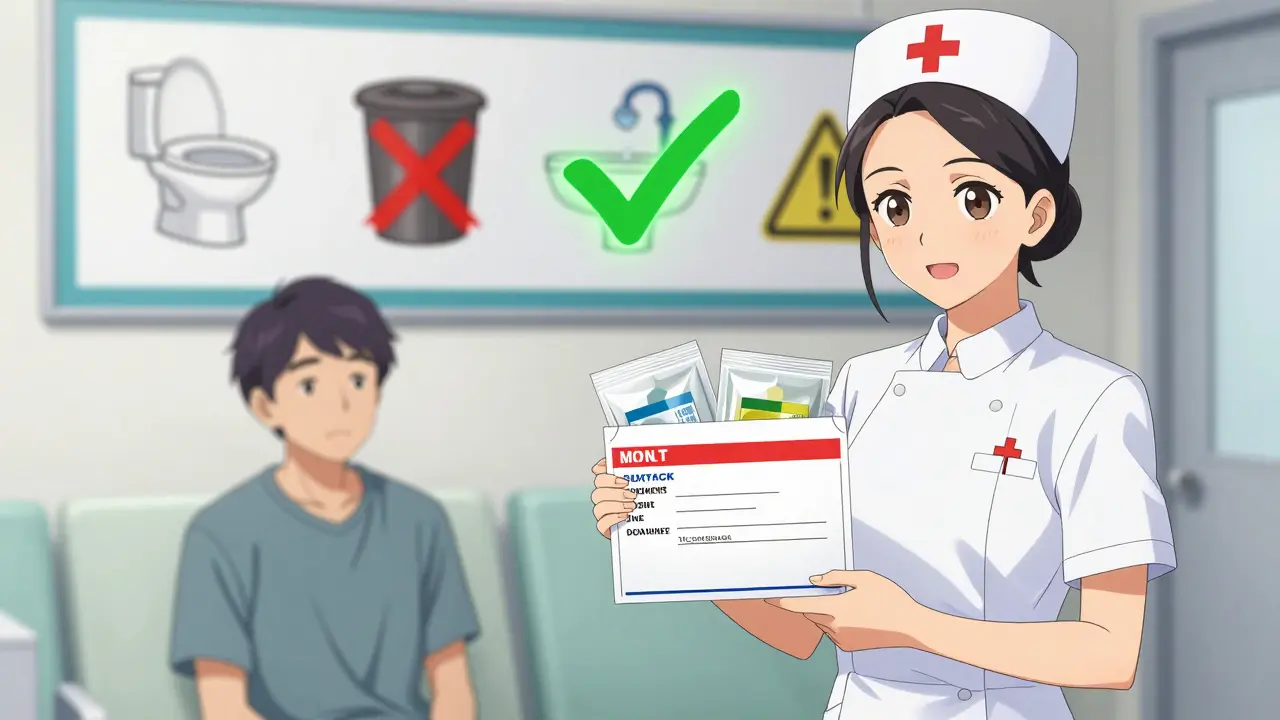
You’ve probably seen MedDrop kiosks at pharmacies. They’re great for regular medications - but they don’t accept all chemo drugs. According to Stericycle’s 2022 data, only 63% of chemotherapy medications are accepted at these kiosks. Some are too hazardous. Others require special handling.
Mail-back programs exist, but only 28% of U.S. pharmacies offer them for chemo waste. And in Australia, options are even more limited. If your clinic provides a pre-paid return envelope, use it. If not, ask your oncology nurse for alternatives. Some hospitals offer scheduled pickups or drop-off days specifically for chemotherapy waste.
Community take-back events? Rare. Most are designed for non-hazardous drugs and require law enforcement presence due to DEA rules. Only 12% of these events accept chemotherapy. Don’t rely on them.
What to Do After Treatment
The danger doesn’t end when the last pill is taken. Active chemotherapy compounds can linger in your body for up to 72 hours - sometimes longer. That means:
- Flush the toilet twice after use
- Wash your hands after using the bathroom
- Use separate towels and linens for 72 hours
- Wear gloves when handling laundry that may be contaminated
- Keep children and pets away from the bathroom for at least two days
Even if you feel fine, your body is still processing toxins. Treat every bodily fluid as hazardous during this time.
What If You Have a Spill?
Accidents happen. If you spill liquid chemo, vomit, or leak a pill:
- Wear gloves, a mask, and eye protection immediately
- Use disposable cloths - never paper towels or sponges
- Soak up the spill, then wipe the area twice with soap and water
- Place all cleanup materials into the inner disposal bag
- Wash your skin thoroughly if exposed
- Contact your oncology team - they’ll tell you if you need further care
Never use a vacuum cleaner or mop. That spreads contamination. And never clean it with your bare hands.
Why This Matters - Real Consequences
A 2023 study in the Journal of Oncology Practice found that only 53% of patients follow disposal guidelines consistently. That’s not just negligence - it’s a public health blind spot.
Think about it: A nurse collecting trash from your home doesn’t know what’s inside your bag. A child finds a pill in the trash. A pet digs through the bin. A water treatment plant can’t filter out these drugs. The EPA estimates that improper home disposal contributes to 30% of pharmaceutical pollution in waterways.
And it’s getting worse. Home-based chemotherapy use has grown 37% since 2019. By 2027, it’s expected to rise another 35%. Without better systems, more people will be at risk.
What’s Being Done?
Change is coming. The FDA now requires all oral chemotherapy labels to include disposal instructions. The EPA has allocated $4.7 million to research safer disposal methods. Companies like Stericycle are expanding specialized waste services. And new technologies - like the ChemiSafe system - are in clinical trials.
But right now, the burden is on you. Your clinic may not have perfect instructions. Your pharmacy may not have a drop-off bin. That’s why you need to know the rules - and follow them exactly.
Final Checklist
Before you throw anything away, ask yourself:
- Did I wear gloves?
- Did I use two sealed plastic bags?
- Did I label the bag?
- Did I avoid flushing, pouring, or crushing?
- Did I wait 72 hours after treatment before handling body waste?
- Did I clean up spills with dedicated supplies?
If you answered yes to all, you’ve done your part. If not, go back and correct it. This isn’t about convenience. It’s about safety.
Can I throw chemotherapy pills in the regular trash?
No. Chemotherapy pills must be double-bagged in leak-proof plastic bags and labeled as hazardous waste. Never mix them with regular trash, food waste, or absorbent materials like cat litter outside of the sealed bag system. This prevents accidental exposure to children, pets, or waste workers.
Is it safe to flush chemo drugs down the toilet?
Absolutely not. Even if the drug label says “flush if no take-back is available,” this rule does not apply to chemotherapy. Flushing chemo drugs contaminates water systems and is prohibited by the EPA. The same applies to pouring it down the sink. Always use double-bagging or approved disposal services.
What should I do with used chemo patches?
Fold the patch so the sticky side sticks to itself, then place it in the inner disposal bag before sealing it inside the second bag. Never throw a used patch in the trash without folding it - the adhesive can still release the drug and contaminate surfaces or skin.
How long should I keep using gloves after treatment ends?
Continue using gloves and following safety steps for at least 72 hours (three days) after the last dose. Active chemotherapy compounds can remain in urine, sweat, and vomit for up to 7 days. Treat all bodily fluids as hazardous during this time.
Are there disposal kiosks for chemotherapy waste in Australia?
Australia currently has limited options for chemotherapy disposal kiosks. Most MedDrop-style programs are U.S.-based and do not accept hazardous chemo drugs. Contact your oncology clinic or hospital pharmacy - they often provide pre-paid mail-back envelopes or arrange scheduled pickups. Local councils may also have hazardous waste drop-off days - call ahead to confirm if chemo waste is accepted.
Can I reuse the disposal bags?
Never reuse disposal bags. Each bag is designed for single use to prevent cross-contamination. Reusing a bag risks exposing you or others to residual drugs. Replacement supplies typically cost around $15-$20 per month, but this is far less than the cost of a medical emergency caused by exposure.

Reviews
Y’all need to stop treating chemo waste like it’s just expired Advil. I’ve seen people toss it in the trash like it’s nothing. One time my neighbor’s kid found a pill in the bin-turned out it was leftover cyclophosphamide. Took three days to get it tested. Don’t be that person. Double-bag. Label. Don’t improvise. Period.
my oncology nurse gave me the bags but didn’t explain how to seal them. i just tied them real tight. is that okay? idk lol
i live in india and we dont have any of these systems. we just wrap the pills in paper and throw them away. is this dangerous? i dont want to hurt anyone
OMG I CRIED READING THIS. I DID THIS WRONG. I FLUSHED A PATCH. I THOUGHT IT WAS FENTANYL. I DIDNT KNOW IT WAS CHEMO. I’M SO GUILTY. MY DOG LICKED THE TOILET. I’M GOING TO THE ER. WHY DIDNT ANYONE TELL ME??
too much info. just say: dont flush. double bag. done.
in indonesia, we just bury it. deep. far from water. no one talks about this. but we do it. maybe we’re not perfect, but we’re careful. not everyone has fancy bags.
It is imperative to underscore that the improper disposal of cytotoxic agents constitutes a gross violation of both environmental hygiene protocols and public health jurisprudence. The EPA’s findings, while statistically significant, are not adequately contextualized within the broader framework of pharmaceutical waste management policy. One must consider the ontological implications of domestic pharmaceutical disposal vis-à-vis institutional infrastructure.
thank u for this 🙏 i was so scared to throw away my husband's meds 😭 we used the bags but i didnt label them... i just wrote "danger" on it. is that enough?? i love u for sharing this 💕
so i read all this and i was like wow this is a lot but then i remembered i dont even have gloves and i just used my old work gloves and put the pills in a ziplock and then put that in a grocery bag and threw it out. i mean it was a month ago and i dont even remember what meds they were. i think they were 5-fluorouracil? or was it capecitabine? idk. i just hope no one finds them. i feel bad now. i should’ve asked. but no one ever told me. like seriously. my nurse just handed me a box and said "dispose of it". no instructions. no nothing. i thought it was like ibuprofen. i feel dumb. but now i know. i’m gonna get the right bags next time. i hope.