
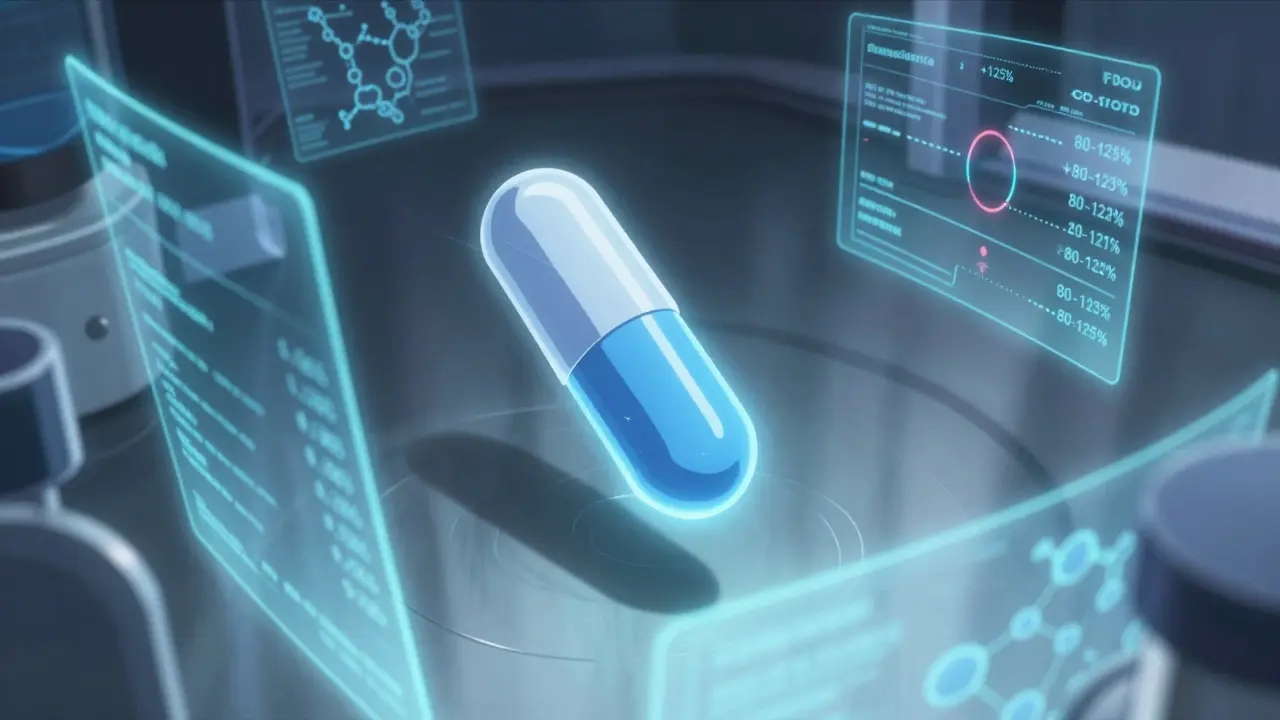
When you pick up a prescription at the pharmacy and see a generic version of your brand-name drug, you’re seeing the result of a precise, science-driven system called the Abbreviated New Drug Application (ANDA) process. This isn’t just a shortcut - it’s a carefully designed legal and scientific pathway that lets generic drug makers bring affordable medicines to market without repeating every clinical trial ever done on the original drug. The system was created in 1984 by the Hatch-Waxman Act, and since then, it’s saved the U.S. healthcare system over $373 billion in a single year. But how does it actually work? And why do some generic drugs take years to hit shelves while others appear in months?
What Is an ANDA, Really?
An ANDA is not a new drug application. It’s an abbreviated one. That means the generic manufacturer doesn’t have to prove the drug is safe or effective from scratch. Instead, they must show their version is therapeutically equivalent to a drug already approved by the FDA - called the Reference Listed Drug (RLD). Think of it like this: if the brand-name drug is a car model, the generic is a replica built to the same blueprints, using the same engine, same tires, same safety features. The FDA already checked the original. Now, they just need to confirm the copy does the same job.
To qualify, the generic must match the RLD in four key ways:
- Same active ingredient (same chemical, same dose)
- Same strength (e.g., 20 mg, not 15 mg)
- Same dosage form (pill, injection, cream, inhaler)
- Same route of administration (taken orally, injected, applied to skin)
It also has to have the same labeling - meaning the warnings, directions, and usage info must be nearly identical. The only exceptions are minor things like the manufacturer’s name or packaging design. The FDA doesn’t care what color the pill is. It cares whether it works the same way inside your body.
How the ANDA Process Works Step by Step
The process isn’t quick, but it’s structured. It follows four clear phases:
- Submission: The generic company files its ANDA electronically using the FDA’s Electronic Submission Gateway. The application includes over 100 technical documents - chemistry data, manufacturing details, bioequivalence studies, and labeling. Two key forms are required: FDA-356h (the actual application) and FDA-3674 (disclosing financial ties).
- Review: The FDA’s Office of Generic Drugs (OGD) splits the application among specialized teams: chemistry, manufacturing, microbiology, labeling, and bioequivalence. Each team checks for compliance. For example, the chemistry team verifies the generic drug’s ingredients match the RLD’s purity and stability. The bioequivalence team reviews clinical data showing the generic delivers the same amount of drug into the bloodstream at the same rate as the brand.
- Feedback and Revision: If something’s missing or unclear, the FDA sends an Information Request (IR). These can be dozens of pages long. One company reported getting 17 IRs on a single submission - stretching their review time by over a year. Companies respond with more data, revised studies, or corrected documentation. If major issues remain, the FDA issues a Complete Response Letter (CRL), essentially saying, “Not approved yet - fix this.”
- Approval: Once all teams agree and the manufacturing facility passes inspection, the FDA grants approval. But here’s the catch: if the brand-name drug still has patent protection or exclusivity, the generic gets a tentative approval. It’s scientifically approved, but legally stuck until those protections expire.
The FDA’s goal under GDUFA III (effective October 2022) is to approve 90% of original ANDAs within 10 months. But in practice, the average timeline is closer to 30 months. Why? Because of delays - inspections, complex science, or patent battles.
Why Bioequivalence Is the Make-or-Break Step
Here’s where most ANDAs fail. The FDA doesn’t require new clinical trials for effectiveness. Instead, they require bioequivalence studies - meaning the generic must deliver the same amount of drug into the bloodstream at the same speed as the brand.
For simple pills, this is straightforward. Volunteers take the brand and generic versions on different days, and blood samples are taken over time. If the drug levels are within 80-125% of each other, it’s considered equivalent.
But for complex products - like inhalers, topical creams, or injectables - it’s much harder. The drug’s behavior depends on how it’s delivered. A generic inhaler must spray the same particle size, with the same pressure, into the same part of the lung. A cream must penetrate the skin at the same rate. These require advanced testing methods, sometimes involving animal models or specialized lab equipment.
According to FDA data from 2022, 35% of Complete Response Letters cited inadequate bioequivalence protocols. One company spent $1.2 million and ran three rounds of studies just to get their topical cream approved. That’s why many generic manufacturers hire specialized labs and use Quality by Design (QbD) principles - building quality into the manufacturing process from day one.
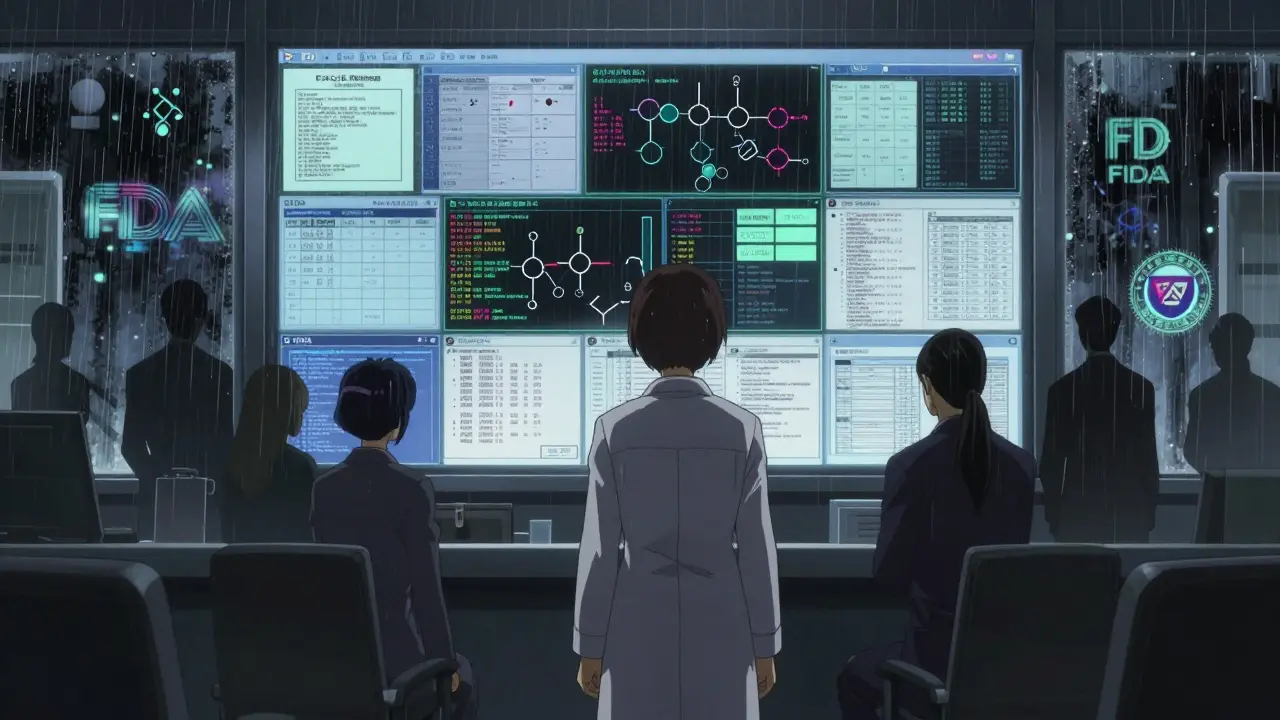
Patents and Exclusivity: The Hidden Roadblocks
You might think once a drug’s patent expires, generics flood the market. Not always. The Hatch-Waxman Act gave brand-name companies extra protection - up to five years of exclusivity for certain new drugs. Some companies even file multiple patents on minor changes - like a new coating or a different tablet shape - to delay generics. This is called “patent thickets.”
Generic companies must certify which patents they’re challenging. There are four types of certifications:
- Patent doesn’t exist
- Patent has expired
- Patent will expire on a certain date
- Patent is invalid or won’t be infringed
If a company files a “Paragraph IV” certification - saying a patent is invalid - the brand-name maker can sue. That triggers a 30-month stay, halting FDA approval. This is why some generics sit in “tentative approval” limbo for years.
And it’s not just patents. The FDA also enforces Risk Evaluation and Mitigation Strategies (REMS) - safety programs that can block generic access if the brand-name maker refuses to share necessary data or restricts distribution.
Who’s Winning and Who’s Struggling?
The generic drug market is dominated by a few big players: Teva, Viatris (formerly Mylan), and Sandoz. Together, they control over half the U.S. market. But over 75% of ANDAs come from companies with five or more approved products - meaning small and mid-sized firms are still active, just not leaders.
Big companies have teams of 10-15 people dedicated to ANDA submissions. They’ve done this before. They know what the FDA wants. They use pre-ANDA meetings - where they talk to FDA reviewers before submitting - to avoid costly mistakes. According to surveys, 78% of successful applicants use these meetings.
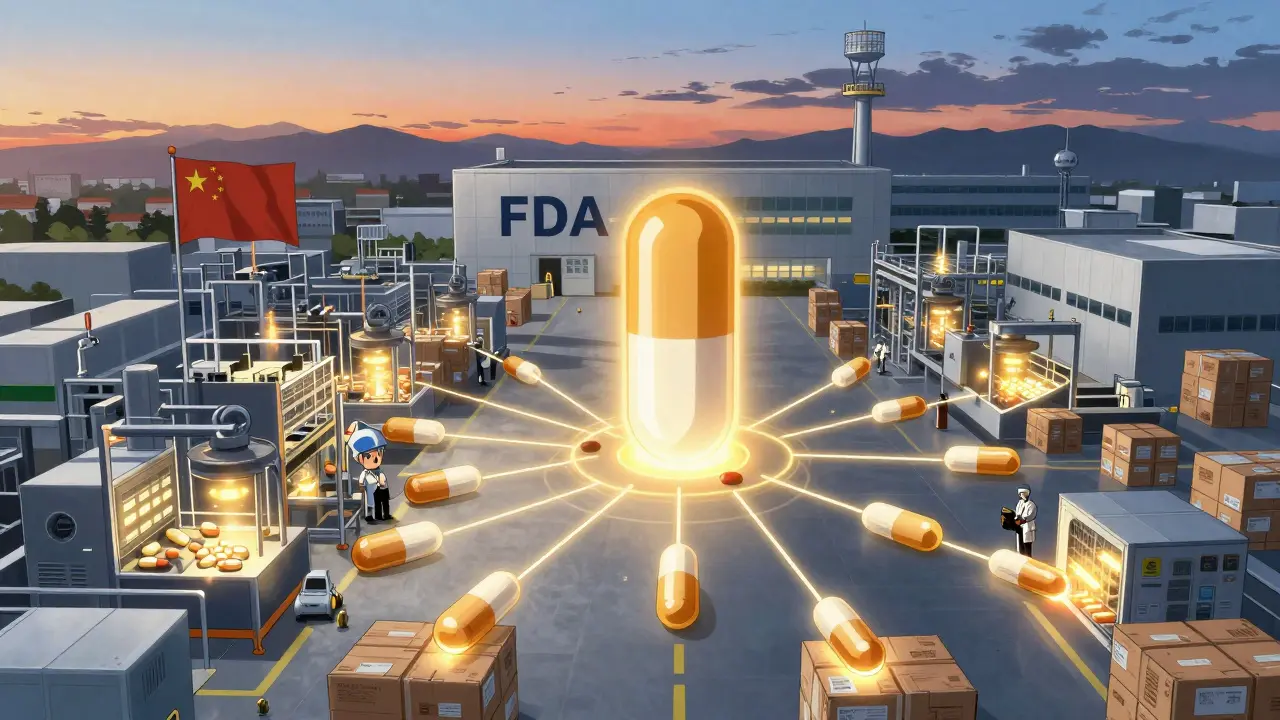
Smaller companies often struggle with resource gaps. One survey found 63% of applicants faced delays due to facility inspections. The FDA inspects manufacturing sites globally - in India, China, the U.S., Europe. If a facility has sanitation issues, or doesn’t follow current Good Manufacturing Practices (cGMP), the whole application gets stuck.
Why This Matters: Cost, Access, and Innovation
Generic drugs make up 90% of prescriptions in the U.S. But they cost only 23% of what brand-name drugs cost. In 2021, generics saved $373 billion. That’s not just corporate profit - it’s money back in patients’ pockets, insurance premiums, and public health budgets.
When a generic hits the market, brand-name prices drop by 85% within a year. That’s the power of competition. And the ANDA process is what makes that competition possible.
But there’s a tension. The system was built for simple pills. Today, more than a third of pending ANDAs are for complex products - injectables, inhalers, eye drops. These are harder to replicate. The FDA is responding with over 2,000 product-specific guidances and using AI tools to speed up chemistry reviews. Still, delays persist.
Some experts worry that as patents get more complex and REMS restrictions tighten, the ANDA pathway could become less effective. Others say the system is adapting - just slowly. The real test will be whether it can keep up with next-generation drugs: biologics, gene therapies, and personalized medicines.
What’s Next for the ANDA Process?
The FDA’s 2022-2026 Strategic Plan calls for more innovation in generic approval. That includes:
- Using real-world data (like electronic health records) to support bioequivalence claims
- Harmonizing standards with international regulators (ICH)
- Expanding use of AI in reviewing chemistry data
- Streamlining inspections for overseas facilities
Meanwhile, the industry is pushing for faster approval of generics that treat drug shortages - especially for antibiotics, cancer drugs, and anesthetics. The FDA now has a priority review track for these, cutting review time to under six months.
One thing is clear: the ANDA process isn’t going away. It’s evolving. And as long as patients need affordable medicine, this system - flawed, slow, complex as it is - will keep working.
What’s the difference between an ANDA and an NDA?
An NDA (New Drug Application) is for brand-name drugs. It requires full clinical trials proving safety and effectiveness from scratch. An ANDA (Abbreviated New Drug Application) is for generics. It skips those trials and instead proves bioequivalence to an already approved drug. NDAs cost around $2.3 billion to develop. ANDAs cost $1-5 million.
Why do some generic drugs take longer to get approved than others?
It depends on complexity. Simple pills are fast. Complex products - like inhalers, creams, or injectables - need advanced testing. Also, patent disputes, facility inspection delays, and incomplete data can add years. If the brand-name drug still has exclusivity, the generic gets tentative approval until those protections expire.
Can a generic drug be different from the brand-name version?
Yes - but only in inactive ingredients. The active ingredient, strength, dosage form, and how it works in the body must be identical. The color, shape, or flavor might be different. But if the drug doesn’t deliver the same amount into your bloodstream at the same rate, it won’t be approved.
How does the FDA ensure generic drugs are safe?
The FDA doesn’t retest safety - it relies on the original brand’s data. Instead, it checks that the generic matches the brand in chemistry, manufacturing, and bioequivalence. It also inspects manufacturing sites worldwide. If a facility fails inspection, the ANDA is delayed or denied.
Are all generic drugs the same?
All FDA-approved generics must meet the same standards. But not all generics are made by the same company. Some brands make their own generics. Others license them. The FDA doesn’t rank them - as long as they’re approved, they’re considered equivalent. However, rare cases of differences in absorption have been reported - which is why some patients switch back and forth between brands.
Reviews