
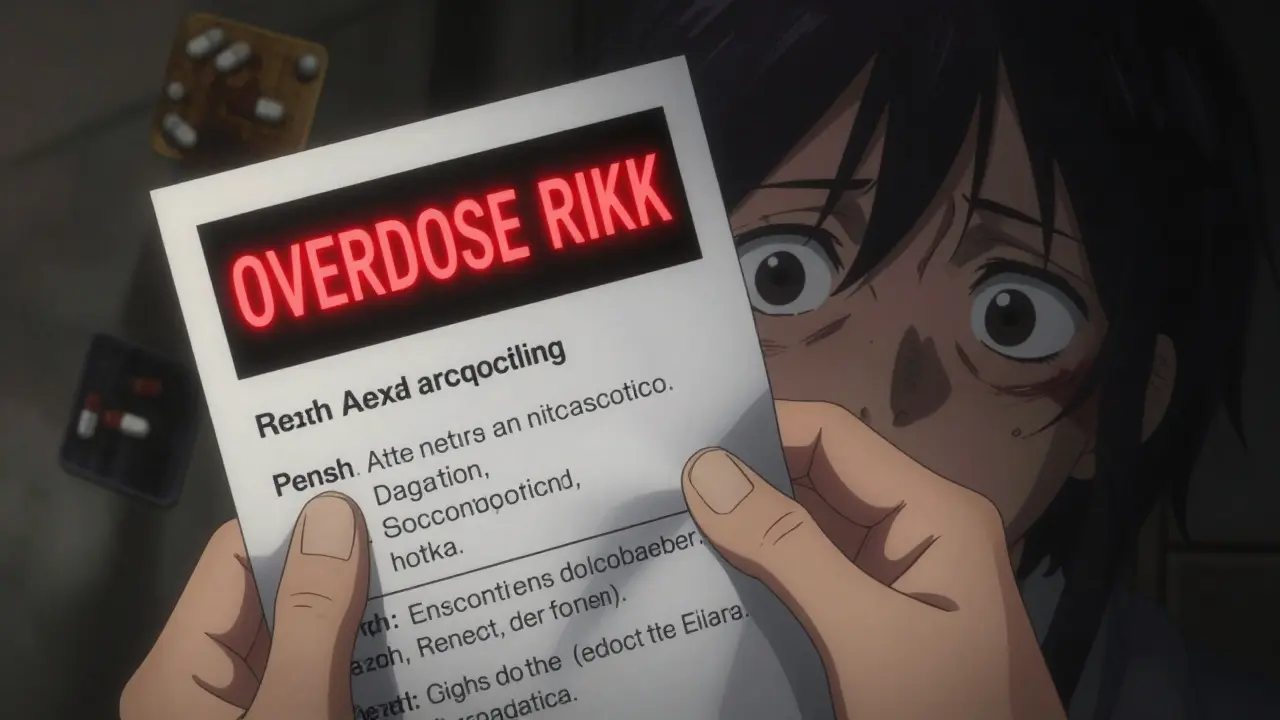
Every time you pick up a new prescription, you get a small paper insert - the medication guide. Most people toss it in the drawer or glance at it once and forget. But that guide holds critical information that could save your life or someone else’s. If you take medications like opioids, benzodiazepines, or certain painkillers, knowing how to read the overdose warnings and find the antidotes isn’t just helpful - it’s essential.
Where to Find Overdose Warnings in the Medication Guide
Overdose warnings don’t hide. They’re placed in specific sections you can count on, no matter which drug you’re taking. Look first for the Boxed Warning. This is the most serious alert the FDA requires. It’s printed in a black border at the top of the guide, right after the drug name. If your medication has a boxed warning about overdose, it means the risk is real and well-documented. Opioids like oxycodone, fentanyl patches, and methadone almost always have one.
Next, scan for the section titled Warnings and Precautions. Here, you’ll find details like: "Risk of respiratory depression may increase with higher doses" or "Concurrent use with alcohol or benzodiazepines may cause fatal overdose." These aren’t vague warnings - they’re specific about what combinations or doses raise the danger.
Then, go straight to the Overdosage section. This is the part most people skip. It’s not about symptoms - it’s about what happens when too much is taken. For example, a guide for tramadol might say: "Overdose may cause seizures, serotonin syndrome, or respiratory arrest. Doses above 400 mg per day are not recommended." That’s not a suggestion. It’s a hard limit.
How to Spot Antidotes - The Lifesaving Details
Antidotes aren’t always listed under the word "antidote." You won’t find a big red button saying "Naloxone Here." Instead, look for the phrase "Treatment of Overdose" or "Management of Overdose" within the Overdosage section. This is where the antidote is named, often with dosage or route details.
For opioids, the antidote is almost always naloxone. The guide will say something like: "Naloxone hydrochloride is a specific antidote for opioid overdose. Administer intravenously, intramuscularly, or intranasally as needed." Some guides even mention that naloxone may need to be repeated because the drug’s effects last longer than naloxone’s. That’s critical - you can’t just give one dose and walk away.
For benzodiazepines like diazepam or alprazolam, the antidote is flumazenil. It’s less common and usually only used in hospitals, but the guide will still list it. For acetaminophen (paracetamol), the antidote is N-acetylcysteine - and timing matters. The guide will note that treatment is most effective within 8 hours of ingestion.
Don’t assume all antidotes are available over the counter. Naloxone is, but flumazenil and N-acetylcysteine are not. The guide tells you what to ask for - and when to call 911.
What the Numbers Really Mean
Medication guides often include numbers. Don’t ignore them. They’re not filler - they’re warnings in disguise.
For example, a guide for fentanyl patches says: "Each patch delivers 25 mcg/hour. Do not use more than one patch at a time unless directed by your doctor." That’s not just dosing advice - it’s an overdose red flag. Using two patches doubles your exposure. A single patch can kill someone who’s not opioid-tolerant.
Another example: "Fatal overdose has been reported with doses as low as 10 mg of oxycodone in opioid-naive individuals." That’s not a statistic. It’s a personal risk. If you’ve never taken opioids before, 10 mg is dangerous. The guide is telling you: start low, go slow - and know what you’re taking.
Some guides list the LD50 (lethal dose for 50% of the population) for animal studies. You don’t need to understand the science - just know that if a guide says "LD50 is 100 mg/kg in mice," it means the drug is potent. That’s why you never crush pills or snort them. The guide already warned you.
Red Flags in the Language
Some phrases are code. Learn them.
- "May cause severe respiratory depression" = This can stop your breathing.
- "Contraindicated with alcohol" = Mixing this with even one drink could kill you.
- "Use with extreme caution in elderly patients" = Older adults are more likely to overdose on lower doses.
- "Do not abruptly discontinue" = Stopping suddenly can cause withdrawal - which can lead to relapse and overdose.
- "Risk increases with hepatic or renal impairment" = If your liver or kidneys aren’t working well, the drug builds up. You need a lower dose.
These aren’t doctor-speak. They’re survival instructions. If you see "severe," "fatal," or "contraindicated," stop and think. This isn’t a side effect - it’s a life-or-death risk.
What to Do If You Can’t Find the Info
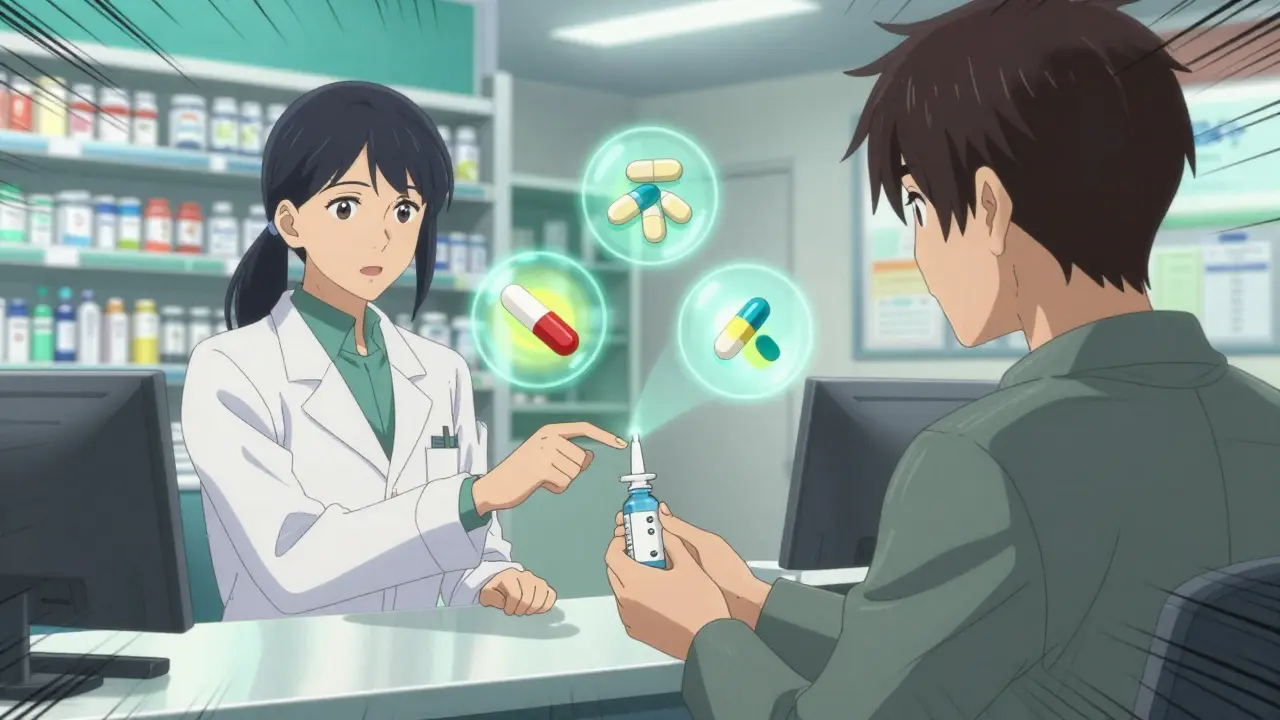
If your guide is missing, damaged, or written in tiny print, don’t guess. Call your pharmacy. Pharmacists are trained to explain medication guides. Ask: "Does this drug have a boxed warning for overdose? Is there a known antidote?"
You can also check the FDA’s website for the official prescribing information. Search for the drug name + "FDA label." You’ll get the full document - same as the guide, but easier to read. The Overdosage section is always there.
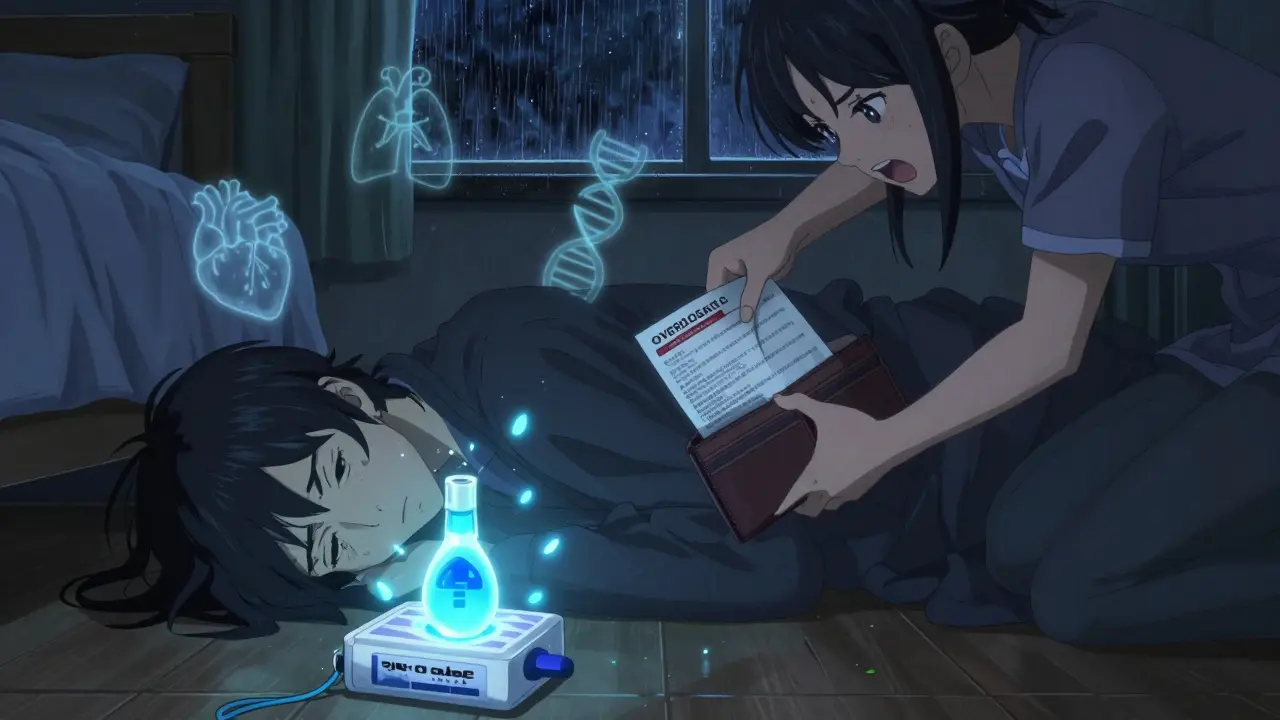
If you’re helping someone else - a parent, partner, or friend - print out the Overdosage section and keep it with the medicine. Put it in your wallet or phone notes. When seconds count, you won’t be flipping through a drawer.
Why This Matters More Than You Think
Most overdoses happen because people don’t realize how dangerous their own meds are. They think, "I’ve taken this for years, it’s fine." But tolerance changes. Liver function drops. A new painkiller gets added. A friend gives you a pill "for anxiety." That’s when the guide becomes your last line of defense.
Every year, thousands of people in Australia and around the world overdose on prescription drugs - not illegal ones. They didn’t know the risk. They didn’t know the antidote. They didn’t know how to read the guide.
Reading your medication guide isn’t paperwork. It’s preparation. It’s knowing that if your partner stops breathing after taking their painkiller, you can grab the naloxone kit you kept near the medicine cabinet - because you read the guide, and you remembered.
What to Do Next
Right now, find your most recent prescription. Open the guide. Go to the Overdosage section. Find the antidote. Write it down. Tell someone you live with. Keep the guide where you take your meds - not tucked away.
If you’re on long-term pain meds, mental health drugs, or sleep aids - make this a habit. Check every time you refill. Guidelines change. New warnings appear. Your life depends on staying updated.
You don’t need to be a doctor to save a life. You just need to know where to look.
What should I do if I can’t find the antidote in my medication guide?
If the antidote isn’t clearly listed, call your pharmacist or doctor. For opioids, naloxone is the standard antidote - even if it’s not named in the guide. For benzodiazepines, it’s flumazenil. For acetaminophen, it’s N-acetylcysteine. If you’re unsure, assume the drug could be dangerous in overdose and keep naloxone on hand if you’re taking opioids. Always confirm with a healthcare professional.
Are all prescription drugs required to have overdose warnings?
Yes, under FDA and TGA (Therapeutic Goods Administration) rules, any drug with a known risk of overdose must include a medication guide with an Overdosage section. This applies to opioids, benzodiazepines, sedatives, certain antidepressants, and painkillers like acetaminophen. Not all drugs have this - but the ones that do are the ones you need to pay attention to.
Can I get naloxone without a prescription?
Yes. In Australia, naloxone is available over the counter at pharmacies without a prescription. You can ask for it by name - pharmacists are trained to provide it and explain how to use it. Many community health centers also offer free naloxone kits. Keep one if you or someone you know takes opioids, even if they’re prescribed.
Why does the guide say "do not crush or chew" pills?
Many pills are designed to release medicine slowly. Crushing or chewing them releases the full dose at once - which can cause a dangerous overdose. The guide says this because it’s happened. People have died after crushing extended-release oxycodone or fentanyl patches. The warning is there to stop that from happening to you.
What if I’m not sure whether my symptoms are an overdose?
If someone is unresponsive, breathing slowly or not at all, or has blue lips or pinpoint pupils, assume it’s an overdose - even if you’re not sure. Call emergency services immediately. If naloxone is available, give it. It won’t harm someone who hasn’t overdosed on opioids. Better to act and find out it wasn’t serious than wait and lose precious time.



Reviews
man i just read this and my brain kinda froze. i’ve been taking tramadol for years and never checked the guide. now i’m sitting here Googling ‘naloxone india’ like my life depends on it… which it kinda does. typo’d ‘naloxone’ as ‘naloxin’ twice. oops.
This is not merely informative-it is a public health imperative. The medication guide is not ancillary documentation; it is a legally mandated lifeline. In India, where polypharmacy is rampant and patient literacy varies widely, the dissemination of this knowledge must be institutionalized. Pharmacists must be mandated to explain the Overdosage section during dispensing. Lives are not saved by accident-they are saved by intention.
There is a profound irony in how we treat medical information: we entrust our bodies to chemicals we barely understand, yet we dismiss the very documents designed to protect us. The medication guide is the quiet contract between science and the individual-it does not beg for attention, it does not shout; it simply waits, folded in a drawer, until the moment it might matter most. And when that moment comes, will you have read it? Or will you be scrambling for answers you should have already known?
It is not paranoia to read the fine print-it is wisdom. The LD50 in mice may seem abstract, but the lethal dose in humans is not. The guide does not exaggerate. It reports. And in reporting, it offers agency. To ignore it is to surrender autonomy to chance.
Perhaps the greatest tragedy is not the overdose itself, but the quiet, avoidable silence that preceded it-the silence of someone who assumed, once again, that ‘it won’t happen to me.’
From a pharmacokinetic standpoint, the reliance on naloxone as a universal opioid antagonist is fundamentally flawed due to its short half-life relative to extended-release formulations. The guideline to repeat administration is not merely a recommendation-it’s a physiological necessity, yet 78% of lay responders fail to do so, per CDC 2022 data. Additionally, flumazenil carries a significant seizure risk in mixed overdose scenarios, particularly with SSRIs or TCAs, which are rarely considered in community-based protocols. The current paradigm is dangerously oversimplified.
Wow. So now we’re treating adults like they can’t read? Next they’ll print ‘do not drink gasoline’ on the gas cap. If you can’t understand a 2-page insert, maybe you shouldn’t be taking opioids. Also, why are we giving naloxone to everyone like it’s hand sanitizer? This is enabling bad choices.
ok but like… why does every medical document look like it was written by a robot who hates humans? 🤡 also i printed the guide and taped it to my pill bottle. now my cat uses it as a bed. worth it.
I’ve worked in rural pharmacies here in Australia for 18 years. I’ve seen people throw these guides away because they’re ‘too small.’ I keep a stack in the back. I hand them out with the script. I say: ‘This isn’t junk mail. This is your emergency manual.’ One man came back last month because he saved his wife with naloxone-he remembered the guide. He didn’t thank me. He just nodded. That’s all it takes.
Just did this. Found naloxone listed under ‘Treatment of Overdose’ on my gabapentin script. Didn’t know it was there. Printed it. Left it on the kitchen counter. Good reminder.
So I checked my Xanax guide. Flumazenil. Never heard of it. Looked it up. Hospital only. So… what’s the point? I guess I just don’t take Xanax with alcohol? And hope? 🤷♀️
You people are so naive. You think reading a pamphlet makes you safe? What about the doctors who prescribe 120mg oxycodone daily? What about the pharmacies that don’t even train staff? This guide doesn’t fix broken systems-it just puts the blame on the patient. Stop glorifying paperwork. Fix the prescribing.
It is imperative to underscore that adherence to the Therapeutic Goods Administration’s mandated medication guide provisions is not discretionary. The omission of critical antidotal information constitutes a material breach of regulatory compliance. Furthermore, the casual attitude toward overdose risk mitigation, as evidenced by the preceding comments, reflects a dangerous erosion of pharmaceutical literacy. One must not conflate accessibility with accountability. Naloxone availability does not absolve the prescriber of duty of care. This is not a matter of personal responsibility-it is a matter of legal and ethical obligation.