

Have you started a new medication and noticed your hair thinning out? You’re not alone. Thousands of people experience medication-induced hair loss every year - often without knowing why. It’s not just about looking different. It’s about feeling like you’ve lost control over your own body. The good news? In most cases, this isn’t permanent. And there are real, science-backed ways to manage it.
How Medications Cause Hair Loss
Not all hair loss is the same. When a drug triggers shedding, it usually messes with one of two phases in your hair’s natural cycle: the growing phase or the resting phase.Telogen effluvium is the most common type. It happens when your hair follicles get pushed too early into the resting phase. Instead of growing, they just sit there - and then fall out. This usually shows up 2 to 4 months after you start a new medication. You might notice more hair in your brush, your shower drain, or on your pillow. It’s not patchy. It’s diffuse - your whole scalp feels thinner.
Anagen effluvium is more sudden and dramatic. This happens with chemotherapy drugs. It attacks the hair follicles while they’re actively growing. Hair can start falling out within days - sometimes even clumps come out when you run your fingers through it. About 65% of people on chemo experience this. It’s intense, but the good news? Hair usually grows back fast once treatment ends.
It’s not just cancer drugs. Common prescriptions like blood pressure pills, antidepressants, birth control, and even arthritis meds can cause this. Methotrexate affects 1-3% of users. Leflunomide? Up to 10%. Oral retinoids like Accutane? Around 18%. Antidepressants like sertraline or fluoxetine? About 5-7% of people report noticeable shedding.
Which Medications Are Most Likely to Cause Hair Loss?
Some drugs are more likely than others. Here’s a clear list of the usual suspects, based on real patient data and clinical studies:- Antidepressants - SSRIs like Prozac, Zoloft, Lexapro
- Blood pressure meds - Beta-blockers (like metoprolol) and ACE inhibitors (like lisinopril)
- Birth control pills - Especially those high in progestin or low in estrogen
- Arthritis drugs - Methotrexate, leflunomide
- Retinoids - Accutane (isotretinoin) for acne
- Chemo drugs - Taxanes, anthracyclines, cyclophosphamide
- Anticoagulants - Warfarin
- Seizure meds - Valproic acid, carbamazepine
Important: Just because a drug is on this list doesn’t mean you’ll lose hair. Most people take these meds without any issues. But if you’re noticing more shedding than usual, timing matters. If you started a new pill within the last 7 months, it’s worth considering as a possible cause.
What to Do When Hair Starts Falling Out
The first step? Don’t panic. And don’t stop your medication on your own.Call your doctor. Bring up the hair loss. Ask: “Could this be linked to my medication?” They might suggest switching to another drug in the same class. For example, if you’re on a beta-blocker like metoprolol and losing hair, switching to a calcium channel blocker like amlodipine might help - without affecting your blood pressure.
If stopping the drug isn’t an option (like with chemo or life-saving meds), there are still things you can do.
Can You Regrow Hair After Medication-Induced Loss?
Yes - and the odds are better than you think.For telogen effluvium, hair usually starts coming back within 6 to 9 months after you stop the drug. About 85% of people see full regrowth without any extra treatment. But if you want to speed things up, here’s what works:
- Minoxidil (Rogaine) - The most proven topical treatment. Use 5% solution twice daily. You’ll likely see shedding in the first few weeks - that’s normal. Real results take 4-6 months. Studies show 40-50% improvement in density after 6 months.
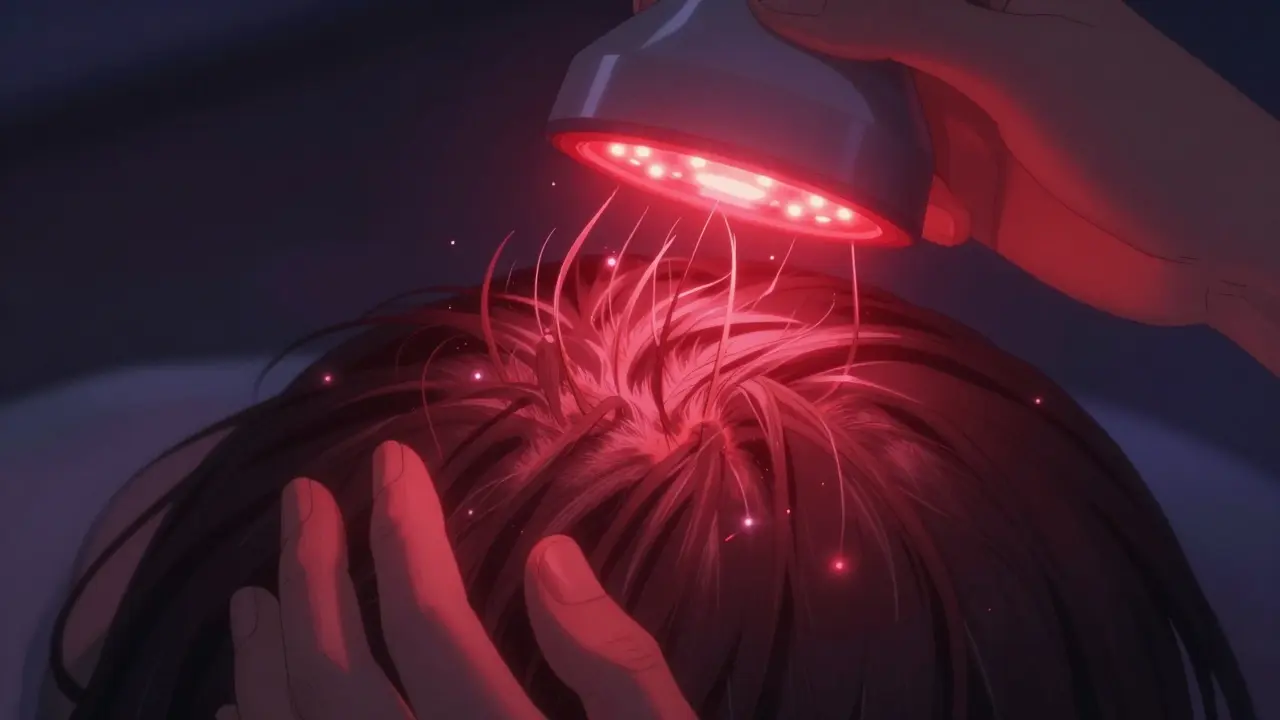
- Low-level laser therapy (LLLT) - Devices like iRestore or Capillus use red light to stimulate follicles. FDA-cleared. Used daily for 20-30 minutes. Studies show 65-90% of users see measurable improvement after 26 weeks.
- Nutrition - Biotin (5,000 mcg), zinc (15 mg), and iron (if your ferritin is below 70 ng/mL) can support regrowth. Don’t overdo it - more isn’t always better.
- Supplements like Nutrafol - Contains marine collagen, ashwagandha, curcumin. 63% of users report visible improvement after 6 months in Amazon reviews.
For chemotherapy-related loss, scalp cooling systems like DigniCap can help. They reduce blood flow to the scalp during treatment, so fewer drugs reach the follicles. Success rates? 50-65% hair retention. It’s uncomfortable - cold, tight, 90 minutes per session - but many cancer patients say it’s worth it.
What Doesn’t Work (And Why)
There’s a lot of noise out there. Avoid these myths:- Shampoos that “block DHT” - Unless you have androgenetic alopecia, this won’t help. Most drug-induced loss isn’t hormone-driven.
- Essential oils alone - Rosemary or peppermint oil might feel nice, but there’s no solid proof they reverse medication-induced shedding.
- Stopping minoxidil too soon - 89% of users experience initial shedding. If you quit at week 6, you’ll never see the results.
- Waiting too long to act - If you wait 12 months hoping it’ll fix itself, you might miss the window for faster regrowth.

The Emotional Toll
Hair loss isn’t just physical. It hits your confidence. A 2023 survey found 82% of people with drug-induced hair loss felt their self-esteem dropped. Nearly half withdrew from social situations.It’s okay to feel this way. Talk to someone. Join a community like Reddit’s r/HairLoss - 247,000 members share stories of recovery. Many say the turning point wasn’t a treatment - it was realizing this wasn’t permanent.
When to See a Dermatologist
If you’ve been shedding for more than 3 months after stopping the medication - or if your hair isn’t coming back at all - it’s time to see a specialist. They can:- Check your ferritin, thyroid, and vitamin levels
- Rule out other causes like alopecia areata
- Prescribe stronger treatments like finasteride or dutasteride (if appropriate)
- Recommend advanced options like exosome therapy (still experimental but showing promise in early trials)
Remember: The goal isn’t to get back to exactly how you looked before. It’s to get back to a version of yourself you feel comfortable in.
Final Thoughts
Medication-induced hair loss is frustrating - but it’s rarely permanent. Most people get their hair back. The key is catching it early, working with your doctor, and being patient. It takes time. But with the right approach, your hair will grow back.Can you get your hair back after stopping a medication that caused hair loss?
Yes, in most cases. If the hair loss was caused by telogen effluvium (the most common type), hair typically starts regrowing 3-6 months after stopping the medication, with full recovery in 9-12 months. For chemotherapy-induced anagen effluvium, regrowth often begins just 3-6 weeks after treatment ends.
How long after starting a new medication does hair loss begin?
It usually takes 2-4 months for hair loss to become noticeable after starting a new drug. This delay happens because the medication affects the hair follicle cycle, and it takes time for the affected hairs to shed. That’s why doctors use the "7-month rule" - any drug started within the last 7 months is a likely suspect.
Is minoxidil effective for medication-induced hair loss?
Yes. Minoxidil is the most studied and widely recommended treatment. Clinical trials show 40-50% improvement in hair density after 6 months of consistent use. It works best when started early and used daily. Most users see shedding in the first few weeks - this is normal and temporary.
Can supplements help with drug-induced hair loss?
Certain supplements can support regrowth if you’re deficient. Biotin (5,000 mcg), zinc (15 mg), and iron (if ferritin is below 70 ng/mL) are commonly recommended. Folic acid can reduce hair loss severity in people taking methotrexate. But supplements alone won’t reverse the problem - they work best alongside other treatments.
Does scalp cooling really work for chemo-related hair loss?
Yes. Devices like DigniCap reduce blood flow to the scalp during chemotherapy, limiting how much drug reaches the hair follicles. Studies show 50-65% hair retention in breast cancer patients on taxane-based chemo. It’s not perfect - it’s cold and takes 90 minutes per session - but many patients say the psychological benefit is worth it.
Should I stop my medication if I’m losing hair?
No - never stop a prescribed medication without talking to your doctor. Many drugs are essential for your health. Instead, ask if there’s an alternative with less risk of hair loss. For example, switching from one antidepressant to another might solve the problem without compromising your mental health.
How do I know if my hair loss is from medication or something else?
Medication-induced hair loss is usually diffuse - your whole scalp thins evenly. It’s not patchy like alopecia areata. If you started a new drug within the last 7 months and noticed increased shedding, it’s likely related. A dermatologist can confirm with a pull test, blood work, and a detailed medication history.
Reviews
thought it was just stress or my diet
turned out it was the med
talked to my doc and switched to bupropion
hair’s growing back slow but steady
felt like a balding wizard 😭
but minoxidil saved my dignity
now i rock the scalp glow like a boss
no one told me this could happen
switched to citalopram and now my hair is back
just dont panic
first 2 weeks felt like i was losing more
then boom-new fuzz appeared
now my scalp looks like a baby’s head again lol
it’s not vanity, it’s belonging
when you lose it, you lose a little piece of your story
and that’s okay to feel
you just dont have strong genes
thought he’d think i was shallow
he just said "oh that’s common with lisinopril" and switched me
so simple