
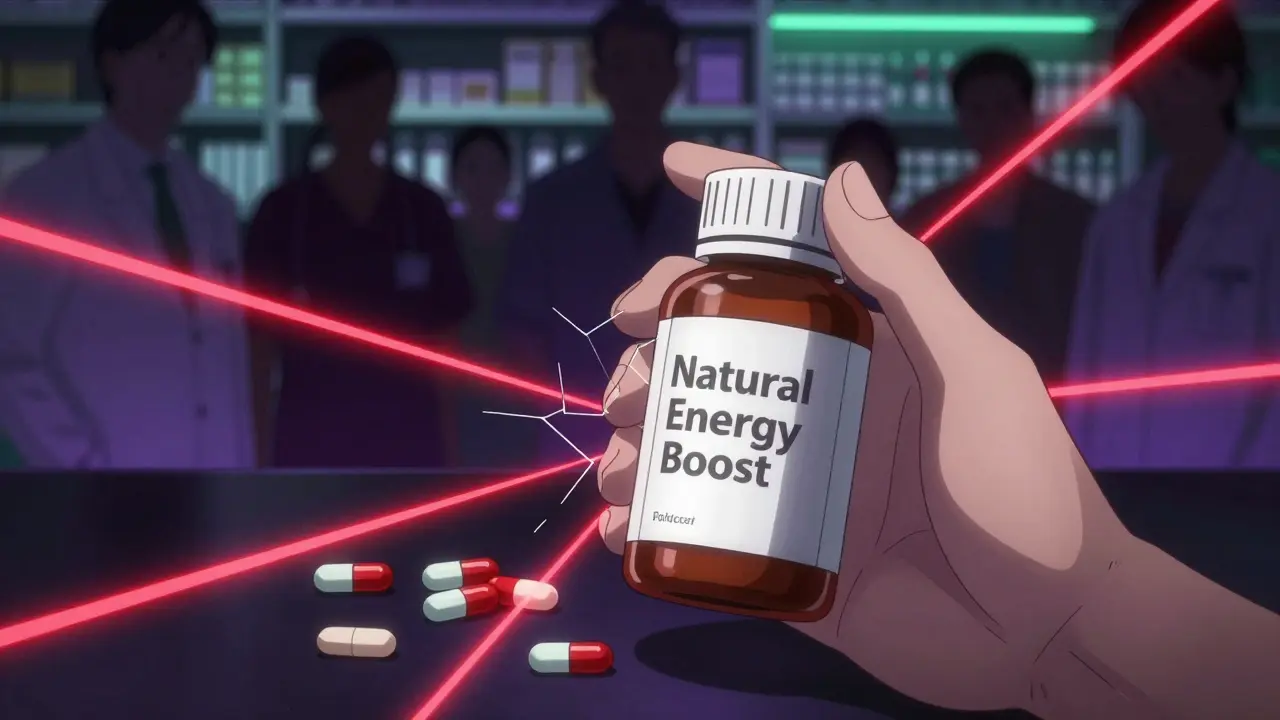
People think if it’s natural, it’s safe. That’s a dangerous myth. You take a vitamin, an herbal pill, or a protein powder because it’s labeled "all-natural" or "no side effects." But here’s the truth: medication risks aren’t just about prescriptions. Dietary supplements can be just as dangerous-sometimes more so-because no one’s checking what’s really inside them.
Supplements Aren’t Regulated Like Medicines
The FDA doesn’t test dietary supplements before they hit the shelf. That’s not a loophole-it’s the law. Under the Dietary Supplement Health and Education Act of 1994, companies can sell anything they want as long as they don’t claim it cures diseases. No proof of safety. No proof it even works. The FDA only steps in after someone gets hurt. By then, thousands may have already taken it.
Compare that to prescription drugs. Before a pill like warfarin or metformin gets approved, it goes through years of clinical trials, hundreds of patients, and strict safety reviews. Supplements? One company in Ohio can mix ginkgo, bitter orange, and caffeine into a "fat burner," ship it nationwide, and the FDA won’t touch it unless someone ends up in the ER.
Interactions Can Kill-And You Might Not Even Know
Take St. John’s wort. It’s sold as a "natural mood booster." But if you’re on birth control, antidepressants, or even HIV meds, it can cut their effectiveness in half. Clinical studies show it drops cyclosporine levels by 50-60%. That’s not a side effect-it’s a medical emergency for transplant patients.
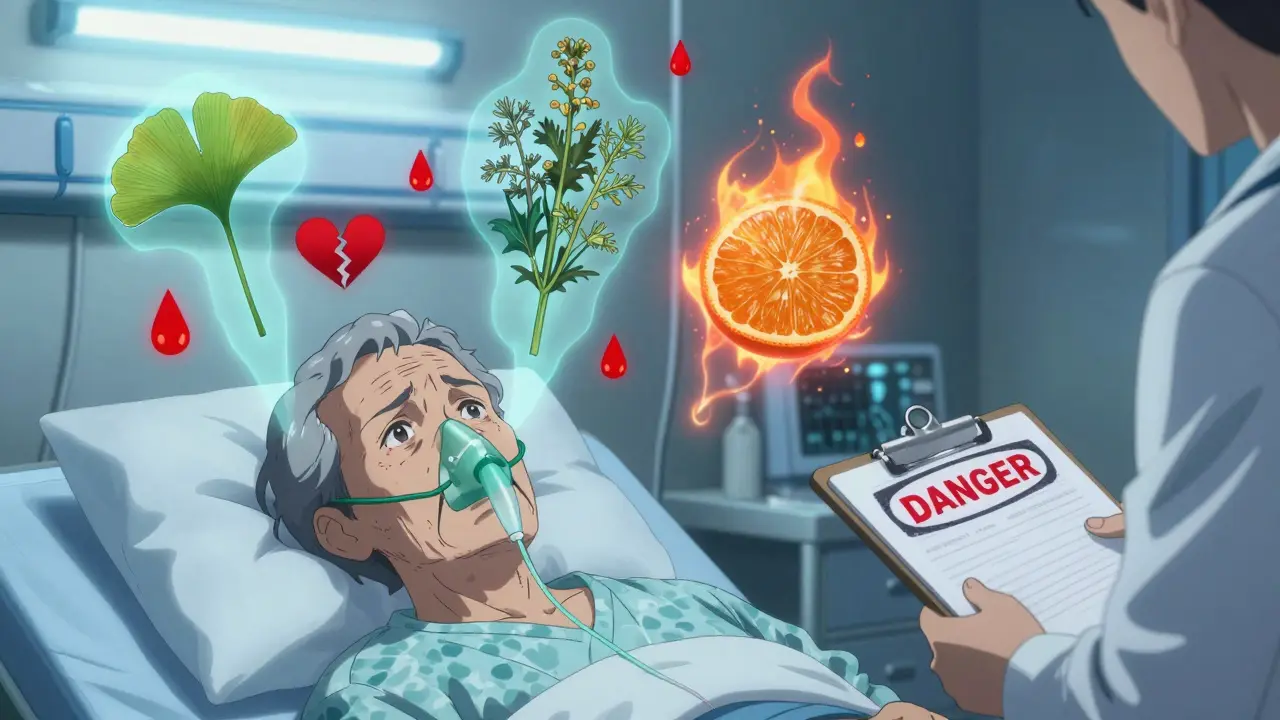
Or consider ginkgo biloba. People take it for memory. But if you’re on aspirin or warfarin, it can turn a minor cut into a life-threatening bleed. A 68-year-old woman in Ohio was hospitalized in 2022 after combining ginkgo with daily aspirin. She lost over two pints of blood. Her doctor said if she’d waited another day, she might not have made it.
Even common vitamins carry risks. Vitamin E at doses over 400 IU per day increases your chance of a hemorrhagic stroke by 10%. Vitamin A? More than 10,000 IU daily for months can wreck your liver and blur your vision. And vitamin D? Taking 300,000 IU in a single monthly dose? That’s linked to a 15-20% rise in falls and fractures in older adults.
Herbs Are Not Harmless
Herbal products are the biggest offenders. They make up only 19% of supplement sales-but cause 38% of all adverse events. Why? Because they’re complex. One bottle of "turmeric for inflammation" might contain 12 different plant extracts, some of which aren’t even listed on the label.
Goldenseal can interfere with liver enzymes that break down over 50% of common medications. Ashwagandha, popular for stress relief, can spike blood pressure when mixed with beta-blockers. One Reddit user reported heart palpitations and insomnia after taking 500mg of ashwagandha with his blood pressure pill. He thought it was "just a supplement." His doctor said it was a textbook interaction.
And then there’s bitter orange. Found in weight-loss teas and energy boosters, it acts like ephedra-the banned stimulant. It raises blood pressure by 10-15 mmHg and can trigger irregular heart rhythms. The FDA added it to their high-risk ingredient list in 2023. But you can still buy it online, in gas stations, and on Amazon.
Cancer Patients Are at Extreme Risk
If you’re undergoing chemotherapy or radiation, supplements can sabotage your treatment. Antioxidants like vitamins C and E may reduce chemotherapy effectiveness by 25-30%. One patient at Memorial Sloan Kettering had to delay radiation for three weeks because vitamin E caused severe skin burns during treatment. Her oncologist told her: "You’re not helping yourself-you’re making your cancer harder to treat."
The American Cancer Society says: avoid all supplements during cancer treatment unless your doctor says otherwise. Yet 40% of cancer patients take them anyway. Why? Because they’re told it will "boost immunity" or "reduce side effects." But those claims? Mostly unproven. The risk? Real and deadly.
What’s Really in Your Bottle?
Third-party testing by ConsumerLab and the FDA finds that 1 in 4 supplements don’t contain what’s on the label. Some have hidden drugs-like sildenafil (the active ingredient in Viagra) in "male enhancement" pills. Others have heavy metals, pesticides, or banned stimulants. A 2022 FDA report found 17% of weight-loss supplements contained unapproved synthetic compounds.
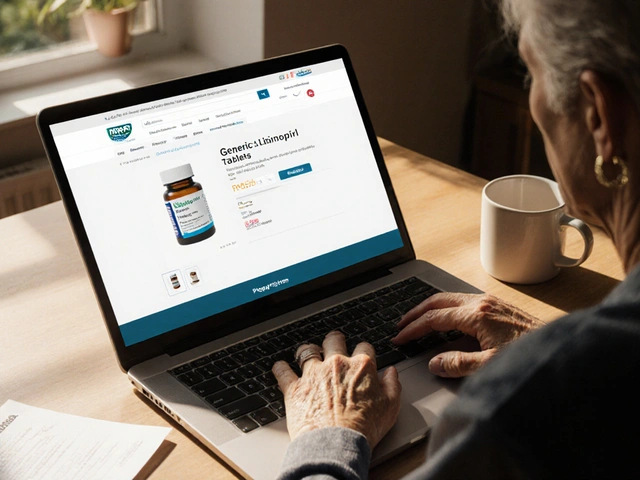
And online sales? They’re the wild west. Nearly half of all supplement-related adverse events come from products bought online, where quality control is nonexistent. You’re not buying from a pharmacy. You’re buying from a warehouse in China, shipped under a fake brand name.
Who’s Most at Risk?
Older adults. People on multiple medications. Pregnant women. Cancer patients. Anyone with liver or kidney disease. These groups are more likely to suffer serious reactions because their bodies process substances slower. Yet they’re also the most likely to pop supplements-thinking they’ll feel better, live longer, or avoid doctor visits.
Here’s the kicker: 50% of American adults take supplements. But only 33% tell their doctor. That means two out of three people are taking something their doctor doesn’t know about. That’s not just risky-it’s reckless.

How to Protect Yourself
You don’t have to quit supplements. But you need a smarter approach.
- Make a full list of everything you take-prescriptions, OTC drugs, vitamins, herbs, teas, powders. Use the NIH’s "My Dietary Supplement and Medicine Record" tool. It’s free, printable, and used by over 1,200 clinics.
- Bring it to every appointment. Don’t assume your doctor will ask. Say: "Here’s everything I’m taking. Are any of these dangerous with what you’ve prescribed?"
- Avoid high-risk combos. Never mix St. John’s wort with antidepressants, birth control, or blood thinners. Avoid vitamin K if you’re on warfarin. Skip antioxidants during chemo unless your oncologist says yes.
- Buy from trusted sources. Look for USP-verified or NSF-certified labels. They don’t guarantee safety, but they mean the product was tested for what’s listed on the bottle.
- Stop immediately if something feels wrong. Unusual fatigue, rash, heart palpitations, dark urine, or unexplained bruising? Stop the supplement. Call your doctor. Report it to the FDA’s MedWatch system.
What’s Changing? And Why It Matters
The FDA is finally trying to catch up. In 2023, they launched the Dietary Supplement Ingredient Advisory List, flagging 12 dangerous compounds like yohimbe and bitter orange. They’re expanding LiverTox to track which supplements damage the liver-green tea extract alone is linked to over 20% of supplement-related liver injuries.
There’s also a new bill, the Dietary Supplement Listing Act, that would force companies to notify the FDA before selling new products. Right now, there’s a 6-12 month gap between a product hitting shelves and the FDA realizing it’s dangerous. That’s too long.
And now, the FDA is using AI to scan social media for early warning signs. In a pilot study, they analyzed 1.2 million posts and correctly flagged 87% of potential safety issues before they made headlines. That’s progress. But it’s still reactive.
You’re the Last Line of Defense
No regulator, no lab test, no algorithm can protect you like informed choices. You’re the one who picks up the bottle. You’re the one who swallows it. You’re the one who notices something’s off.
Just because something is sold in a health food store doesn’t mean it’s safe. Just because it’s labeled "natural" doesn’t mean it’s harmless. Medications and supplements both contain active chemicals. Both can interact. Both can kill.
Don’t trust marketing. Don’t assume your doctor knows. Don’t wait for a crisis. Ask. Check. Report. Your life might depend on it.
Can dietary supplements really cause liver damage?
Yes. The NIH’s LiverTox database now lists 45 supplement ingredients linked to liver injury. Green tea extract is the most common culprit, responsible for 22% of reported cases. Other offenders include usnic acid, black cohosh, and weight-loss products containing stimulants. Symptoms include jaundice, dark urine, nausea, and abdominal pain. If you notice these after starting a supplement, stop immediately and get tested.
Are multivitamins safe to take every day?
For most healthy people, a standard multivitamin is low-risk. But they’re not necessary unless you have a diagnosed deficiency. High-dose multivitamins (especially those with extra vitamin A, D, or iron) can be harmful over time. A 2021 study in JAMA found no benefit in preventing heart disease or cancer-and a slight increase in mortality risk among those taking high-dose supplements. If you’re eating a balanced diet, you’re probably getting enough.
Why don’t supplement labels list side effects like drug labels do?
Because they’re not required to. Under DSHEA, supplements are treated like food, not drugs. Drug labels must list all known side effects, contraindications, and interactions. Supplement labels only need to list ingredients. Many don’t even list dosages clearly. That’s why you’ll see a bottle saying "500mg of herbal blend"-with no breakdown of what’s inside or how much of each component.
Can I take supplements before surgery?
No-not without approval. Supplements like ginkgo, garlic, fish oil, and vitamin E can increase bleeding risk during surgery. Others, like kava or valerian, can interfere with anesthesia. The American Society of Anesthesiologists recommends stopping all supplements at least two weeks before any procedure. Many hospitals now require you to disclose supplement use on pre-op forms.
What should I do if I think a supplement made me sick?
Stop taking it immediately. See your doctor and ask them to report it to the FDA through MedWatch. You can also report it yourself online at fda.gov/medwatch. Include the product name, brand, lot number, and what symptoms you experienced. These reports help the FDA identify dangerous products. In 2022, they received over 18,000 supplement-related reports-most from people like you.
Reviews
I used to take every supplement under the sun thinking it was "natural" so it had to be safe. Then I started having unexplained heart palpitations. Turned out it was the ashwagandha I was taking with my blood pressure med. My doctor nearly had a heart attack. Now I check every single thing with them before I even open a bottle.
This is exactly why I made a printed list of everything I take and bring it to every appointment. My PCP didn’t even know I was taking turmeric until I showed up with the bottle. She said it was interfering with my thyroid med. I didn’t even realize supplements could do that.
It’s not just about regulation-it’s about cultural ignorance. People treat supplements like candy because they’ve been sold a fantasy by marketing departments who know how to exploit the placebo effect. The fact that the FDA can’t act until someone dies is not a loophole-it’s a national disgrace. And yet, people still buy "detox teas" with senna and cascara sagrada like it’s a wellness ritual. It’s not wellness. It’s self-harm with a pretty label.
As a medical professional with over two decades of clinical experience, I must emphasize that the structural deficiencies in the regulatory framework governing dietary supplements represent a profound public health vulnerability. The absence of pre-market safety verification, coupled with widespread consumer misconception regarding the term "natural," creates an environment in which preventable adverse events are not merely possible-they are statistically inevitable. The data presented here is not anecdotal; it is epidemiologically robust and demands systemic reform.
Western medicine is a scam. Big Pharma controls everything. Supplements are the only real medicine. They don’t want you to know this because they make billions off pills. The FDA is in their pocket. Everything you read here is propaganda. Natural herbs have been used for thousands of years. Why trust a lab that makes you sick instead of a root that’s been healing people since ancient times?
I read this whole thing. It’s well-researched. But you know what’s worse? The fact that people still don’t get it. They’ll read this, nod along, then go buy the same ginkgo biloba because it says "supports memory" on the front. They don’t read the tiny print. They don’t check interactions. They don’t care. They want to feel better without effort. That’s the real problem.
They’re putting fluoride and lithium in the water too. You think this is about supplements? No. This is about control. The FDA doesn’t want you healthy. They want you dependent. They let dangerous stuff in because they know if you get sick, you’ll go to them. Then they sell you more drugs. This is all part of the plan. Look at the dates on the reports. They always come out right after elections. Coincidence? I think not.
Back home in India, we’ve always used turmeric, ashwagandha, and neem-but we didn’t just pop pills. We used them in food, in teas, with guidance from elders or Ayurvedic practitioners. Now people in the U.S. buy 1000mg capsules of isolated extracts and think it’s the same thing. It’s not. It’s like taking pure caffeine powder instead of drinking coffee. You’re not getting the balance. You’re not getting the context. That’s why things go wrong.
Stop waiting for someone else to fix this. Your health is your responsibility. Make the list. Bring it to your doctor. Ask the questions. Say "I’m taking this-what do you think?" Most doctors will appreciate it. I did. My blood pressure dropped 15 points after I stopped the fish oil they didn’t know I was on. You don’t need a PhD to be safe. You just need to care enough to ask.
It’s ironic that we live in an age of unprecedented scientific literacy, yet so many people place greater trust in Amazon reviews than in peer-reviewed journals. The cognitive dissonance here is staggering. One would assume that if a product is marketed as "natural," it would be subject to the same scrutiny as any other substance entering the human system. Yet we tolerate a regulatory vacuum with the casualness of someone ignoring a warning label on a toaster.
They’re letting Chinese factories pump out fake supplements with synthetic drugs inside. This is why America is weak. We used to make things here. Now we import poison disguised as health. The government is letting them in because they’re too lazy to protect us. Wake up. This is a war. And they’re poisoning our bodies while we scroll TikTok.
I took a "natural sleep aid" with melatonin and valerian. Next thing I know, I’m in the ER with my heart racing and my vision blurry. They said it was the valerian mixed with my antidepressant. I almost died. Now I don’t trust anything that doesn’t come in a pharmacy with a barcode. Even then, I’m suspicious. They’re all out to get you. Always have been.
My grandma in Punjab used to make herbal teas for everything-cough, digestion, even stress. She never measured anything. Just a pinch of this, a sprig of that. But she knew the body. She knew the season. She knew when to stop. Today, people take pills like they’re cereal. They don’t listen to their bodies. They don’t slow down. They don’t respect the medicine. We’ve lost the wisdom. Now we just buy the bottle and hope.
The entire supplement industry is a performative illusion designed to commodify anxiety. You’re not buying health-you’re buying the aesthetic of wellness. The labels are designed to trigger dopamine: "clean," "pure," "ancient wisdom," "bioavailable." These are not scientific terms-they are marketing semiotics. The real product isn’t the capsule. It’s the fantasy that you can outsource your health to a bottle bought at Whole Foods. And that fantasy? It’s lethal.
My doctor just told me to stop all antioxidants during chemo. I thought they were helping. Turns out they were shielding my cancer cells. I felt so stupid. But now I’m learning. And I’m telling everyone I know. Don’t assume. Ask. Always ask.