

Antibiotic stewardship isn’t just about stopping superbugs. It’s about keeping patients safe from the very drugs meant to help them. Every year, millions of people in the U.S. get antibiotics they don’t need. And every time that happens, their bodies pay a price - not just in resistance, but in real, painful, sometimes life-threatening side effects.
Why Antibiotics Can Hurt You Even When They’re Supposed to Help
Antibiotics don’t just kill the bad bacteria causing your infection. They wipe out the good ones too - the ones living in your gut, mouth, and skin that keep your immune system balanced. When those helpful microbes vanish, dangerous ones like Clostridioides difficile (C. diff) take over. The result? Severe diarrhea, abdominal cramps, fever, and in worst cases, colon damage or death. The CDC reports that at least 30% of outpatient antibiotic prescriptions in the U.S. are unnecessary. That’s over 47 million prescriptions a year - many for viral infections like colds or flu, where antibiotics do nothing. And yet, patients still get them. Why? Sometimes it’s pressure from patients expecting a pill. Sometimes it’s doctors unsure if it’s bacterial or viral. Either way, the cost is paid by the patient’s body. Studies show that inappropriate antibiotic use increases the risk of C. diff infection by 7 to 10 times. In hospitals, where broad-spectrum antibiotics are common, C. diff rates drop by 25-30% when stewardship programs are in place. That’s not just a statistic. That’s someone avoiding a week in the hospital, a colostomy bag, or worse.What Antibiotic Stewardship Actually Looks Like in Practice
Antibiotic stewardship isn’t a buzzword. It’s a set of proven actions taken by healthcare teams to make sure antibiotics are used only when necessary, and used correctly when they are. Here’s what it looks like on the ground:- A pharmacist reviews a patient’s antibiotic order and suggests switching from IV to oral pills after 48 hours - because the patient is improving and oral works just as well.
- A doctor uses a blood test called procalcitonin to decide whether a lung infection is bacterial. If levels are low, they hold off on antibiotics - even if the patient has a cough.
- An emergency department uses clinical decision tools to avoid prescribing antibiotics for sinus infections unless there’s high fever, facial pain lasting over 10 days, or thick green discharge.
- A hospital tracks which antibiotics are prescribed most and flags doctors who consistently overuse them - then offers one-on-one coaching, not punishment.
The Hidden Cost of Overprescribing - Beyond C. diff
C. diff gets all the attention, but it’s not the only side effect. Antibiotics can trigger:- Allergic reactions - from rashes to anaphylaxis
- Kidney or liver damage, especially with long-term use
- Yeast infections (oral thrush, vaginal candidiasis)
- Drug interactions - for example, certain antibiotics making birth control less effective
- Long-term gut microbiome disruption, linked to obesity, asthma, and even depression

Who Runs These Programs - And Why It Matters
You won’t find antibiotic stewardship led by a nurse or a general practitioner alone. Effective programs are led by specialists: an infectious disease physician and a clinical pharmacist with advanced training in antimicrobials. The CDC recommends at least 1.5 full-time equivalents (FTE) per hospital - that’s half a doctor and one full-time pharmacist. Why so much? Because choosing the right antibiotic isn’t simple. It requires understanding:- Which bugs are common in your hospital
- Which drugs penetrate which tissues (like the brain, lungs, or urine)
- How kidney or liver function changes dosing
- Which antibiotics are most likely to cause C. diff or resistance
Why Outpatient Settings Are the New Front Line
Most antibiotic overuse happens outside hospitals - in doctor’s offices, urgent care centers, and ERs. That’s where 80% of antibiotic prescriptions begin. The CDC’s 2023 update to its Core Elements framework now pushes hard on outpatient stewardship. Why? Because if you stop overprescribing at the front door, you prevent the cascade of harm that follows. Simple tools are making a difference:- Electronic alerts that pop up when a doctor tries to prescribe amoxicillin for a viral sore throat
- Printed handouts explaining why antibiotics won’t help a cold
- Peer comparison reports - showing doctors how their prescribing compares to colleagues
The Big Picture: Stewardship Isn’t Optional Anymore
In 2017, The Joint Commission - the group that accredits U.S. hospitals - made antibiotic stewardship mandatory. If your hospital doesn’t have a program, you lose accreditation. That’s not a suggestion. It’s a rule. And it’s working. In 2014, only 40% of U.S. hospitals had formal stewardship programs. By 2023, that number jumped to 88%. The market for stewardship tools and consulting is growing at 12.3% per year - projected to hit $1.8 billion by 2027. But gaps remain. Only 48% of nursing homes have programs. That’s dangerous. Elderly patients are more vulnerable to side effects, and antibiotics are often given without proper testing. The World Health Organization warns that without stewardship, antimicrobial resistance could kill 10 million people a year by 2050. That’s more than cancer. And behind every death statistic is a person who got an antibiotic they didn’t need - and paid the price.What You Can Do - As a Patient
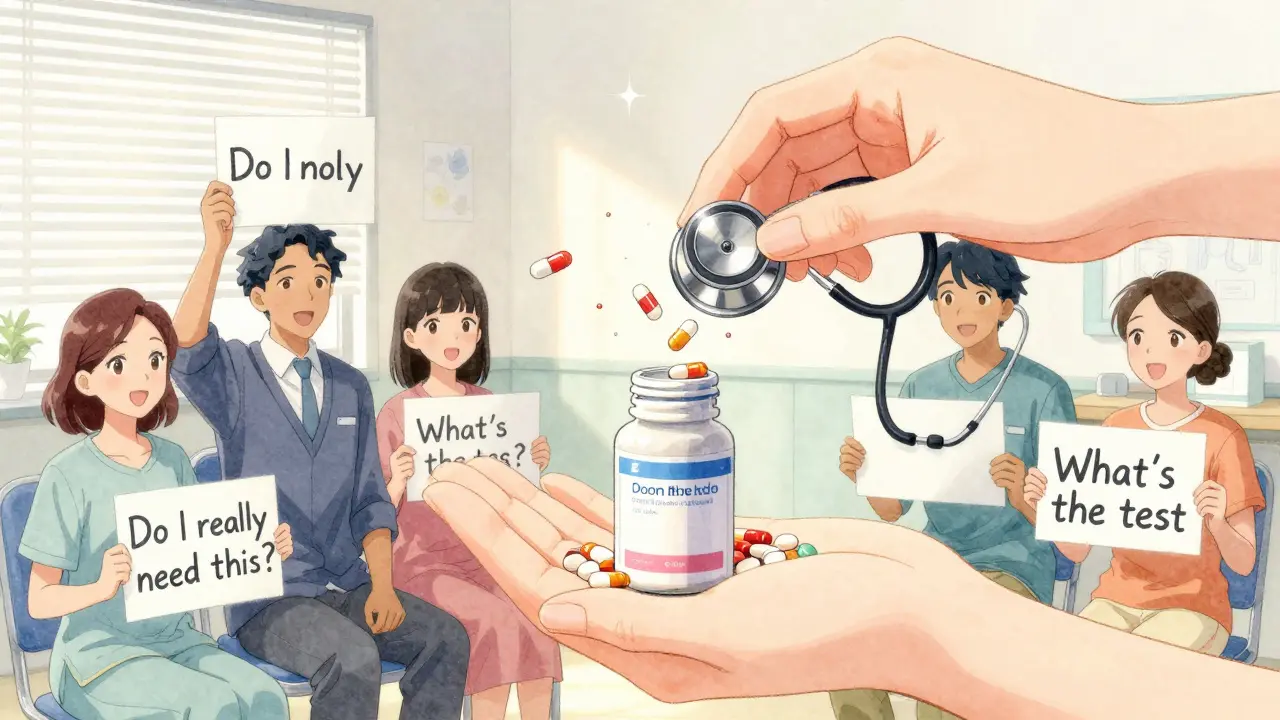
You don’t need to be a doctor to help. Here’s how you can protect yourself:- Ask: “Do I really need this antibiotic?” If the answer is “We’re not sure,” push for a test.
- Ask: “Is there a narrower-spectrum option?” Broad-spectrum drugs kill more good bacteria.
- Ask: “How long do I really need to take this?” Many courses are too long. Seven days is often enough.
- Never save leftover antibiotics. Never share them. Never take them for a friend’s cold.
- If you develop diarrhea after antibiotics, tell your doctor immediately. Don’t wait.
What is the main goal of antibiotic stewardship?
The main goal is to ensure antibiotics are used only when necessary, in the right dose, for the right bug, and for the shortest effective time. This protects patients from side effects like C. diff infections, reduces antibiotic resistance, and preserves the effectiveness of these life-saving drugs for future generations.
Can antibiotic stewardship really reduce side effects?
Yes. Studies show hospital stewardship programs reduce C. diff infections by 25-30%, lower overall adverse drug events by over 20%, and cut unnecessary antibiotic use by 15-30%. These aren’t small gains - they’re life-saving changes that prevent hospitalizations, surgeries, and deaths.
Why do doctors still overprescribe antibiotics?
Many factors contribute. Some doctors fear missing a bacterial infection. Others face pressure from patients who expect a prescription. Diagnostic uncertainty - especially in emergency rooms - makes it hard to tell viral from bacterial infections without tests. Stewardship programs help by providing clear guidelines, rapid diagnostics, and peer feedback to reduce these pressures.
Are there alternatives to antibiotics for common infections?
For many viral infections - like colds, flu, and most sore throats - there are no antibiotics. But there are alternatives: rest, fluids, pain relievers, saline nasal sprays, and humidifiers. For some bacterial infections, watchful waiting is now recommended - delaying antibiotics for 48-72 hours to see if the body clears it on its own. This reduces unnecessary exposure.
How long should I take an antibiotic if my symptoms improve?
Always finish the full course unless your doctor says otherwise. But here’s the twist: many courses are longer than needed. For common infections like urinary tract infections or pneumonia, 5-7 days is often enough. New guidelines are moving away from 10-14-day courses. Ask your doctor: “Is this course length based on current evidence?”
What should I do if I have diarrhea after taking antibiotics?
Don’t ignore it. Diarrhea after antibiotics could be C. diff - a serious infection. Contact your doctor immediately. Don’t take over-the-counter anti-diarrhea meds without medical advice, as they can trap the toxin in your gut. Your doctor may order a stool test and start specific treatment if needed.

Reviews
Let me tell you-I had C. diff after a simple sinus infection. Antibiotics? Yeah, they gave me amoxicillin. Three days later, I was in the ER, dehydrated, screaming about cramps. No one warned me. No one even asked if I’d ever had GI issues before. I’m still scared to take any antibiotic now. I don’t trust them. Not even a little.
And don’t get me started on how doctors act like it’s no big deal. Like it’s just ‘a little diarrhea.’ No. It’s not. It’s your colon turning against you. I had to quit my job for six weeks. Six weeks. Because some idiot thought a cold needed pills.
This is SO important!! I work in a clinic and I see this every single day-patients walking in demanding antibiotics for their runny noses, and we have to gently explain that no, honey, your body’s got this. It’s frustrating, but also kind of empowering when they finally get it.
I had a mom last week who cried because she felt guilty for not pushing harder for a script. I gave her a printed handout and a hug. Two weeks later, she came back saying her kid’s cold got better on its own-and she felt proud. That’s the win. That’s what stewardship looks like on the ground. We’re not villains. We’re guardians.
And yes, the procalcitonin test? Life-changing. It’s like having a little bacterial detective in your pocket. More hospitals need this. More docs need training. More patients need to know: sometimes, waiting IS the treatment.
Oh please. ‘Antibiotic stewardship’ is just another way for the medical-industrial complex to shift blame onto doctors while they profit from expensive diagnostics and ‘consulting services.’
Let’s be real-most of these ‘stewardship programs’ are just bureaucratic theater. Hospitals get accredited, pharmaceutical reps keep pushing their newest broad-spectrum drugs, and patients still get overprescribed because the system is broken, not because doctors are lazy.
And don’t even get me started on ‘peer comparison reports.’ Next thing you know, we’ll be rating doctors like Uber drivers. ‘Your prescribing habits are below average, Dr. Smith. Please complete our 45-minute mandatory empathy module.’
Meanwhile, real problems-like rural access to testing, or insurance not covering rapid diagnostics-get ignored. This isn’t science. It’s performative virtue signaling dressed up in CDC branding.
In India, we don’t have the luxury of procalcitonin tests or electronic alerts. Antibiotics are sold over the counter at every corner pharmacy. Kids get them for fever. Adults get them for cough. Grandmas get them for ‘body weakness.’
But here’s the thing-we’ve learned the hard way. My cousin died from C. diff after taking antibiotics for a tooth infection. He was 24. No one knew what was happening. No one had heard of it.
So now, my family doesn’t touch antibiotics unless a doctor says it’s bacterial. We wait. We drink warm water. We rest. We use turmeric. It’s not glamorous. But it’s saved lives.
I wish more people in the U.S. understood: sometimes, the medicine isn’t the solution. Sometimes, the medicine is the problem.
Let’s talk about the microbiome. This isn’t just about C. diff-it’s about long-term dysbiosis. Antibiotics don’t just wipe out pathogens; they decimate commensal flora that regulate immune tolerance, metabolize bile acids, produce short-chain fatty acids, and modulate the gut-brain axis.
Studies now link early-life antibiotic exposure to increased risk of IBD, type 1 diabetes, asthma, and even neurodevelopmental disorders. The gut isn’t just a pipe-it’s an endocrine organ.
And yes, narrowing spectrum matters. Amoxicillin vs. ceftriaxone? Huge difference in collateral damage. But most PCPs don’t know the pharmacokinetics of beta-lactams vs. macrolides. That’s why pharmacist-led stewardship is non-negotiable. You need someone who understands MICs, PK/PD, and resistance patterns.
Also-yes, 5 days is often enough. The 10-day rule is outdated. The 2021 IDSA guidelines explicitly recommend shorter courses for CAP, UTI, and cellulitis. But old habits die hard. Especially when patients expect a full script.
OMG I CRIED READING THIS 😭😭😭
Like... I had to get a colostomy bag after C. diff. I was 31. I had a sinus infection. I took amoxicillin. I thought it was ‘just a pill.’
Now I carry a little card in my wallet that says: ‘I survived C. diff. Don’t give me antibiotics unless you’ve tested.’
And I’m so mad at my doctor. I’m so mad at the system. I’m so mad that no one warned me.
Thank you for writing this. I’m sharing it with everyone. 💔🩹❤️🩹
While the empirical evidence supporting antibiotic stewardship is robust and statistically significant, one must acknowledge the methodological limitations inherent in observational studies conducted in heterogeneous clinical environments.
For instance, the 25–30% reduction in C. diff incidence cited is derived from quasi-experimental designs with potential confounding variables, including concurrent infection control measures, changes in hand hygiene compliance, and variations in stool testing protocols.
Moreover, the assumption that reducing antibiotic prescriptions directly correlates with improved patient outcomes presumes perfect adherence to guidelines, which is rarely observed in real-world practice.
Furthermore, the economic projections of a $1.8 billion market by 2027 suggest a potential conflict of interest wherein stewardship initiatives may be incentivized by commercial stakeholders rather than purely clinical necessity.
One must therefore temper enthusiasm with epistemological caution.
Y’all. I’m a nurse. I’ve seen it. I’ve held people’s hands while they screamed from C. diff pain. I’ve watched families cry because their grandma got a ‘simple’ antibiotic and never came home.
And yeah, some docs are lazy. Some patients are entitled. But guess what? We can fix this. Together.
Here’s what I tell my patients: ‘If your doc says you need antibiotics, ask: ‘Is this the narrowest one? How long? Can we wait 48 hours?’ You’re not being a pain-you’re being a hero.
And doctors? You’re not alone. Use the tools. Let the pharmacist help. Don’t be afraid to say ‘I don’t know’-then look it up. We’re all learning.
This isn’t about blame. It’s about being smarter. And yeah, I’m gonna post this on every Facebook group I’m in. Let’s change this.
❤️🩺 #antibioticawareness