

Sodium & Blood Pressure Medication Calculator
This tool helps you estimate your daily sodium intake and understand how it might impact the effectiveness of your blood pressure medications. Based on the latest research, reducing sodium can significantly improve how well your medications work.
Daily Sodium Goals
The American Heart Association recommends 1,500 mg or less for those on blood pressure medications. Most people consume 4,500 mg daily (nearly double the ideal amount).
Enter your total daily sodium from all sources (food, restaurant, packaged items).
Enter your daily sodium intake to see how it affects your medications.
Common Sodium Sources
When you're on blood pressure medication, the salt on your dinner plate might be working against you-not just your doctor’s prescription. It’s not just about avoiding the shaker. The real problem? Hidden sodium in packaged foods, restaurant meals, and even bread. And if you’re not watching it, your meds might not be doing their job.
Why Salt Makes Blood Pressure Medications Less Effective
Your body holds onto water when you eat too much sodium. That extra fluid increases pressure in your blood vessels, forcing your heart to work harder. Blood pressure medications like ACE inhibitors, ARBs, and diuretics are designed to counteract this-but they can’t fully overcome a constant flood of sodium. A 2023 study in JAMA found that people on these drugs still saw their systolic blood pressure drop by 6 mm Hg when they cut sodium by about one teaspoon per day. That’s the same drop you’d get from starting a new medication.
Here’s the catch: sodium doesn’t just raise blood pressure. It also makes your kidneys hold onto more fluid, which reduces how well diuretics work. It thickens artery walls, making ACE inhibitors less effective at relaxing them. And for people with kidney disease or diabetes, high salt intake increases protein leakage into urine-a sign of worsening damage that meds struggle to fix when sodium is high.
The Science Behind the Numbers
The JAMA study followed 213 adults, mostly over 60, with and without high blood pressure. Their usual sodium intake? Around 4,500 mg per day-nearly double the American Heart Association’s upper limit of 2,300 mg. When researchers cut their intake to just 500 mg daily, systolic pressure dropped from 125 to 119 mm Hg. That’s a 6-point drop on average, even while people stayed on their regular meds.
Not everyone responds the same. About 25-30% of people are “non-responsive” to sodium changes, meaning their blood pressure barely budges. But for the rest-70-75%-reducing salt delivers measurable results. The effect is strongest in older adults, Black individuals, and those with higher baseline blood pressure. In fact, for hypertensive patients, each 100 mmol reduction in daily sodium lowered systolic pressure by over 5 mm Hg. That’s more than double the effect seen in people with normal blood pressure.
What Medications Are Most Affected?
Not all blood pressure drugs are equally impacted by sodium. The biggest winners from low-sodium diets are:
- ACE inhibitors (like lisinopril): Work better when sodium is low because they help relax blood vessels, and less fluid means less resistance.
- ARBs (like losartan): Similar mechanism-less sodium = better vessel dilation.
- Diuretics (like hydrochlorothiazide): These flush out fluid, but if you keep eating salt, your body just reabsorbs it. Low sodium lets them work as intended.
Calcium channel blockers and beta-blockers show less sensitivity to sodium changes, but that doesn’t mean you can ignore salt. Even if your meds aren’t directly weakened, excess sodium still raises your overall blood pressure burden.
Where Is All the Sodium Hiding?
Most people think the salt shaker is the enemy. It’s not. The FDA says 70% of dietary sodium comes from packaged and restaurant foods. That means:
- A single slice of store-bought bread can have 230 mg sodium.
- One cup of canned soup? Often over 800 mg.
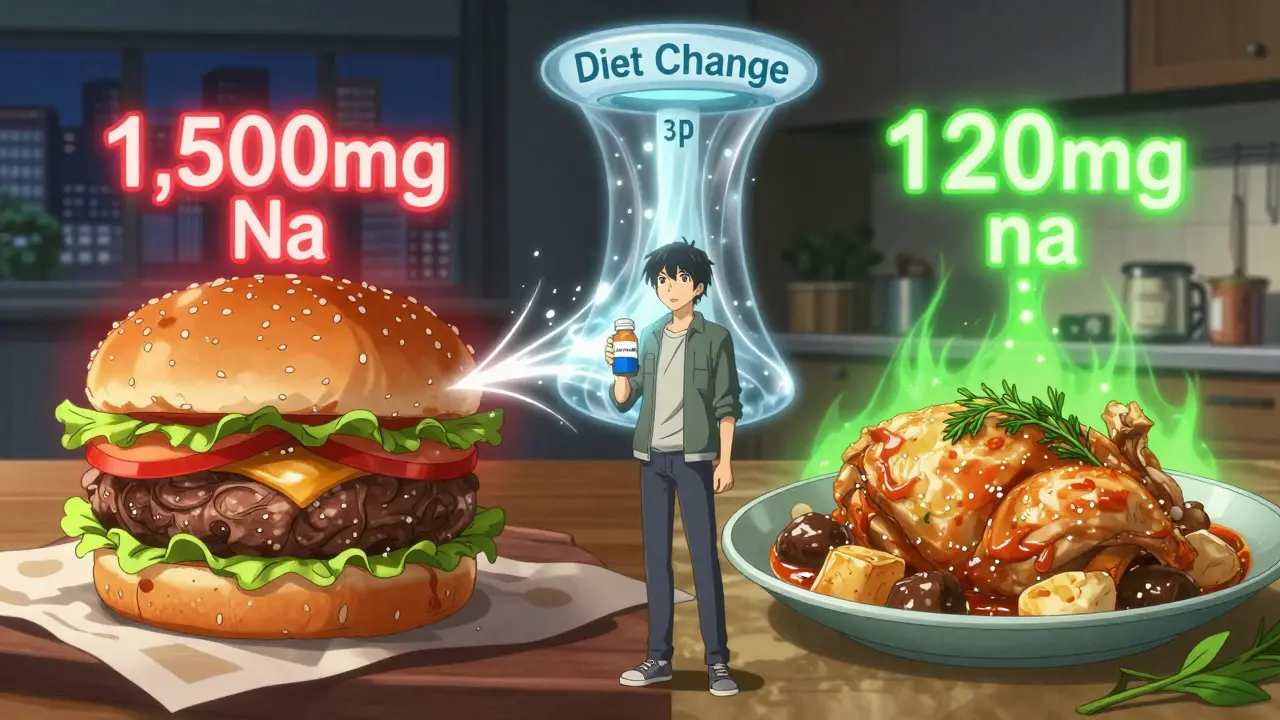
- A fast-food burger? Easily 1,500 mg or more.
- Even “healthy” snacks like granola bars, frozen meals, and deli meats are loaded.
Check labels for “mg of sodium,” not % Daily Value. That percentage is based on 2,300 mg, but if you’re trying to get under 1,500 mg (the ideal target), you need to be stricter. Look for products with less than 140 mg per serving-that’s the FDA’s definition of “low sodium.”
How to Cut Sodium Without Sacrificing Flavor
You don’t need bland food to lower sodium. Here’s what works:
- Use herbs and spices: Garlic powder, smoked paprika, lemon zest, cumin, and black pepper add punch without salt.
- Cook at home: Even if you use a little salt, you control the total amount. Restaurant meals are often 2-3 times saltier than home-cooked versions.
- Choose fresh or frozen vegetables: No added salt. Rinse canned beans and vegetables under water to remove 30-40% of sodium.
- Try potassium salt substitutes: Products like NoSalt or Nu-Salt replace sodium with potassium, which helps relax blood vessels. But talk to your doctor first-especially if you have kidney disease or take certain meds like ACE inhibitors, which can raise potassium levels dangerously.
One woman in the JAMA study switched from eating instant ramen daily to cooking chicken with ginger, garlic, and soy sauce (low-sodium version). Within 10 days, her systolic pressure dropped 8 mm Hg. She didn’t change her meds. Just her meals.
How Fast Does It Work?
You don’t need months to see results. The same study showed blood pressure drops within one week of cutting sodium. That’s faster than waiting for a new medication to kick in. Many people notice less bloating, better sleep, and reduced headaches almost immediately.
That’s why doctors now say: if you’re on blood pressure meds, sodium reduction isn’t optional. It’s part of the treatment plan.

What About Long-Term Benefits?
Lowering sodium doesn’t just help your blood pressure today-it protects your heart, kidneys, and brain long-term. The American Heart Association estimates that if everyone in the U.S. cut sodium to 2,000 mg daily, we could prevent 280,000 to 500,000 cardiovascular deaths over ten years.
For people with diabetes or chronic kidney disease, reducing salt can cut protein in urine by up to 30%, slowing kidney damage. That means fewer hospital visits, less risk of dialysis, and better quality of life.
What’s Next? Personalized Sodium Targets
Researchers are now moving beyond one-size-fits-all advice. A team at Vanderbilt is testing a mobile app that tracks your food intake and alerts you when your sodium might interfere with your specific meds. It’s in Phase II trials with 500 people across three medical centers.
Future guidelines may recommend different sodium limits based on your age, kidney function, and medication type. For now, the safest bet is to aim for under 2,300 mg daily-and ideally, under 1,500 mg if you’re on blood pressure meds.
Bottom Line: Salt Is Part of the Prescription
If you’re taking medication for high blood pressure, your diet isn’t just “supporting” treatment-it’s actively part of it. Reducing sodium isn’t about being perfect. It’s about making smarter choices every day. Swap one processed snack for fruit. Choose low-sodium broth. Rinse canned beans. These small steps add up.
And don’t wait for your next appointment. Start today. Within a week, you might feel the difference-not just in your blood pressure numbers, but in how you feel.
Can I still use salt if I’m on blood pressure medication?
You can use salt, but you need to be extremely careful. Most of your sodium comes from processed foods, not the shaker. If you’re on blood pressure meds, aim for under 1,500 mg of sodium per day. That means skipping the salt at the table, choosing low-sodium versions of packaged foods, and cooking more meals at home. Even small amounts of added salt can undo the benefits of your medication.
How long does it take for low-sodium diets to lower blood pressure?
You can see a drop in blood pressure within just one week of cutting sodium. A major 2023 study showed systolic pressure falling by 6 mm Hg on average after seven days of eating only 500 mg of sodium daily. That’s faster than most new medications take to work. The effect is strongest in people already on blood pressure drugs.
Are salt substitutes safe with blood pressure meds?
Potassium-based salt substitutes (like NoSalt or Nu-Salt) can help reduce sodium, but they’re not safe for everyone. If you have kidney disease, diabetes, or take ACE inhibitors or ARBs, potassium can build up in your blood and cause dangerous heart rhythms. Always talk to your doctor before using them. For most people without kidney issues, they’re a good alternative-but only if used in moderation.
Do all blood pressure medications work the same with sodium?
No. ACE inhibitors, ARBs, and diuretics are the most affected by sodium. High salt intake makes them less effective because they rely on reducing fluid and relaxing blood vessels-both of which are harder when your body is holding onto sodium. Calcium channel blockers and beta-blockers are less sensitive, but excess sodium still raises your overall blood pressure, so reducing it helps regardless of your drug type.
Is it true that most sodium comes from salt shakers?
No. That’s a common myth. About 70% of the sodium in the average diet comes from packaged and restaurant foods-things like bread, soup, deli meats, frozen meals, and sauces. Only about 15% comes from salt added during cooking or at the table. That’s why reading labels and choosing low-sodium options matters more than avoiding the shaker.
Can reducing sodium help me reduce my medication dose?
Yes, in many cases. A 6 mm Hg drop in systolic blood pressure from cutting sodium is equivalent to the effect of starting a first-line blood pressure medication. Some patients who strictly reduce sodium can work with their doctor to lower their medication dose. But never stop or change your meds without medical advice. Sodium reduction is a tool to enhance treatment-not replace it.

Reviews
Whoa. I just realized I’ve been eating 3,000 mg of sodium before lunch. 🤯 That instant ramen habit? Yeah, it’s not just a comfort food-it’s a silent saboteur. I’m switching to homemade broth with ginger and garlic tonight. If my BP drops 6 points in a week, I’m writing a thank-you letter to my kitchen.
My grandma always said salt makes you swell and your heart gets tired. She didn’t know about ACE inhibitors but she knew her body. I’ve been rinsing canned beans for years and people think I’m weird. Turns out I was just ahead of the science lol
THIS IS A PHARMA TRAP. They don’t want you to know you can just stop the meds and eat real food. The FDA is in bed with Big Salt. Why do you think they let 70% of sodium come from processed stuff? It’s not an accident. It’s a business model. 🚨
As someone who’s managed hypertension for 12 years, I can tell you-cutting sodium is the single most effective thing you can do alongside meds. I used to take three pills. Now I take one. Not because I’m cured, but because my body finally has a chance to breathe. Start with swapping one processed item a day. You’ll feel it.
Let’s be clear: the JAMA study had a tiny sample size, no control group for medication adherence, and self-reported dietary logs. The 6 mm Hg drop is statistically insignificant when you account for placebo effect and regression to the mean. This is anecdotal science dressed up as clinical guidance.
MY HEART IS CRYING. I ate a frozen pizza last night. 1,800 mg of sodium. I’m not just breaking my diet-I’m betraying my arteries. I’m going to bed with a lettuce leaf on my chest as penance. 💔
OMG I just read this and I’m crying happy tears 😭 I’ve been trying to cut salt for months and felt so alone. Now I know I’m not crazy. My BP dropped 5 points in 10 days just by rinsing canned veggies. You’re not just helping your heart-you’re giving yourself back your energy. Thank you for this.
In India, we’ve always known this. Our grandmas used to say, "Chuna hai toh dhadkan tez hai." Salt = fast heartbeat. We used tamarind, mango powder, and roasted cumin for flavor. No salt needed. Modern processed food is a foreign poison. We lost wisdom by chasing convenience.
My uncle in Lagos used to say, "If your medicine doesn’t work, check your plate first." He didn’t know about ACE inhibitors but he knew food. He ate yam, plantain, and grilled fish with pepper sauce. No salt. No meds. BP normal. We’re not talking about diet. We’re talking about culture.
Okay but let’s be real-most people can’t cook. You tell someone to "rinse canned beans" and they look at you like you asked them to perform open-heart surgery. The real problem isn’t salt-it’s food deserts, time poverty, and $1.50 ramen being the only affordable option. This article reads like a luxury pamphlet. 🤷♂️
What if salt isn’t the enemy… but the messenger? What if our bodies are screaming for balance and we’ve been poisoning the signal with processed junk? Maybe the real medication is silence. Silence of the factories. Silence of the labels. Silence of the myth that we need to eat like machines. We are not machines. We are salt-stained souls trying to remember how to be human.
So let me get this straight. You’re telling me I should stop eating bread, soup, and deli meat because of a 6 mm Hg drop? That’s less than the fluctuation I get from drinking coffee. This is fear-mongering disguised as science. Also, potassium substitutes? That’s just trading one risk for another. You’re not fixing the problem-you’re just moving the goalposts.
My dad had kidney disease. He cut salt. His protein in urine dropped. He lived longer. I didn’t know why until now. This isn’t just about BP. It’s about dignity. About not needing dialysis. About watching your grandkids grow. I’m gonna start cooking tonight. For him.
I started cutting sodium last week. No more frozen dinners. No more soy sauce. Just garlic, lime, and chili. My blood pressure dropped 8 points. I feel lighter. I sleep better. I didn’t need a new pill. I just needed to stop eating poison. Simple. But hard. Worth it.
Thanks for sharing this. I’ve been on losartan for 5 years and thought I was doing fine. Then I checked my sodium intake-4,200 mg. I cried. I’m not perfect, but I’m starting today. One meal at a time. I’m not giving up my meds. I’m just giving my body a fighting chance.