
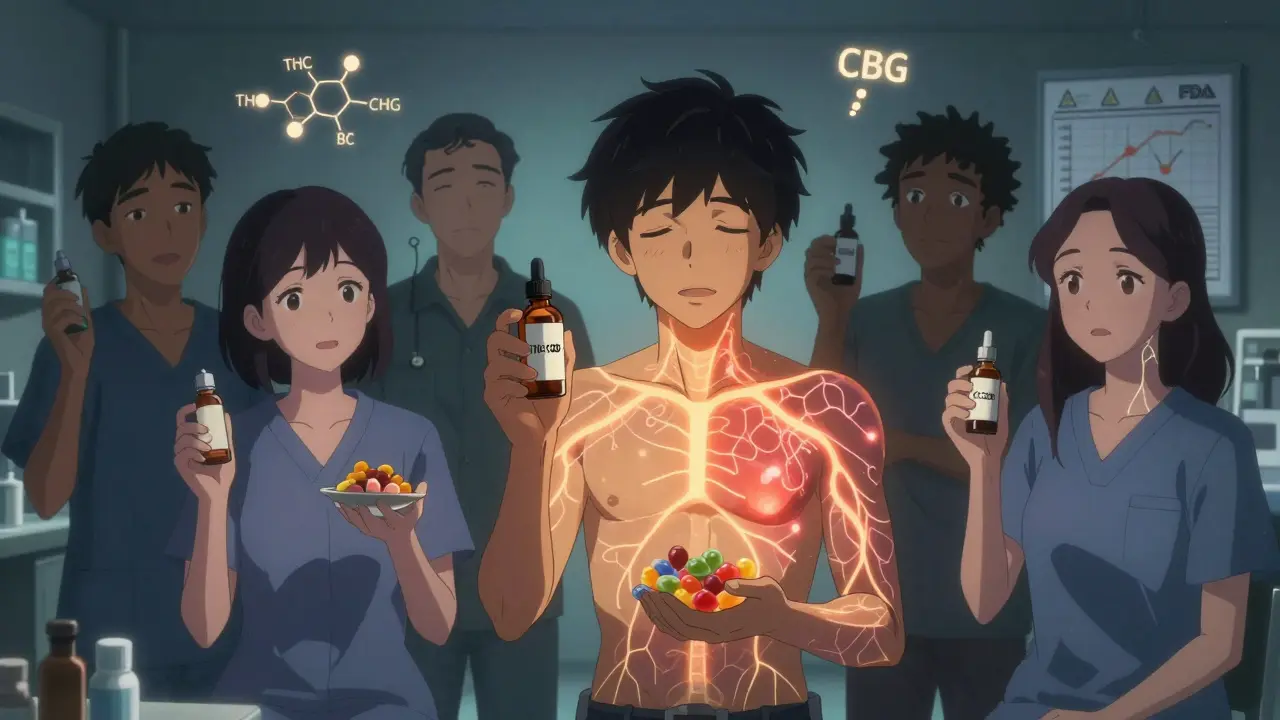
When it comes to chronic pain, millions of people are looking for alternatives to opioids. With over 50 million adults in the U.S. dealing with persistent pain, it’s no surprise that cannabinoids-compounds from the cannabis plant-are getting serious attention. But here’s the problem: one person swears by CBD oil for their arthritis, while another spent $400 on gummies and felt nothing. So what’s actually true? Is there real science behind cannabinoids for pain, or is it all hype?
What Are Cannabinoids, and How Do They Work?
Cannabinoids are natural chemicals found in the cannabis plant. The most well-known ones are THC (tetrahydrocannabinol), CBD (cannabidiol), CBG (cannabigerol), and CBN (cannabinol). These compounds interact with your body’s endocannabinoid system, which helps regulate pain, mood, sleep, and inflammation. Unlike opioids that block pain signals in the brain, cannabinoids work on multiple levels-reducing inflammation, calming overactive nerves, and even changing how your brain processes pain signals. That’s why they’re being studied for conditions like neuropathic pain, fibromyalgia, and multiple sclerosis, where traditional painkillers often fall short. The big difference between THC and CBD? THC gets you high. CBD doesn’t. That’s why CBD has become a household name-it’s marketed as a safe, non-intoxicating option. But does that mean it works? The science says… maybe not as much as you think.The Evidence: What Studies Actually Show
Let’s cut through the noise. There are dozens of studies on cannabinoids and pain, but they don’t all agree. A 2015 JAMA review of 28 studies found moderate-quality evidence that cannabinoids help with chronic pain, especially nerve-related pain. That’s a solid finding. But here’s the catch: most of those studies used whole-plant extracts or combinations of THC and CBD-not pure CBD alone. A 2023 University of Bath study looked at 16 clinical trials using pharmaceutical-grade CBD. Fifteen of them showed no benefit over placebo. That’s not a small sample-it’s a major red flag for CBD-only products. Harvard Medical School echoed this in 2020: “There is currently no high-quality research study that supports the use of CBD alone for the treatment of pain.” But then there’s new data. In January 2025, researchers at Yale found that CBG-a lesser-known cannabinoid-was the most effective at blocking a key pain-signaling protein in lab tests. CBG didn’t just match CBD; it outperformed it. And unlike THC, it doesn’t cause intoxication. This could be a game-changer-if it translates to real patients. Meanwhile, Health Canada and the CDC both acknowledge that THC-CBD combinations (like the drug Sativex) work for specific types of neuropathic pain, especially in multiple sclerosis and cancer patients. One patient on Leafly reported cutting their daily oxycodone dose from 120mg to 30mg after switching to a 1:1 THC:CBD tincture-same pain control, fewer side effects. So what’s the real takeaway? Pure CBD? Likely ineffective for pain. THC-CBD blends? Evidence supports them for certain nerve pain. CBG? Promising, but still in early stages.Dosing: There’s No Standard
If you’re thinking about trying cannabinoids for pain, you’ll quickly hit a wall: there’s no official dosing guide. Why? Because the FDA hasn’t approved any cannabinoid product for pain. That means no standardized pills, no labeled strengths, no clinical protocols. What you find in a store is a gamble. A 2023 University of Bath analysis tested 44 CBD products bought online. One-third contained less CBD than labeled. Some had zero CBD at all. Others had up to 260% more than advertised. And nearly half contained trace amounts of THC-enough to trigger a positive drug test or cause unwanted psychoactive effects. Clinicians who do recommend cannabinoids usually start low: 2.5-5mg of THC, or 10-20mg of CBD, once or twice a day. Increase slowly over weeks. Track your pain levels, sleep, and mood. If nothing changes after 4-6 weeks, it’s probably not working for you. And don’t assume more is better. High doses of CBD have been linked to liver enzyme changes in some studies. THC can cause dizziness, dry mouth, or even anxiety in sensitive people.
Safety: It’s Not Risk-Free
Many people think cannabinoids are harmless because they’re “natural.” That’s dangerous thinking. THC-containing products can impair coordination, affect memory, and worsen anxiety or psychosis in vulnerable individuals. Long-term use in teens is linked to cognitive changes. CBD isn’t harmless either. It interacts with over 60 medications, especially blood thinners like warfarin, seizure drugs like clobazam, and some antidepressants. It blocks the liver enzyme CYP3A4-the same one that processes statins and many heart medications. That can lead to dangerous drug buildup. The CDC warns that while cannabinoids may have fewer risks than opioids, they’re not risk-free. Side effects reported in clinical trials include dizziness (9.2%), dry mouth (6.6%), and nausea (5.4%). And then there’s the quality problem. A 2023 analysis of Amazon and Trustpilot reviews found that 41% of negative reviews cited “no pain relief.” Many users reported spending hundreds of dollars on products that didn’t work-while unknowingly ingesting pesticides, heavy metals, or synthetic cannabinoids.How Cannabinoids Compare to Opioids
The opioid crisis killed over 80,000 people in the U.S. in 2023. It’s no wonder people are desperate for alternatives. Opioids are powerful for acute pain-like after surgery or a broken bone. But for chronic pain? Their effectiveness drops after a few months, while addiction risk climbs. The CDC says long-term opioid use doesn’t improve function or quality of life for most people. Cannabinoids don’t have the same overdose risk. They’re not addictive in the same way. But they’re not magic bullets either. For neuropathic pain-nerve damage from diabetes, shingles, or injury-cannabinoids may offer a better safety profile than opioids. For back pain, osteoarthritis, or headaches? Evidence is weak. One key point: cannabinoids should not replace opioids without medical supervision. Stopping opioids cold turkey can trigger severe withdrawal. A slow, guided switch under a doctor’s care is the only safe approach.
What’s Next? Research and Regulation
The landscape is shifting. The FDA is reviewing whether cannabis should be moved from Schedule I (no medical use, high abuse potential) to a lower category. That could unlock federal funding for research. Right now, over a dozen phase III clinical trials are underway. GW Pharmaceuticals is testing a THC-CBD spray for cancer pain. Columbia University is studying CBD for chronic low back pain. Results are expected by 2025. If one of these gets FDA approval, it could be the first legal, standardized cannabinoid pain medication in the U.S. That would change everything-offering real dosing, safety data, and insurance coverage. Until then, the market is a wild west. Brands market CBD as a cure-all. Consumers spend billions. And the science? Still catching up.Bottom Line: What Should You Do?
If you’re considering cannabinoids for pain:- Avoid pure CBD products for pain. The evidence just isn’t there.
- If you live in a state with medical cannabis, talk to a doctor about THC-CBD combinations-especially for nerve pain.
- Never self-medicate to replace opioids. Work with your provider.
- Start low. Go slow. Track your symptoms.
- Buy from licensed dispensaries, not Amazon or gas stations. Look for lab-tested, batch-specific certificates.
- Watch for interactions with your other meds. Ask your pharmacist.
- Be skeptical of claims like “cures arthritis” or “eliminates pain.” If it sounds too good to be true, it probably is.
Can CBD oil really help with chronic pain?
Most high-quality studies show that pure CBD oil does not provide meaningful pain relief beyond placebo. While some people report benefits, clinical trials using pharmaceutical-grade CBD found no significant advantage over dummy pills. The few positive reports often come from low-quality studies or products that may contain hidden THC or other compounds.
Is THC better than CBD for pain?
Yes, for certain types of pain-especially neuropathic pain. Products combining THC and CBD, like Sativex, have shown consistent results in clinical trials for conditions like multiple sclerosis and cancer-related pain. THC directly affects pain pathways in the brain and spinal cord. CBD alone does not have the same effect. However, THC can cause psychoactive side effects, so it’s not suitable for everyone.
What’s the best way to take cannabinoids for pain?
Tinctures (oils under the tongue) and sprays are the most reliable for dosing control. Edibles vary too much in absorption. Smoking or vaping carries lung risks and makes dosing imprecise. Topicals (creams, patches) may help localized pain but don’t affect systemic pain. For medical use, pharmaceutical-grade formulations are preferred over over-the-counter products.
Are there any safe, legal cannabinoid pain treatments?
In the U.S., the only FDA-approved cannabinoid medications are Epidiolex (for epilepsy) and Sativex (available in Canada and Europe for MS and cancer pain). No cannabinoid product is currently FDA-approved for pain in the U.S. Medical cannabis programs in 38 states allow access to whole-plant products, but quality and consistency vary widely. Always check your state’s regulations and consult a doctor.
Can cannabinoids help with opioid withdrawal?
Some patients report that cannabinoids help reduce opioid cravings and ease withdrawal symptoms like anxiety, insomnia, and muscle aches. However, there’s no strong clinical evidence to support this as a standard treatment. Opioid withdrawal should be managed under medical supervision using proven methods like methadone, buprenorphine, or naltrexone. Cannabinoids may be used as an adjunct, but not as a primary solution.
Is CBG the next big thing for pain relief?
Early lab studies from Yale in January 2025 show CBG is highly effective at blocking a key pain-signaling protein, even more so than CBD. It also doesn’t cause intoxication. But these are lab results-not human trials. CBG products on the market today are unregulated, poorly studied, and often mislabeled. While promising, CBG is not yet a proven treatment. Clinical trials are needed before it can be recommended.
Why do some people say CBD helped them if the science says it doesn’t?
Placebo effect is powerful, especially for conditions like chronic pain that are influenced by stress, sleep, and mood. Many CBD products contain trace THC or other compounds that may have real effects. Some users report better sleep or reduced anxiety after using CBD-which can indirectly improve pain perception. But that’s not the same as direct pain relief. The difference matters when you’re making health decisions.
Can I use cannabinoids if I’m on other medications?
CBD and THC can interfere with medications metabolized by the liver, especially blood thinners, seizure drugs, antidepressants, and statins. This can lead to dangerous side effects or reduced effectiveness. Always talk to your doctor or pharmacist before combining cannabinoids with any prescription or over-the-counter meds. Never start on your own.


Reviews
Also, CBG sounds wild. If it really blocks pain signals without the high, we might be looking at the next big thing. Hope the trials move fast.
Also, don't trust random online reviews. I spent $300 on a 'pure CBD' tincture that had more fillers than cannabinoids.