

Itchy, red, watery eyes-especially during spring or fall-aren’t just annoying. They’re a sign your body is overreacting to something harmless, like pollen or pet dander. This isn’t an infection. It’s allergic conjunctivitis, a common eye allergy affecting about 40% of people in the U.S. alone. Unlike pink eye caused by viruses or bacteria, eye allergies don’t spread from person to person. But they can make you feel like you’re constantly rubbing your eyes raw.
What’s Really Going On in Your Eyes?
Your eyes are lined with a thin, delicate membrane called the conjunctiva. When allergens like pollen, mold, or dust mites land on it, your immune system goes into overdrive. Mast cells in that tissue release histamine, a chemical that triggers inflammation. That’s what causes the classic trio: itching, redness, and tearing.
Itching is the #1 symptom-reported by 92% of people with eye allergies. Redness follows closely at 88%, and watery eyes hit 85%. Swollen eyelids? That’s 76%. Some even feel a burning sensation or get blurry vision from too much tearing. Dark circles under the eyes (called allergic shiners) are common too, especially in kids and teens.
Here’s how to tell it’s an allergy and not an infection: If your eyes are yellow or green and sticky, it’s likely bacterial. If they’re watery, itchy, and worse when you’re outside or around pets, it’s allergy season. Viral conjunctivitis might have watery discharge too, but itching is usually mild, and you’ll often feel sick with a cold or flu at the same time.
Why Antihistamine Eye Drops Are the Go-To Fix
Antihistamine eye drops are the most common first-line treatment for a reason: they work fast. The best ones block histamine from binding to receptors in your eyes, stopping the itch before it starts. But not all drops are created equal.
First-generation drops like pheniramine (in Naphcon-A) give relief in 3 to 5 minutes, but they wear off quickly. You’ll need to use them every 4 to 6 hours-and 25% of users report stinging when they apply them.
Second-generation drops like olopatadine (Pataday), ketotifen (Zaditor, Alaway), and epinastine (Elestat) are better. They don’t just block histamine-they also stabilize mast cells so they don’t release more histamine in the first place. That’s called dual-action therapy. These last 12 to 24 hours. Pataday Once Daily Relief, for example, keeps itching down for 16 hours. In clinical trials, itching scores dropped from 2.8 to 0.7 on a 4-point scale within 3 minutes.
Cost matters. Generic ketotifen costs around $13 for a 2.5mL bottle. Brand-name Pataday runs about $43 for the same size. But many insurance plans cover prescriptions at a $15-$40 copay. If you’re using it daily, that adds up.
Other Treatments-And Why They’re Not Always the Best
Decongestant drops like Visine-A shrink blood vessels to reduce redness. They work fast-but only for a few hours. Use them for more than 3 days, and your eyes can rebound with even worse redness. Studies show 65% of people who overuse these end up with worse symptoms than before.
Oral antihistamines like Zyrtec or Claritin help with runny noses and sneezing, but they can dry out your eyes. In one study, 40% of users reported worse dryness and irritation after taking them. That’s bad news if your eyes are already watering and sensitive.
Mast cell stabilizers like cromolyn sodium (Crolom) are great for prevention. But you have to start using them 2 to 4 days before you’re exposed to allergens. Not helpful if you’re already itching.
Corticosteroid drops? They’re powerful-used for severe cases. But they can raise eye pressure or even cause cataracts with long-term use. Doctors only prescribe them for short bursts.
Immunotherapy-like allergy shots or tablets-is the only treatment that changes your body’s long-term response. It can reduce symptoms by 60-80% after 3-5 years. But it takes months just to start working. Not a quick fix.
What Experts Say About the Best Choice
Dr. David A. Grieshaber, an ophthalmologist in Switzerland, calls ketotifen and olopatadine the “gold standard.” Why? They hit the sweet spot: fast relief, long-lasting, and minimal side effects.
The American College of Allergy, Asthma & Immunology (ACAAI) recommends olopatadine 0.2% (Pataday) as first-line for seasonal allergies. Why? Once-daily dosing. No need to remember to reapply midday.
But Dr. Carolyn M. Harmon from Massachusetts General Hospital reminds us: eye drops alone aren’t enough. You need to combine them with real-world changes.
Real-World Tips That Actually Help
Here’s what works beyond the bottle:
- Wash your face and eyelids after being outside. A 2022 study found this reduces symptoms by 30%.
- Use preservative-free artificial tears 4-6 times a day. They flush out allergens like pollen and dust.
- Wear wraparound sunglasses outdoors. A 2023 trial showed they cut pollen exposure by half.
- Keep windows closed during high pollen counts. Use AC with a HEPA filter.
- Don’t rub your eyes. It makes inflammation worse and can even scratch the cornea.
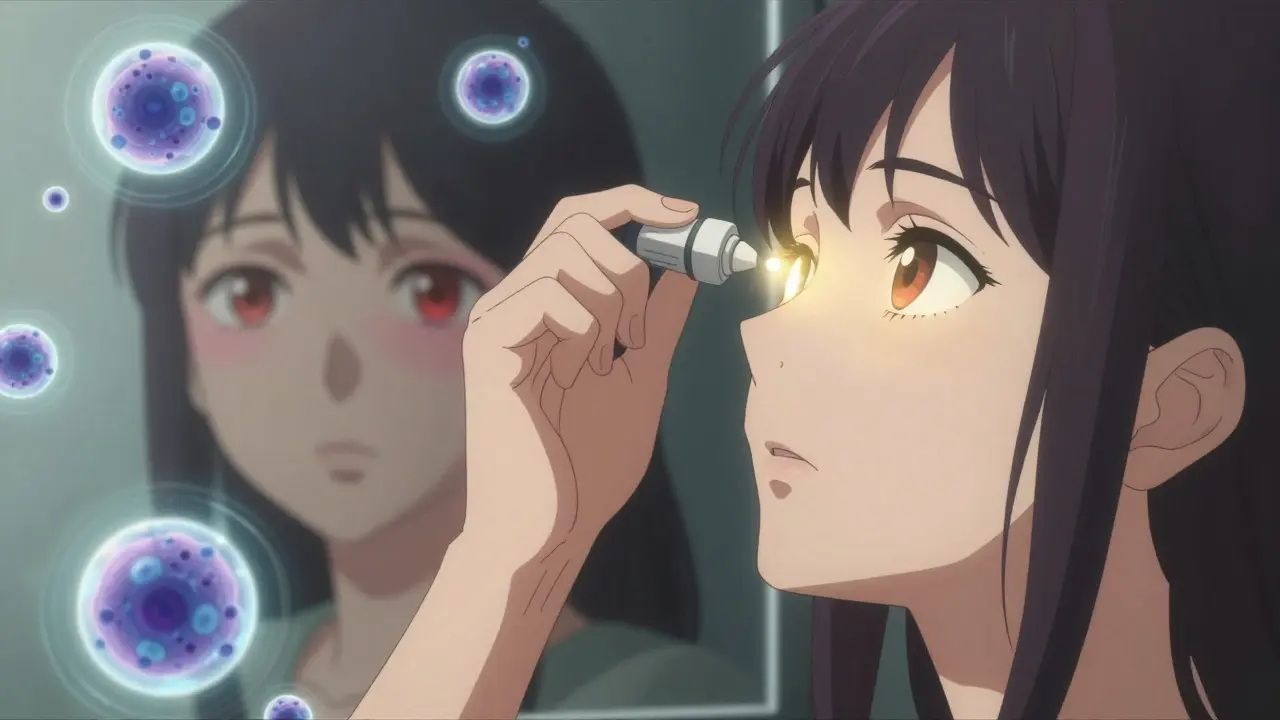
Proper drop application matters too. Tilt your head back, pull down the lower lid to make a little pocket, and drop one drop in. Don’t let the bottle touch your eye. Contamination can cause infections. And if you’re over 65 or have shaky hands, ask a family member to help.

What Users Are Saying
On Reddit’s r/allergies, 68% of users said Pataday worked best for severe symptoms. But 22% said the price was too high without insurance. Amazon reviews for Pataday average 4.4/5 with comments like “Works in minutes and lasts all day.” Zaditor got 4.1/5-people like the value but say they need to reapply by lunchtime.
One user wrote on Drugs.com: “Used Visine-A for five days straight. My eyes got worse than ever.” That’s rebound hyperemia in action. Another Reddit post said: “Pataday in the morning + cold compresses. Symptoms cut in half within two days.”
When to See a Doctor
If you’ve been using antihistamine drops for two weeks and your eyes still itch, burn, or feel gritty, it might not be allergies. About 20% of people with “allergic” eyes actually have dry eye disease, blepharitis, or another condition. An eye doctor can tell the difference with a quick exam.
Also, if you notice changes in vision, pain, or light sensitivity, don’t wait. Those aren’t typical allergy symptoms. Get checked.
The Future of Eye Allergy Treatment
The global eye allergy market hit $1.8 billion in 2023 and is growing fast. New drops like bepotastine (Bepreve) just got FDA approval in 2023 for once-daily use. Pipeline drugs like OTX-ALL, a tiny implant that releases medicine for 3 months, are in late-stage trials.
Climate change is making things worse. Pollen counts have risen 21% since 1990. By 2035, the ACAAI predicts eye allergies will affect 40% more people. That means better, longer-lasting treatments will be more important than ever.
For now, stick with proven options: dual-action antihistamine/mast cell stabilizer drops, plus smart environmental habits. You don’t need to suffer through allergy season.
Can antihistamine eye drops cause dry eyes?
Most antihistamine eye drops don’t cause dryness. In fact, they help by reducing inflammation that can worsen dryness. But oral antihistamines like Zyrtec or Claritin can dry out your eyes. If you’re using both, the oral meds are likely the culprit. Stick with topical drops if dryness is a concern.
Is it safe to use antihistamine eye drops every day?
Yes, for most people. Second-generation drops like olopatadine and ketotifen are designed for daily use, even long-term. They’re much safer than decongestants or steroids. But if you’re using them daily for more than 3 months without relief, talk to your eye doctor. There might be another underlying issue.
Why do my eyes sting when I put in drops?
Stinging is common with first-generation drops like Naphcon-A, affecting about 25% of users. Newer drops like Pataday or Zaditor cause stinging in only 8% of users. If it hurts badly, you might be using a preserved formula. Try preservative-free versions-they’re gentler on sensitive eyes. Also, make sure the bottle isn’t expired or contaminated.
Can I use antihistamine drops with contact lenses?
Yes, but remove your lenses first. Wait 10-15 minutes after applying drops before putting lenses back in. Some drops contain preservatives that can build up on lenses and irritate your eyes. Preservative-free options are safest for contact wearers. Always check the label.
Do eye allergies get worse over time?
Not necessarily, but they can. If you’re exposed to the same allergens year after year, your immune system may react more strongly. Climate change is also making pollen seasons longer and more intense. In the U.S., pollen counts have risen 21% since 1990. That means more people are experiencing worse symptoms. Early, consistent treatment helps prevent this progression.


Reviews
Let’s cut through the noise-olopatadine and ketotifen aren’t just ‘good options,’ they’re the only real choices if you’re serious about relief. First-gen drops? They’re like using duct tape on a leaking pipe. Sure, it holds for a bit, but you’re just delaying the mess. Second-gen? Dual-action. Mast cell stabilization + histamine blocking. That’s not marketing-that’s science. And yes, the price difference is brutal, but if you’re using it daily, the generic ketotifen at $13 is the smart play. No stinging, no rebound redness, just calm eyes. Stop wasting money on Visine-A. That stuff is a trap.
wait… so you’re telling me the government is secretly spraying pollen to keep us hooked on eye drops?? 😈👁️💊 I’ve been noticing this since 2020… and WHY do they always make the good ones prescription only?? 🤔 #BigPharma #EyeDropConspiracy
YES. This. So. Much. 🙌 I switched to generic ketotifen after my insurance dropped Pataday, and honestly? I didn’t even notice the difference. No stinging, lasts all day, and I can afford it. Also-preservative-free tears are a GAME CHANGER. I use them 5x a day now. My eyes haven’t felt this calm since college. Thank you for this breakdown. 💖
40% of people in the US have eye allergies? That’s statistically impossible. You’re inflating numbers to sell drops. Also, ‘dual-action therapy’ is just corporate jargon. Real science doesn’t need buzzwords. And why are you promoting a Swiss doctor? Are we not supposed to trust American ophthalmologists? Also-why no data on long-term mast cell stabilizer use? Hmm. Suspicious.
In India we don’t have these fancy drops. We use plain cold water and a clean cloth. Your overpriced American solutions are just profit machines. Why not teach people to wash eyes properly? Why sell pills and drops? We have centuries of Ayurveda. You people need to stop overmedicalizing everything.
Thank you for this comprehensive, well-structured overview. As someone who lives in a region with extreme seasonal pollen shifts, I appreciate the emphasis on environmental modifications-wraparound sunglasses, HEPA filters, and eyelid hygiene. These are not merely adjuncts; they are foundational. The clinical data presented is both precise and actionable. A rare example of medical communication that respects the reader’s intelligence.
It’s fascinating how we’ve turned a biological response to environmental stimuli into a pharmaceutical market. The fact that we’re now discussing 3-month implants for eye allergies speaks volumes about how far we’ve strayed from root-cause solutions. Immunotherapy works because it doesn’t suppress-it reprograms. But we’re incentivized to sell symptom management, not long-term healing. Are we treating people… or markets?
Ugh I HATE when people say ‘just use tears’ like it’s magic. My eyes are already dry as sandpaper and then I’m supposed to pour more liquid in? No. I tried Pataday. It burned like hell. I went back to Visine. It’s the only thing that numbs the itch. I don’t care about rebound redness-I just want to stop rubbing until I bleed.
Visine-A numbs the itch? That’s not treatment-that’s anesthesia. You’re masking pain so you can keep rubbing. That’s how corneal abrasions happen. You think it’s helping? You’re making it worse. Try the ketotifen. Just once. If it stings, you’re either using an expired bottle or you’re allergic to the preservative. Go preservative-free. I swear, if you give it a real shot, you’ll wonder why you ever used anything else.
yo i tried the whole ‘cold compress + pataday’ thing and it was like a whole spa day for my eyes 🌿❄️✨ honestly i was skeptical but now i’m hooked. also-don’t sleep with your contacts in. i learned that the hard way. now i have a little glass bowl by my bed for them. weird? maybe. but my eyes haven’t felt this alive since 2019. #eyehealthrevolution
I’ve been using Zaditor for two years now. No issues. My mom has glaucoma, so I’m extra careful with anything that touches my eyes. This stuff is gentle. I also wash my face after biking to work. Simple. Free. Effective. No drama. Just clean eyes.
Let’s be real: this whole post is designed to sell Pataday. You mention the price difference, then praise the brand. You cite Reddit reviews like they’re peer-reviewed studies. You cherry-pick stats from 2022 and 2023 studies but ignore the 2020 meta-analysis that showed no significant difference between ketotifen and placebo in mild cases. This isn’t education-it’s targeted advertising disguised as medical advice.