
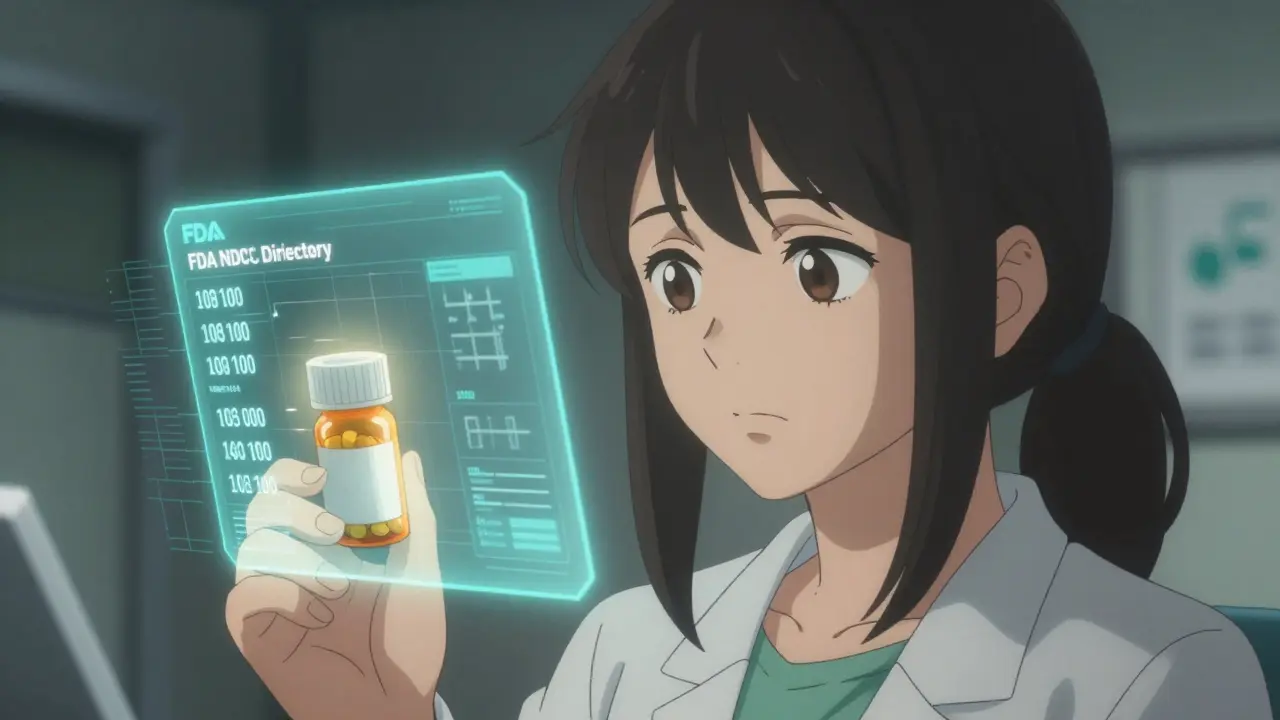
Every year, millions of people in the U.S. take prescription drugs without ever checking if they’re real. That’s a risk you don’t have to take. The FDA databases give you the tools to confirm whether a medication is legitimate - and to spot fake pills before they reach your medicine cabinet. You don’t need to be a pharmacist or a doctor to use them. All you need is the drug name, the NDC number, or the manufacturer’s name.
What the FDA Databases Actually Do
The U.S. Food and Drug Administration runs three main public databases that track every legally sold prescription drug in the country. These aren’t just lists - they’re live, updated systems that connect manufacturers, distributors, and pharmacies to ensure drugs are traceable from factory to patient.
The most important one is the National Drug Code (NDC) Directory. Every FDA-approved drug has a unique 10- or 11-digit NDC number. Think of it like a barcode for medicine. It breaks down into three parts: the labeler (who makes it), the product (what the drug is), and the package size. If the NDC on your pill bottle doesn’t match what’s in the FDA’s database, it’s a red flag.
The second system is the Drug Establishments Current Registration Site. This tells you which companies are legally allowed to make, package, or distribute drugs in the U.S. If a company isn’t listed here, anything they sell is suspect. This isn’t just about big pharma - it includes small compounding pharmacies and foreign suppliers shipping into the U.S.
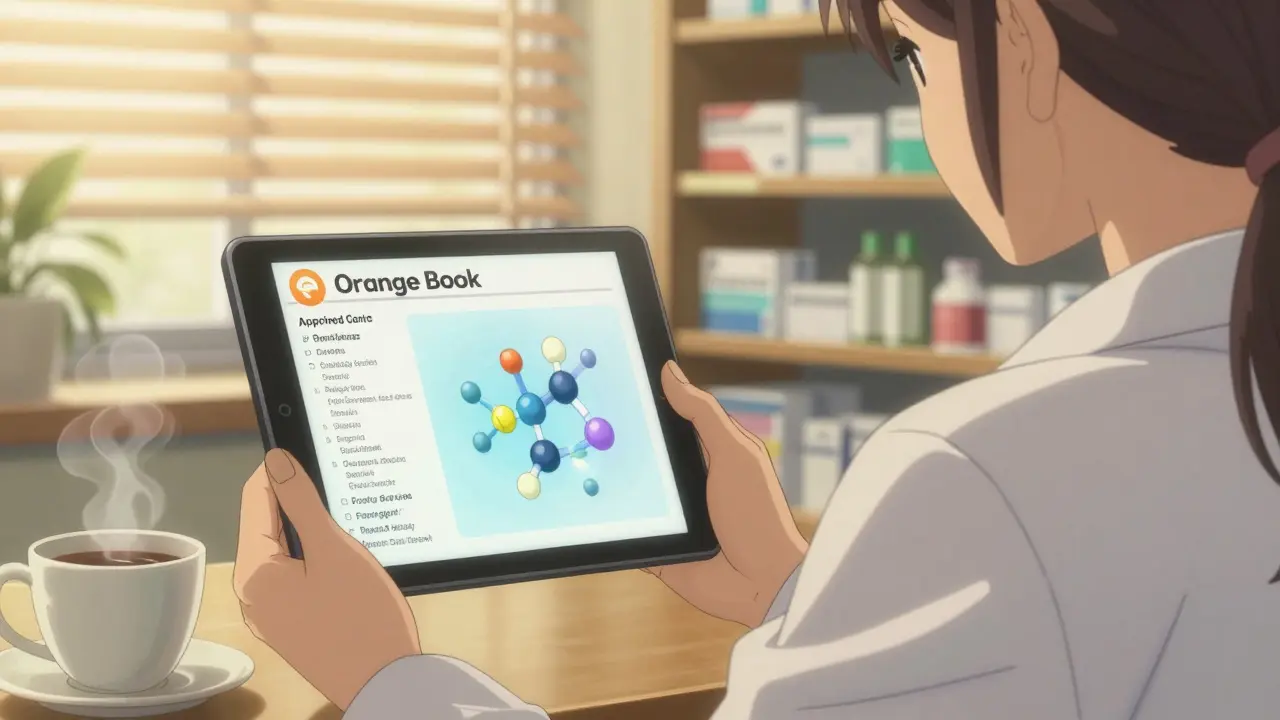
The third is the Orange Book, which lists approved drugs and their generic equivalents. If you’re buying a generic version of a brand-name drug, this tells you if it’s therapeutically equal. Not all generics are created equal - and the Orange Book helps you know which ones are safe to use.
How to Check a Drug’s Legitimacy
Here’s how to use these tools in real life:
- Find the NDC number on the drug packaging. It’s usually printed near the barcode, often labeled "NDC".
- Go to the FDA’s NDC Directory at fda.gov/drugs/drug-approvals-and-databases/national-drug-code-directory.
- Enter the full NDC number. If the drug appears with the correct name, manufacturer, and dosage, it’s verified.
- If you don’t see it, or if the details don’t match your bottle, stop using it.
Let’s say you buy a bottle of metformin from an online pharmacy. The label says "500 mg, 100 tablets". You find the NDC: 0078-0628-10. You search the FDA database - and it shows up as a legitimate product made by Apotex Corp. That’s good. But if the same NDC shows up as a different drug - say, insulin - you’ve got a counterfeit. That’s exactly how fake drugs slip in: wrong label, same barcode.
Spotting Counterfeit Drugs: Red Flags
Counterfeit drugs don’t always look fake. Sometimes they’re perfect copies - except they contain no active ingredient, or worse, toxic chemicals like lead or rat poison. Here’s what to watch for:
- Unfamiliar brand names - If you’ve never heard of the manufacturer, check the FDA’s registration site.
- Missing NDC numbers - Legitimate U.S. drugs always have them. If it’s not there, walk away.
- Unusual packaging - Typos, blurry printing, mismatched colors, or different pill shapes than usual.
- Too-good-to-be-true prices - A 90-day supply of Viagra for $15? That’s not a deal - it’s a trap.
- Online pharmacies without a physical address - Legitimate U.S. pharmacies are registered and listed. If you can’t find them in the FDA’s database, they’re not legal.
In 2022, the FDA seized over 1.5 million counterfeit pills - mostly fakes of opioids, diabetes meds, and heart drugs. Many of these were shipped from overseas and sold through websites that look real but aren’t registered with the FDA.
Why the System Isn’t Perfect
The FDA’s databases are powerful - but they’re not foolproof. Here’s why:
- Not all drugs are covered - Over-the-counter meds, vitamins, and compounded drugs (made by pharmacies for individual patients) aren’t always in the NDC Directory.
- Foreign suppliers often skip registration - About 65% of counterfeit drugs come from overseas. Many foreign manufacturers don’t follow U.S. rules, and the FDA can’t inspect them easily.
- NDC formatting errors - Even legitimate companies make mistakes. A missing zero in the NDC can make a drug disappear from search results.
- Delayed updates - While the NDC Directory updates daily, some new products take weeks to appear.
And here’s the biggest gap: the system is designed for industry use, not consumers. The FDA doesn’t have a simple consumer-facing app. You have to dig through government websites. That’s why so many people miss the signs.
What You Can Do Right Now
You don’t need to wait for the government to fix everything. Here’s your action plan:
- Always check the NDC - Make it a habit. Before you take any new prescription, verify it.
- Buy from licensed U.S. pharmacies - Look for the VIPPS seal (Verified Internet Pharmacy Practice Sites) - it means the pharmacy is FDA-approved.
- Don’t trust social media ads - If someone’s selling drugs on Instagram or TikTok, it’s illegal. Period.
- Report suspicious drugs - The FDA has a reporting portal. Even one fake pill reported can trigger an investigation.
One pharmacist in Ohio noticed her patients were getting pills that looked slightly off. She checked the NDC - it matched a legitimate drug, but the manufacturer was listed as a company that had shut down in 2020. She called the FDA. They traced it to a warehouse in China. That one report led to a nationwide recall.
What’s Changing in 2025
The FDA is upgrading the system. By 2026, all NDC numbers will be standardized to 12 digits. That will reduce errors and make tracking more precise. By the end of 2025, the agency plans to add product images to the NDC Directory - so you can compare your pill to the official photo.
Some companies are using AI to spot fake drugs before they reach shelves. IBM and Google are testing machine learning tools that analyze packaging patterns and detect tiny differences invisible to the human eye. These tools are still in testing, but they’re the future.
For now, your best defense is still the same: check the NDC. Know the manufacturer. Don’t buy from unknown sources. The FDA databases are free, public, and powerful. Use them.
What Happens If You Find a Fake?
If you suspect a drug is counterfeit:
- Stop taking it immediately.
- Keep the packaging and pills - don’t throw them away.
- Report it to the FDA’s MedWatch program at fda.gov/medwatch.
- Contact your pharmacist or doctor. They can help you get a replacement.
The FDA doesn’t just collect reports - they act on them. In 2022, over 2,000 consumer reports led to investigations, seizures, or warnings to other pharmacies.
How do I find the NDC number on my medication?
The NDC number is usually printed on the drug’s packaging, often near the barcode or lot number. It’s a 10- or 11-digit number formatted like XXXXX-XXXX-XX. Look for the label "NDC" right before the number. If you can’t find it on the bottle, check the box or the leaflet inside.
Can I trust online pharmacies that say they’re FDA-approved?
Only if they’re listed on the FDA’s VIPPS program. Many fake pharmacies use fake seals. Go to fda.gov/vipps to verify a website. If it’s not there, it’s not legitimate - even if it looks professional.
Are generic drugs as safe as brand-name ones?
Yes - if they’re FDA-approved. The Orange Book lists all approved generics and confirms they work the same as the brand-name version. But only check generics listed there. Some unapproved generics are sold illegally and can be dangerous.
Why do some drugs show up as "inactive" in the FDA database?
An "inactive" status means the manufacturer stopped selling that version of the drug - maybe it was discontinued, reformulated, or the company lost its license. It doesn’t mean the drug is fake. But if you’re buying a drug labeled as inactive, ask your pharmacist why it’s still on the market.
Do vitamins and supplements have NDC numbers?
No. The FDA doesn’t regulate supplements the same way as prescription drugs. Vitamins, herbal products, and dietary supplements don’t need NDC numbers. That’s why counterfeit supplements are common - there’s no centralized database to verify them.
What should I do if my doctor prescribes a drug I can’t find in the FDA database?
Ask your doctor or pharmacist for clarification. It could be a new drug still being processed, a compounded medication, or a drug imported under special rules. But if it’s not listed and you’re unsure, get a second opinion. Never take a drug you can’t verify.

Reviews
Been using the NDC checker since my grandma got hit with fake metformin. Still blows my mind that this info is free and public. Why isn’t this on every prescription bottle? Simple as that.
There’s something quietly revolutionary about this - like finding out the government gave you a lockpick for your own medicine cabinet. No fanfare, no app, just a dusty database that could save your life if you know how to use it. I’ve started printing out NDC lookup guides for my elderly neighbors. They don’t trust tech, but they trust paper.
India’s a nightmare for fake meds - I’ve seen pills with fake FDA logos shipped here from US-based sites. The NDC system works if you’re in the US, but globally? Zero enforcement. We need a global database, not just one country’s version. The WHO tried, but pharma lobbying killed it.
People don’t realize the Orange Book is the real MVP. I used to assume all generics were equal until I found one that made me dizzy - turned out it was bioequivalent in name only. The Orange Book tells you which generics have the same dissolution profile. That’s the difference between safe and scary. Also, watch out for ‘inactive’ drugs - sometimes they’re just discontinued, but pharmacies still stock them. Ask your pharmacist for the lot number and cross-check it. Most won’t know to do that.
So let me get this straight - you’re telling me I’m supposed to dig through a government website to make sure my blood pressure pill isn’t made of chalk and rat poison? And the FDA doesn’t even have an app? What kind of dystopia are we living in?
FAKE. This is all a cover-up. The FDA is in bed with Big Pharma. They only list drugs that make money. The real truth? The NDC database is rigged. I checked my insulin - it showed up as ‘inactive’ - but my doctor says it’s fine. Coincidence? I don’t think so. They’re hiding the bad stuff. Also, I found a pill with a QR code that linked to a .xyz domain. That’s proof. 🕵️♀️💊
Thank you for this. I’ve been trying to explain to my mother why she shouldn’t buy her diabetes meds from that ‘discount pharmacy’ on Facebook. She thinks it’s a bargain. Now I can send her this. The part about the Orange Book and generic equivalents is exactly what she needs to understand. Clarity like this saves lives.
It’s fascinating how a system designed for regulators became a quiet tool for consumer survival. We live in an age where you can track your package across the globe in real time, but you still have to manually paste a 10-digit code into a 1990s-style government portal to avoid poisoning yourself. The irony isn’t lost on me - we’ve built the most advanced surveillance state in history, yet the most basic health safeguard is buried under layers of bureaucratic indifference. Maybe the real counterfeit isn’t the pill - it’s the promise that our institutions will protect us.