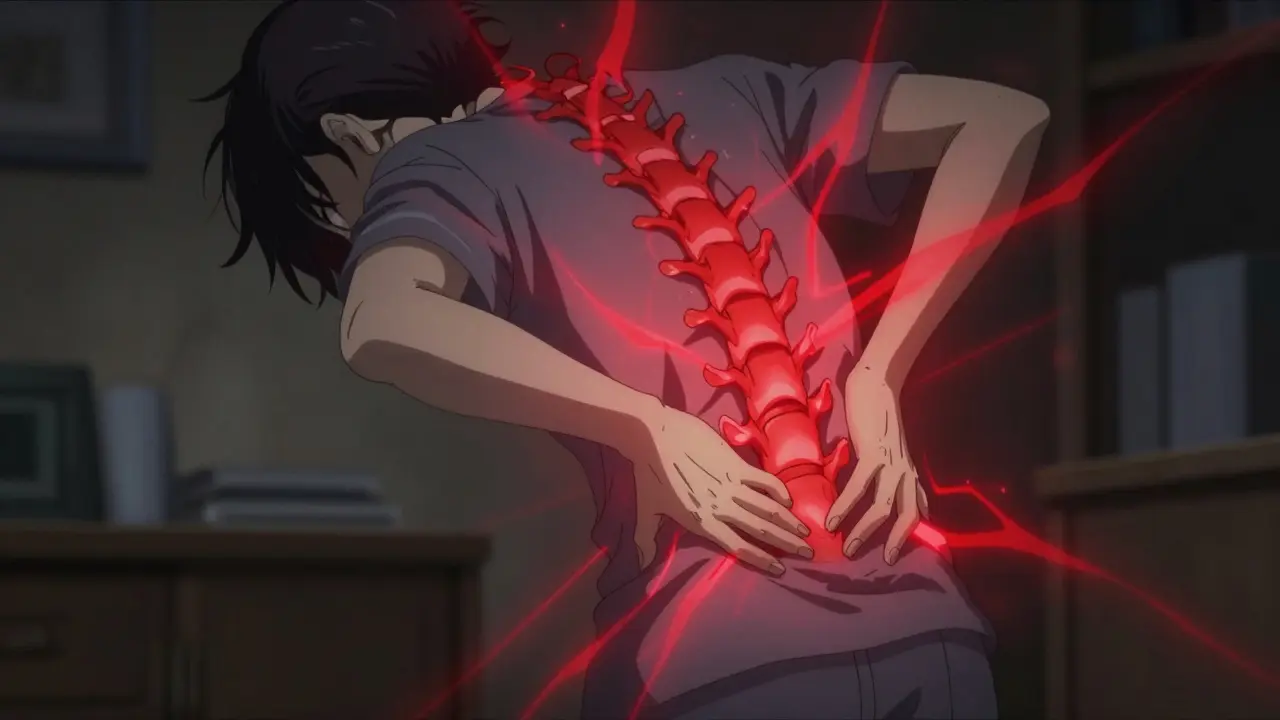
Did you know that roughly 80% of people experience low back pain at some point in their lives? It is often called the "backbreaker" of modern living, yet the approach to fixing it depends entirely on how long you have been hurting. Many patients end up stuck in a cycle of recurring pain because they don't understand the critical difference between short-term injury and long-term nerve adaptation. The distinction between acute and chronic pain isn't just about semantics-it changes everything about your recovery plan.
The Critical Timeline: When Does Pain Become Chronic?
To manage back issues effectively, you first need to know exactly where you stand on the calendar. According to major clinical standards like those from the Cleveland Clinic, acute back pain is defined as discomfort lasting less than four weeks. This is the body's natural alarm system screaming that something went wrong, such as a muscle strain or ligament sprain from lifting a heavy box incorrectly.
If that pain lingers between four to twelve weeks, we call it subacute back pain pain persisting beyond the typical tissue healing timeframe. But here is where it gets tricky. If you pass the three-month mark-or six months, depending on the study-the condition shifts gears. At this stage, the issue is no longer just about damaged tissue; it becomes chronic back pain discomfort persisting for more than twelve to fifty-two weeks. About 20% of individuals with initial acute pain will unfortunately cross this line, turning a short nuisance into a persistent lifestyle burden.
Why does this shift happen? In acute cases, the root cause is usually mechanical trauma. You tweaked a disc, pulled a muscle, or twisted awkwardly. The body knows exactly what is broken. However, once you enter chronic territory, the process changes to central sensitization a neurophysiological change where the brain and spinal cord become hyper-sensitive to pain signals. Your nervous system essentially learns to be in pain mode, keeping the alarm bells ringing even after the original injury has healed. This means treating a chronic ache requires a completely different strategy than treating a fresh bruise.
How Physical Therapy Changes the Game
You might wonder why the timing matters so much for treatment success. The data is quite clear: early physical therapy intervention treatment initiated within two weeks of symptom onset is a powerful tool against chronicity. Studies show that seeing a physical therapist when symptoms are still fresh can reduce the risk of that pain becoming permanent by roughly 16% to 22%. Think of it as putting out a small fire before it burns the whole house down.
In acute back pain, the goal of physical therapy is straightforward. We focus on pain modulation and movement re-education. Typically, this involves a short course of 6 to 12 sessions over a few weeks. The therapist works on reducing inflammation using modalities like ice or heat, followed immediately by gentle range-of-motion exercises. The objective is to keep moving safely while the tissues heal. For about 85% to 90% of these patients, this standard approach results in complete resolution within two to three months. One verified patient report noted that starting treatment within three days led to a 90% pain reduction by the fifth session. Speed matters immensely here.
However, the playbook looks very different for chronic sufferers. Here, simply stretching or strengthening might even make things worse if done incorrectly. Because the pain mechanism has shifted to the central nervous system, the treatment must address the brain's relationship with pain. Effective rehabilitation typically requires 15 to 25 sessions over several months. Techniques include Pain Neuroscience Education teaching patients how the nervous system processes pain signals and graded exposure therapy. You learn to move despite fear, slowly rewiring the brain's threat response. While complete elimination of pain is less common in chronic cases, research indicates a 30% to 50% average pain reduction and significant functional improvement in most patients who stick with the program.

Understanding Outcomes and Expectations
It is vital to set realistic expectations based on whether your pain is fresh or long-standing. In acute scenarios, the outlook is overwhelmingly positive. Most patients recover fully and return to work without needing specialist interventions. The key metric here is adherence to movement protocols rather than bed rest. In fact, staying active during the acute phase significantly shortens recovery time compared to taking extended time off work.
For chronic pain, the outcome measure shifts from "cure" to "management." Complete resolution occurs in only about 20% to 30% of cases even with comprehensive care, which sounds discouraging until you realize that improved quality of life is the real goal. Patients often report that after months of trying to "fix" the tissue, the breakthrough comes when they stop fighting the pain and start managing the sensitivity. The STarT Back a risk stratification tool used to match treatment intensity to individual needs approach, implemented in hundreds of clinics, shows that matching treatment complexity to the patient's risk profile improves functional outcomes by 37% compared to standard care.
| Feature | Acute Phase (Early) | Chronic Phase (Late) |
|---|---|---|
| Duration | Less than 4 weeks | More than 3 months |
| Patient Goal | Tissue Healing | Symptom Management |
| PT Sessions | 6-12 sessions | 15-25 sessions |
| Success Rate | 85-90% Resolution | 30-50% Reduction |
| Key Focus | Movement Mechanics | Nerve Desensitization |
Preventing the Transition to Chronic Pain
The window of opportunity to stop acute pain from becoming chronic is narrow-often just two to four weeks. During this period, avoiding fear-avoidance behaviors is crucial. Many people freeze up when their back hurts, afraid that any movement will cause damage. Paradoxically, this lack of movement reinforces the pain signals to the brain. Experts recommend initiating physical therapy within 72 hours of onset if possible. This drastically lowers the probability of chronicity by nearly 22%.
Furthermore, avoid over-medicalization too early. Jumping straight to advanced imaging like MRIs for a simple strain can sometimes label a patient unnecessarily, increasing anxiety and the likelihood of developing chronic symptoms. Research suggests that excessive testing increases the risk of chronicity by 27%. Instead, focus on function. Can you walk? Can you sleep? If yes, keep moving within comfort limits.

Future Trends in Pain Management
Technology is beginning to reshape how we handle chronic pain management. New FDA-cleared digital therapeutic platforms, such as Kaia Health an AI-guided digital physical therapy platform, are emerging. These apps provide personalized exercise programs and pain neuroscience education remotely. Clinical trials have shown an average pain reduction of 45% at twelve weeks. As we look toward 2026 and beyond, the combination of traditional hands-on therapy with these digital tools is becoming the gold standard for accessibility.
Frequently Asked Questions
When should I see a physical therapist for back pain?
Ideally, you should seek physical therapy within the first 72 hours of acute symptoms. Early intervention significantly reduces the risk of the pain becoming chronic. Waiting longer than 16 days can increase the chance of chronicity by 38%.
What is the success rate for acute back pain treatment?
The prognosis is excellent. Approximately 85% to 90% of patients with acute low back pain resolve completely within 6 to 12 weeks without needing surgical or specialist intervention, especially with early physical therapy.
Can chronic back pain ever go away completely?
While about 20% of chronic cases achieve full resolution, for many others the goal is management rather than total cure. Treatments aim for a 30% to 50% reduction in pain and restoring normal daily function.
Why is movement important when my back hurts?
Movement prevents stiffness and keeps blood flowing to injured tissues. Avoiding movement due to fear (fear-avoidance behavior) actually strengthens the pain signal in your brain, leading to central sensitization.
Are digital health apps effective for back pain?
Yes, emerging AI-driven platforms like Kaia Health have shown a 45% average pain reduction in 12-week trials, offering a viable alternative or supplement to in-person sessions for chronic management.