Steroid-Induced Hyperglycemia Insulin Calculator
Insulin Adjustment Calculator
Calculate your insulin dose adjustments based on corticosteroid type and dosage.
Your Adjusted Insulin Dose
Total Daily Insulin: units/day
Basal Insulin: units/day
Bolus Insulin: units/day
Why corticosteroids raise blood sugar
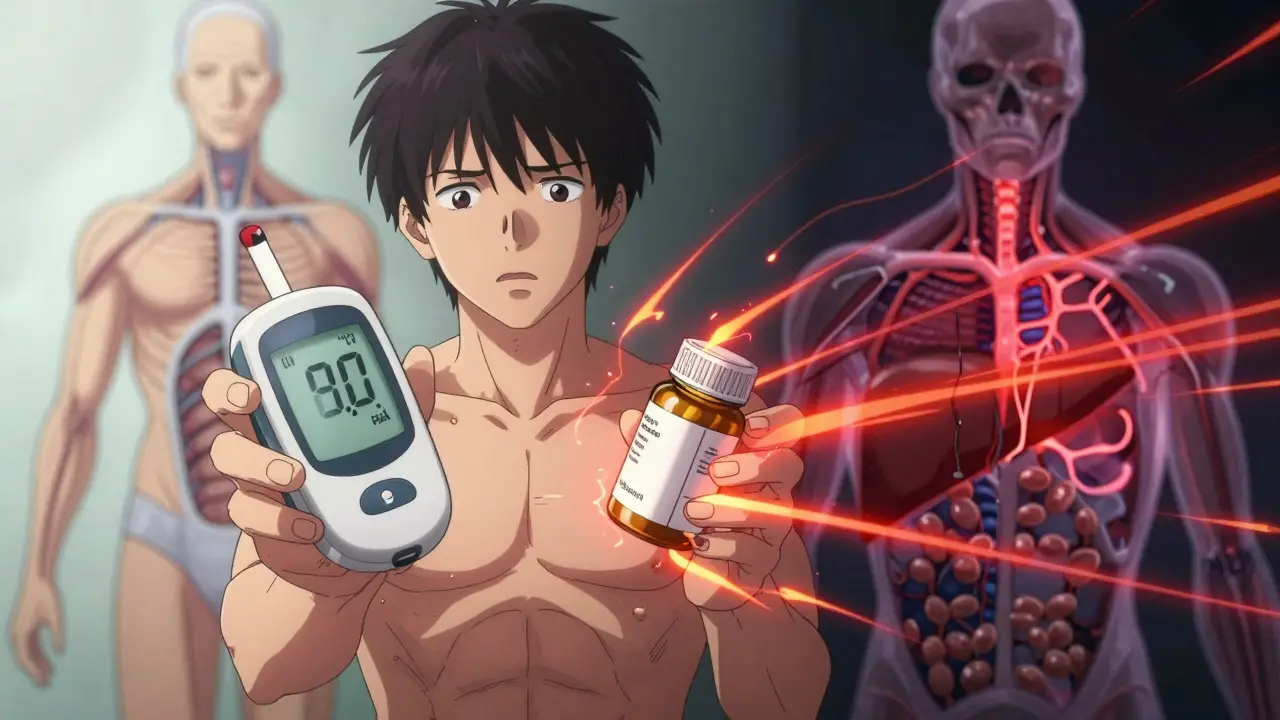
When you take corticosteroids like prednisone or dexamethasone, your body doesn’t just fight inflammation-it also starts pumping out extra glucose. This isn’t a side effect you can ignore. About 20 to 50% of people on high-dose steroids develop high blood sugar, even if they’ve never had diabetes before. It’s not just about sugar intake. The drugs mess with how your liver, muscles, fat, and pancreas work together to control glucose.
Your liver starts making more glucose, up to 40% more than normal. At the same time, your muscles and fat tissue stop responding to insulin like they used to. That means even if insulin is present, glucose can’t get into cells where it’s needed. Your pancreas also struggles. Steroids reduce insulin production by 20 to 35%, and they damage the cells that make it. The result? Blood sugar climbs fast-sometimes within 24 to 48 hours of starting treatment.
Who’s most at risk
Not everyone on steroids gets high blood sugar. But certain people are far more likely to. If you’re over 50, your risk jumps 3.1 times. If you’re overweight (BMI 25 or higher), it’s 2.5 times higher. A family history of diabetes? That adds another 2.7 times the risk. And if you’ve had gestational diabetes before, your chance of steroid-induced hyperglycemia is more than four times greater.
Dose matters. Taking just 7.5 mg of prednisone daily triples your risk. Dexamethasone is even stronger-6 to 8 times more likely to spike blood sugar than prednisone at the same anti-inflammatory dose. Each extra 5 mg of prednisone increases your risk by 18%. And it’s not just the dose-it’s how long you’re on it. After two weeks, your risk climbs 12% every week.
People with kidney problems (eGFR under 60) face a 3.8 times higher risk. Even short courses can trigger problems if you’re already at risk. That’s why doctors should screen patients before starting treatment, not wait for symptoms to show up.
What the symptoms look like (and what they don’t
Many people assume high blood sugar means thirst, frequent urination, and fatigue. And yes, those happen. Sixty-five percent of patients feel unusually thirsty. Seventy-two percent go to the bathroom more often. Eighty-one percent report constant tiredness. But here’s the catch: nearly 40% of cases show no symptoms at all. That’s why routine testing is critical.
And it’s easy to confuse steroid side effects with high blood sugar. Steroids make you hungrier-85% of patients report increased appetite. They cause weight gain, often 2.5 to 4 kg in the first month. Blurred vision and mood swings are common too. So if you’re on steroids and feel foggy or irritable, is it the drug… or is your blood sugar out of control? You can’t tell by feel alone. That’s why checking your glucose levels is the only reliable way to know.

How to monitor blood sugar properly
If you’re taking 20 mg or more of prednisone daily (or the equivalent), you need to check your blood sugar at least twice a day. One test should be fasting, before breakfast. The other should be two hours after your largest meal. Some patients need more frequent checks if their levels are unstable.
The thresholds for action are clear: if your fasting glucose is above 140 mg/dL (7.8 mmol/L), or your random reading is over 180 mg/dL (10.0 mmol/L), it’s time to start treatment. Don’t wait for symptoms. Don’t assume it’s just temporary. High blood sugar during steroid therapy can lead to dangerous complications like hyperglycemic hyperosmolar state-fatal in 15 to 20% of cases-or diabetic ketoacidosis.
Timing matters too. Steroids peak in your system 4 to 8 hours after you take them. So if you take your dose in the morning, your blood sugar will climb in the afternoon. Check your levels then, not just in the morning. And if you’re on dexamethasone, which lasts 36 to 72 hours, your glucose stays high longer. You can’t just test once and assume you’re safe.
Managing blood sugar with insulin
For most patients, insulin is the most effective and safest option. Oral diabetes pills often don’t work well because steroids keep blocking insulin’s effects. Insulin bypasses that problem-it directly lowers glucose.
The standard approach is basal-bolus insulin: a long-acting shot once or twice a day to cover background needs, plus rapid-acting insulin at meals. For every 10 mg increase in prednisone above 20 mg daily, insulin needs go up by 20%. At meals, one unit of rapid-acting insulin typically covers 5 to 10 grams of carbs. That’s a starting point-adjustments are needed based on glucose readings.
Patients with pre-existing type 2 diabetes often need 50 to 100% more insulin while on steroids. That’s not a mistake-it’s expected. Many patients panic when their numbers jump and think they’ve “failed” their diet or meds. But it’s the steroid doing it. You’re not broken. You just need more insulin.
Why oral meds can be risky
Sulfonylureas like glibenclamide or glipizide force your pancreas to release more insulin. That sounds good, right? But steroids are already suppressing insulin production. So when you add a sulfonylurea, you’re asking your pancreas to work harder when it’s already struggling. That can lead to dangerous lows, especially when the steroid dose is lowered.
When steroids are tapered, insulin resistance drops fast. But sulfonylureas keep working. That mismatch causes hypoglycemia. In fact, 37% of adverse events linked to oral diabetes drugs during steroid treatment happen during tapering. That’s why many experts avoid sulfonylureas entirely in this setting.
Metformin is safer for patients with insulin resistance, but it doesn’t fix the problem fast enough for acute spikes. GLP-1 agonists like semaglutide are being studied in trials like GLUCO-STER, and early results show 28% fewer low blood sugar events than insulin. But they’re not yet standard for short-term steroid use.

What happens when you stop steroids
The good news? Steroid-induced diabetes usually goes away. Blood sugar levels start dropping within 24 to 48 hours of stopping steroids. Most people return to normal within 3 to 5 days. That’s why it’s called “steroid-induced”-it’s temporary.
But here’s the problem: many patients don’t know that. After their steroid course ends, they keep taking diabetes meds because they think they still have diabetes. That leads to dangerous lows. Others don’t get follow-up testing and never realize they had a temporary spike.
Doctors need to tell patients: “This is caused by the medicine. When it’s gone, your sugar should come down. We’ll check it again in a week.” And patients need to know: “Don’t keep taking pills unless your doctor says so.”
Real-world gaps in care
Despite clear guidelines, many patients are left in the dark. A 2022 audit found that 35% of people on long-term steroids in primary care never had their blood sugar checked. In hospitals, 68% of patients on Reddit’s diabetes forum said they weren’t warned about the risk. That’s not just poor communication-it’s a safety gap.
Some hospitals now use apps like STEROID-Glucose, which gives real-time insulin dose suggestions based on steroid amount and glucose readings. In pilot studies, it cut hyperglycemic events by 32%. But these tools aren’t widely available. Most clinics still rely on paper charts and guesswork.
Even worse, patients often don’t get education. They’re given a prescription for prednisone and told to take it. No mention of glucose. No plan for monitoring. No warning that their blood sugar might climb. That’s not just negligence-it’s preventable harm.
What’s next for treatment
Researchers are working on better drugs. A new class called tissue-selective glucocorticoid receptor modulators is in phase II trials. One compound, XG-201, reduced hyperglycemia by 65% compared to prednisone, while keeping the anti-inflammatory effects. That could change everything.
Meanwhile, corticosteroid use is growing. In CAR-T cell cancer therapy, 75 to 85% of patients develop severe hyperglycemia. That’s a new wave of cases doctors aren’t fully prepared for. The Endocrine Society predicts steroid-induced diabetes will become the third most common cause of secondary diabetes by 2030.
Until better drugs arrive, the best tool we have is awareness, monitoring, and timely insulin use. It’s not glamorous. But it saves lives.
Can corticosteroids cause diabetes in people who never had it before?
Yes. Corticosteroids like prednisone and dexamethasone can trigger steroid-induced diabetes in people without prior diabetes. This happens in 10 to 30% of patients on high-dose therapy. It’s not true type 2 diabetes-it’s a temporary condition caused by the drug’s effect on insulin resistance and insulin production. Blood sugar usually returns to normal within days after stopping the steroid.
How soon after starting steroids does blood sugar rise?
Blood sugar can rise within 24 to 48 hours of starting high-dose corticosteroids. The peak effect usually occurs 4 to 8 hours after taking the dose. For example, if you take prednisone in the morning, your blood sugar may climb by afternoon. This timing matters for when you test your glucose and when you take insulin.
Is insulin the best treatment for steroid-induced hyperglycemia?
For most patients, yes. Insulin is the most effective and safest option because it directly lowers blood glucose without relying on the body’s impaired insulin response. Oral medications like sulfonylureas can cause dangerous low blood sugar when steroids are tapered. Basal-bolus insulin regimens are preferred, with doses adjusted based on steroid amount and glucose readings.
Do I need to keep taking diabetes meds after stopping steroids?
No, not unless your doctor says so. Steroid-induced hyperglycemia usually resolves within 3 to 5 days after stopping the drug. Continuing diabetes medications can lead to hypoglycemia. Always have your blood sugar checked after stopping steroids, and only continue meds if your levels remain high after a full week without steroids.
What’s the difference between steroid-induced diabetes and type 2 diabetes?
Steroid-induced diabetes is caused by medication and is usually temporary. It results from insulin resistance and reduced insulin production triggered by corticosteroids. Type 2 diabetes is a chronic condition caused by long-term insulin resistance and beta-cell decline, often linked to genetics, weight, and lifestyle. While the symptoms are similar, the cause, duration, and treatment approach differ. Steroid-induced diabetes doesn’t mean you’ll develop type 2 diabetes-but it does increase your long-term risk.