

What’s Really Happening in Hospitals and Clinics Right Now?
It’s not just about running out of bandages or running low on antibiotics. The real crisis hitting hospitals and clinics today is staffing. Nurses, doctors, and support staff are stretched so thin that patient safety is at risk. In 2025, over 42 U.S. states are projected to face nursing shortages so severe that hospitals are forced to close beds, delay surgeries, and turn away patients. This isn’t a future warning-it’s happening now.
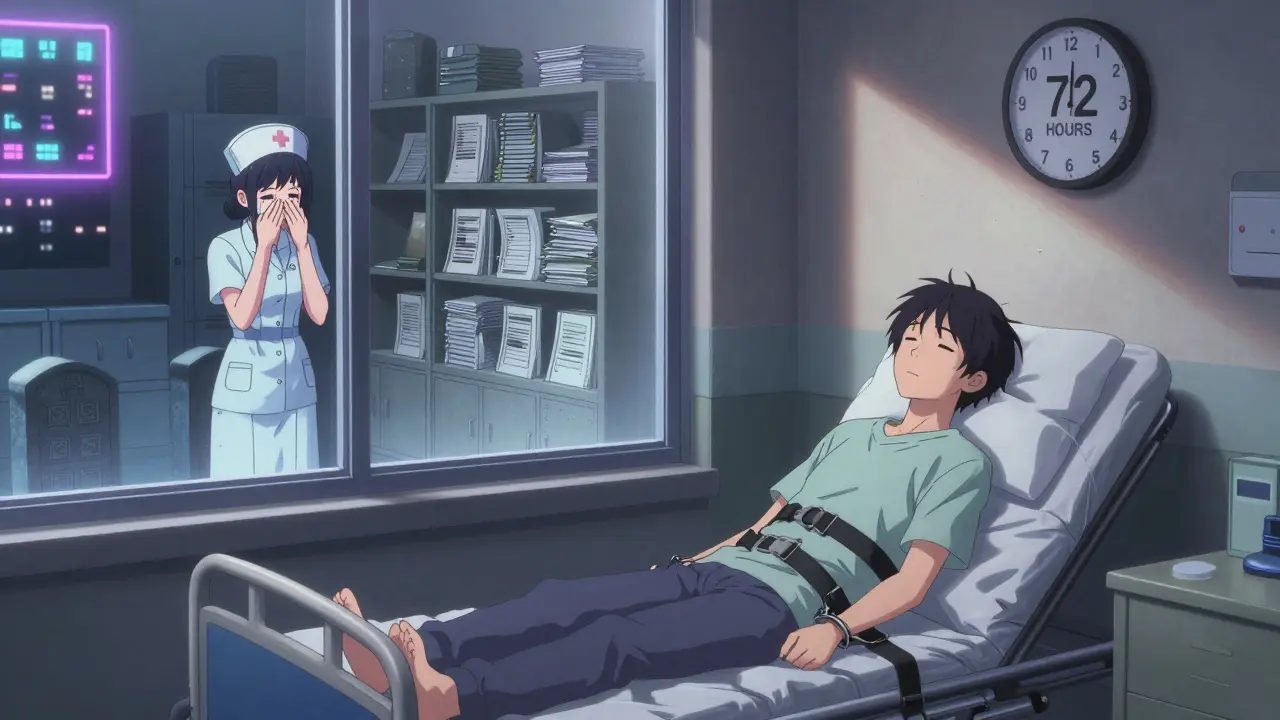
Imagine working 16-hour shifts with five patients at a time when you’re trained to handle two. That’s the reality for many nurses in rural emergency rooms and urban ICUs. A 2022 study in JAMA found that when nurse-to-patient ratios go above 1:4, mortality rates jump by 7%. In places like Nevada and West Virginia, patients are waiting up to 72 hours in ERs just to be seen. And it’s not because the hospitals are full-it’s because there aren’t enough people to care for them.
Why Are So Many Healthcare Workers Leaving?
The pandemic didn’t create the shortage-it exposed it. Before 2020, hospitals were already struggling to keep up with aging populations and rising chronic diseases. But when COVID-19 hit, nurses and aides worked nonstop for months, often without adequate PPE or mental health support. The result? Turnover hit 104% in some units. That means, on average, every nurse in a unit left and was replaced more than once in a single year.
Now, nearly half of all registered nurses in the U.S. are over 50. One-third will retire in the next 10 to 15 years. Meanwhile, nursing schools can’t keep up. In 2023 alone, over 2,300 qualified applicants were turned away from nursing programs because there weren’t enough faculty to teach them. It’s a broken pipeline. More people want to enter the field, but the system can’t train them fast enough.
How Rural Clinics Are Getting Crushed
The problem hits hardest outside big cities. Rural hospitals have 37% higher vacancy rates than urban ones. In places like eastern Kentucky or western Montana, clinics often rely on one or two doctors who cover everything-from pediatrics to geriatrics. When those providers take a day off, the clinic shuts down. Many rural hospitals now operate at 60% staffing. Some have closed entirely.
It’s not just about location-it’s about pay. A travel nurse in New York City can earn $185 an hour. Meanwhile, a permanent nurse at a small-town clinic makes $65. That gap makes retention impossible. And when clinics can’t hire locally, they turn to temp agencies. But those contracts cost hospitals and clinics up to 34% more, which means less money for equipment, maintenance, or even basic supplies.

What’s Happening in Emergency Rooms and Behavioral Health
Emergency departments are ground zero. The American College of Emergency Physicians reports that understaffed ERs now have 22% longer wait times than before 2020. Patients with chest pain, strokes, or severe infections are sitting for hours because there’s no one to assess them. In some cases, ambulances have to circle for over an hour before they can offload a patient.
Behavioral health is even worse. There are 12,400 unfilled positions in mental health and substance use services nationwide-up 37% since 2023. People in crisis are being held in ERs for days because there’s no bed in a psychiatric facility. A 19-year-old with a suicide attempt might wait 72 hours for a counselor. A veteran with PTSD might spend a week in a general hospital bed because no mental health facility will take them. This isn’t treatment-it’s warehousing.
Technology Isn’t Saving Us-Yet
Hospitals are trying to fix this with tech. AI tools that auto-document patient visits, remote monitoring systems, and virtual triage apps are being rolled out. Some pilot programs reduced ER visits by 19%. But these aren’t magic fixes. Training staff to use them takes an average of 8.7 weeks. And 68% of hospitals still struggle with broken electronic health records that don’t talk to each other.
Telehealth nurse triage sounds great-until you realize it costs $2.3 million to set up per health system. And even then, it only works if patients have reliable internet and smartphones. In rural areas, that’s not a given. Meanwhile, the nurses who are already overworked are being asked to learn new software on top of their 12-hour shifts. It’s adding stress, not relieving it.
The Real Cost: Lost Lives and Lost Trust
Behind every statistic is a person. A woman who died because her sepsis wasn’t caught in time. A child who missed a cancer screening because the clinic was closed. An elderly man who fell in his home because no one came to check on him. A nurse who quit after two near-miss medication errors.
Dr. Atul Gawande put it plainly: “The healthcare staffing crisis represents the most significant threat to healthcare quality since the advent of antibiotics.” Every 10% increase in nurse turnover leads to a 6.5% rise in hospital infections. That’s not just bad service-it’s preventable death.
Patients are noticing. Healthgrades reports a 27% increase in complaints about long waits since 2022. On Reddit, nurses share stories of working double shifts while crying in the supply closet. On LinkedIn, hospital CEOs admit they’re closing beds because they can’t staff them-losing millions in revenue every month. Trust in the system is crumbling.
What’s Being Done-and Why It’s Not Enough
Some states are trying. California now requires nurse-to-patient ratios of 1:5 in medical-surgical units. Massachusetts offers loan forgiveness that’s cut its shortage to 8% below the national average. The Biden administration just allocated $500 million for nursing education. But experts say that’s only 18% of what’s needed.
The American Medical Association says $1.2 billion a year is required just to train enough nurses. Right now, we’re spending $247 million. That’s like trying to put out a house fire with a water pistol.
Some hospitals, like Mayo Clinic, have redesigned entire care teams over 18 months, investing $4.7 million. They cut nurse turnover by 31%. But those are the exceptions. Most small clinics and rural hospitals can’t afford that kind of investment.
What Comes Next?
Without major intervention, the U.S. will face a shortage of over 500,000 nurses by 2030. The global gap? Ten million healthcare workers. That’s not a prediction-it’s a countdown.
The solution isn’t just more money. It’s better working conditions. Fair pay. Mental health support. Realistic patient loads. Investment in education. And respect.
Right now, we’re treating healthcare workers like replaceable parts. But they’re not. They’re the backbone of the system. And if we don’t fix this, the consequences won’t just be longer wait times. They’ll be lives lost-and a health system that no longer works for anyone.
Why are hospitals closing beds due to staffing shortages?
Hospitals close beds because they don’t have enough nurses, doctors, or support staff to safely care for patients. A single ICU bed requires at least two nurses for a 12-hour shift. If only one nurse is available, the bed can’t be used. This isn’t about space-it’s about safety. Regulators and hospitals themselves have strict staffing rules to prevent errors and deaths, so when staff are missing, beds stay empty.
Are travel nurses making the shortage worse?
They’re a band-aid, not a cure. Travel nurses fill critical gaps-especially in rural areas and during surges-but they’re expensive. Hospitals pay up to 34% more for them, which drains budgets meant for permanent hires or training. Worse, their short-term contracts mean hospitals never build stable teams. Permanent staff often resent the pay gap, which lowers morale. Travel nurses are necessary now, but they don’t solve the root problem: we’re not training or retaining enough people.
Can AI replace nurses or doctors?
No-and it shouldn’t. AI can help with scheduling, documentation, or flagging lab results, but it can’t hold a dying patient’s hand, recognize subtle changes in behavior, or make ethical calls in emergencies. The idea that tech will fully replace staff is misleading. The real goal is to use AI to reduce paperwork and burnout so nurses can spend more time with patients-not replace them.
Why aren’t more people becoming nurses?
Many are deterred by the workload, low pay relative to responsibility, and lack of support. Nursing school is expensive and competitive-over 2,300 qualified applicants were rejected in 2023 because there weren’t enough instructors. Once in the job, many face unsafe ratios, mandatory overtime, and emotional trauma. A 2025 Medscape survey found 63% of nurses are considering leaving the field, mostly because of burnout and unsafe conditions.
What can be done to fix this crisis?
Four things: First, fund nursing education properly-$1.2 billion a year, not $247 million. Second, enforce safe staffing ratios nationwide, not just in a few states. Third, pay nurses fairly and offer mental health support. Fourth, reduce administrative burden with better tech and fewer pointless forms. Without systemic change, we’ll keep patching the same holes.




Reviews