
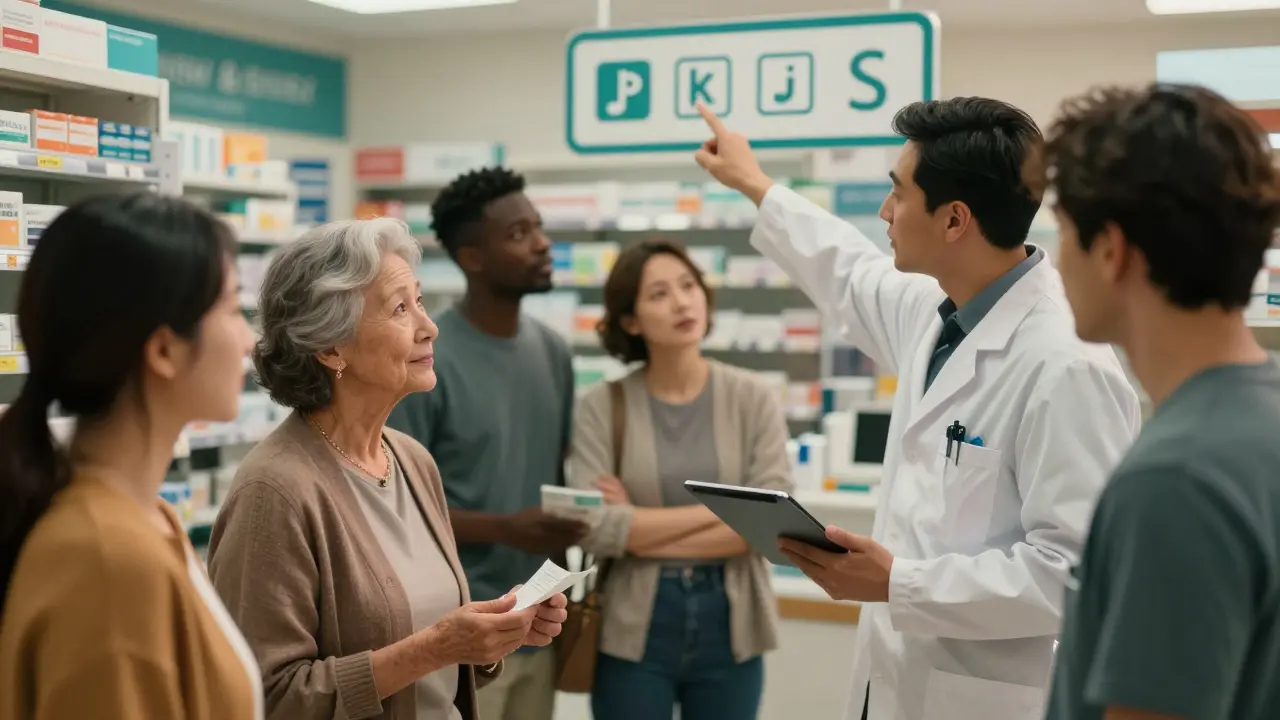
When you pick up a prescription, you expect the pharmacist to explain how to take it - when to take it, what to avoid, what side effects to watch for. But what if you don’t speak English well? Or at all? For millions of people in the U.S., this isn’t a hypothetical question. It’s a daily risk. That’s where interpreter rights come in - and why they’re not optional. They’re a lifeline.
Why Language Access Isn’t Just Nice - It’s Necessary
In the U.S., about 25 million people - one in every 13 - have limited English proficiency. That means they struggle to understand written or spoken English well enough to safely manage their medications. Think about it: a label that says "Take once daily" means nothing if you can’t read it. A warning like "May cause dizziness" could be missed entirely. And if you don’t know to avoid grapefruit with your blood pressure med? That’s not a mistake - it’s a danger. Studies show that poor language support leads directly to medication errors. One major 2018 study found that LEP patients were far more likely to overdose, skip doses, or mix dangerous drug combinations simply because they didn’t understand the instructions. The result? More hospital visits, more complications, more deaths that could have been prevented. The good news? The law now requires pharmacies to fix this.What the Law Actually Says
Federal law under Section 1557 of the Affordable Care Act (ACA) says any healthcare provider that gets federal funding - which includes almost every pharmacy in the country - must give patients with limited English proficiency meaningful access to care. That includes medication counseling. And since July 5, 2024, those rules got even stronger. Here’s what that means in practice:- You have the right to free, professional interpretation - in person, by phone, or video - when the pharmacist explains your medication.
- You cannot be asked to use a child, family member, or friend as an interpreter - unless you specifically ask for it.
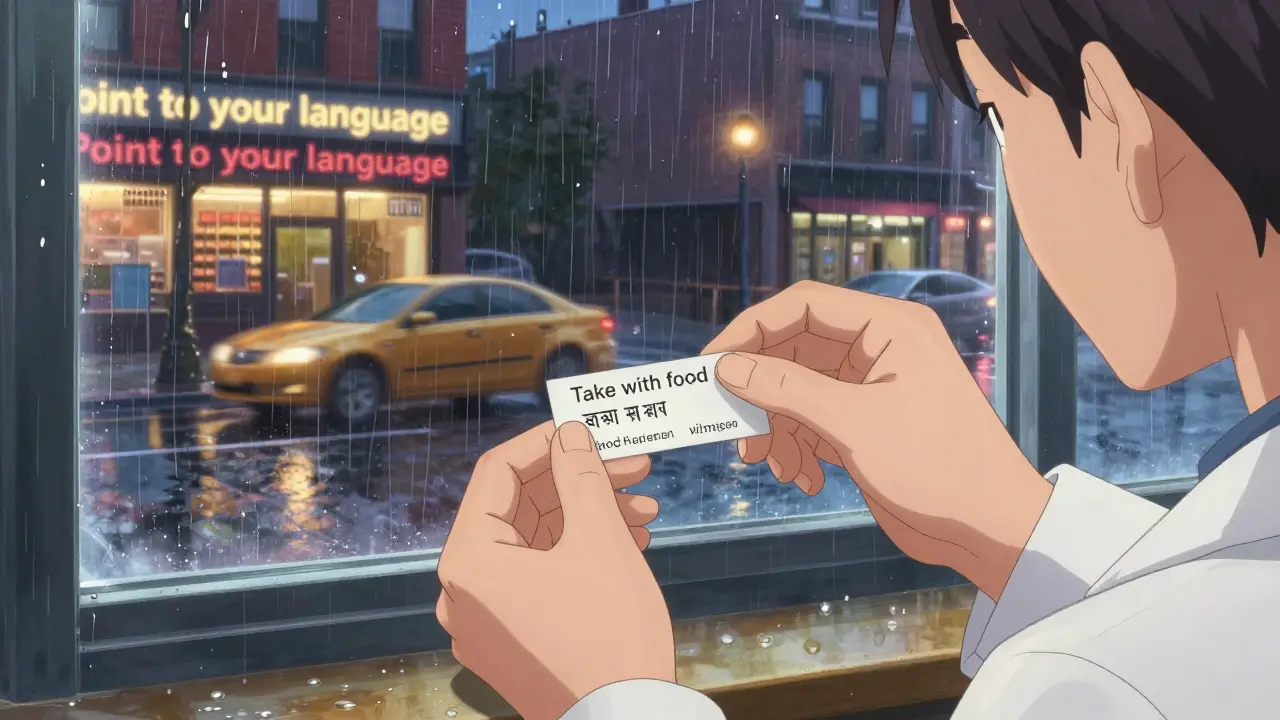
- Pharmacies must translate your prescription label, warning labels (like "Take with food" or "May cause drowsiness"), and any written instructions into your language.
- They must post clear signs near the counter that say "Point to your language" - with pictures of common languages spoken in your area.
How New York Set the Standard
New York State didn’t wait for federal rules to catch up. Back in 2012, it passed SafeRx - one of the strictest pharmacy language access laws in the country. It forced chain pharmacies to do more than just offer phone interpreters. They had to:- Translate all warning labels - not just the main instructions.
- Use the exact phrase "Point to your language" on signs.
- Offer interpretation services immediately - no waiting, no excuses.
- Track and document every patient’s language preference in their file.
What Languages Are Covered?
It’s not just Spanish. It’s not even just the top five. New York’s rules say: if a language is spoken by 1% or more of the population in a given area, the pharmacy must offer services in that language. That means in parts of Brooklyn, you might see signs for Bengali, Mandarin, Russian, Arabic, and Haitian Creole - all at the same pharmacy. And there’s a cap: no more than seven languages per region. That keeps things manageable for pharmacies, but it also means some smaller communities might get left out. That’s a real problem. A 2023 survey found that in neighborhoods with rapidly growing immigrant populations, pharmacies sometimes didn’t update their language lists fast enough. If your language isn’t on the sign, ask for help anyway. The law still protects you.What If You’re Not Getting Help?
You have rights - but you have to know how to use them. If a pharmacist refuses to provide an interpreter:- Ask again - calmly and clearly. Say: "I need a professional interpreter to understand my medication. It’s my right under federal law."
- If they still say no, ask to speak to the manager. Most managers know the rules.
- If that doesn’t work, write down the date, time, pharmacy name, and what happened. Call the New York State Office of Language Access Services at 1-800-688-8814. They’re available 24/7.
- You can also file a complaint with the U.S. Department of Health and Human Services. They investigate these cases.
Real Stories Behind the Numbers
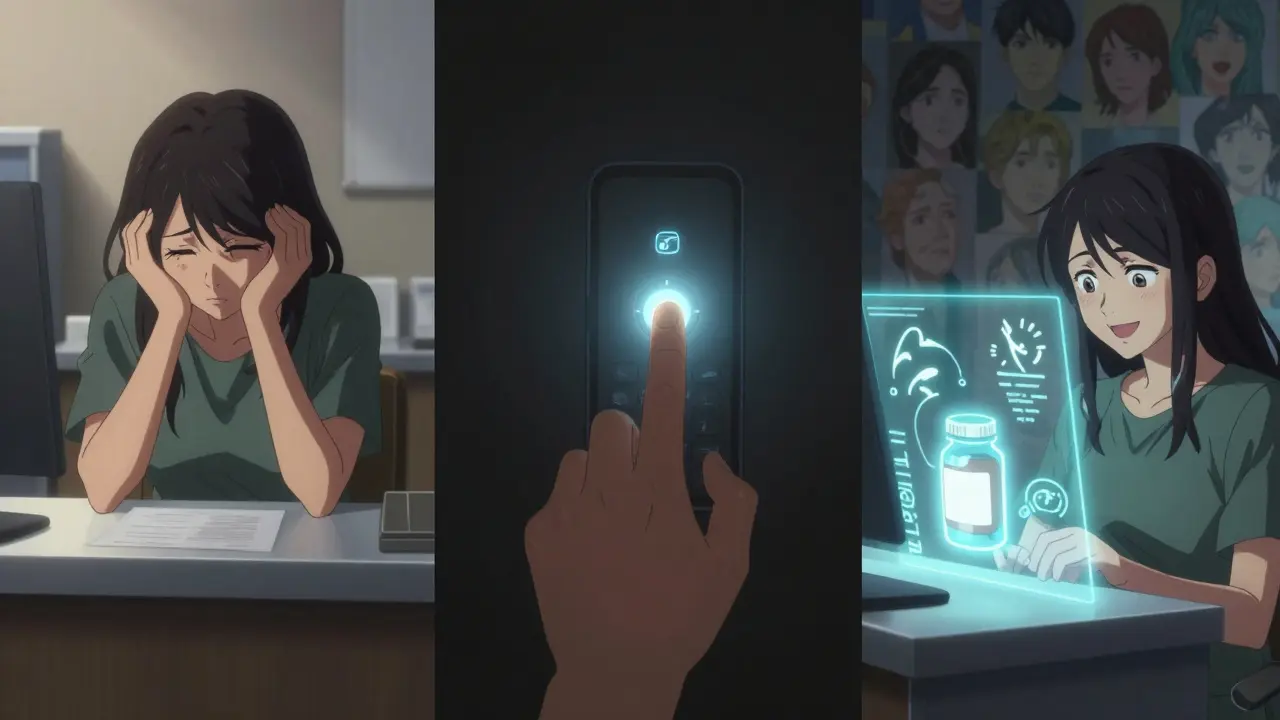
A pharmacist in the Bronx, u/NYCPharmTech, posted on Reddit in July 2024: "Since we started following the new rules, we’ve had zero medication errors tied to language barriers in our pharmacy. Our Spanish and Bengali-speaking patients now ask us questions. They’re more confident. That’s what this is about." A Chinese-speaking woman reviewed CVS in Queens: "They have the signs. But when I needed help, no one knew how to call the interpreter. I waited 20 minutes." That’s the gap between policy and practice. The law says "immediate" access. But some pharmacies still treat it like an afterthought. The good news? Community groups are stepping in. In 2022, a study found that 83% of LEP patients recognized the "Point to your language" signs and knew how to point. That’s a win. But 29% still struggled to get help on weekends. That’s not okay.What Pharmacies Need to Do
It’s not easy for them either. Small, independent pharmacies often can’t afford full-time interpreters or expensive software. Many rely on contracted services like LanguageLine Solutions or TransPerfect - companies that provide phone or video interpreters on demand. Big chains like CVS and Walgreens spent over $10 million in 2023 training staff. They now require 10 hours of mandatory training for every employee. That includes:- How to spot when a patient needs help
- How to use the interpreter system
- How to respect cultural differences
- How to document language needs
The Bigger Picture
This isn’t just about pharmacies. It’s about dignity. It’s about safety. It’s about equity. The American Pharmacists Association says professional interpretation reduces medication errors by 67%. Dr. Glenn Flores from JAMA found that 32% of adverse drug events in LEP patients were caused by language barriers alone. That’s not just statistics. That’s mothers not knowing how to give insulin. Grandparents taking double doses because they misunderstood "twice daily." Teens skipping their asthma inhaler because they thought it was "optional." And it’s working. By 2026, federal rules will require all Medicare and Medicaid providers to be fully compliant. The Congressional Budget Office estimates these rules will prevent 14,000 emergency visits each year - and save $187 million. The tools are here. The laws are clear. The evidence is overwhelming. If you’re LEP - or if you care about someone who is - know this: you have the right to understand your medication. No excuses. No exceptions. No waiting.Do I have to pay for an interpreter at the pharmacy?
No. Federal law requires pharmacies to provide free interpretation services for medication counseling. You cannot be charged for an interpreter, whether they are in person, on the phone, or via video. This applies to all pharmacies that receive federal funding - which includes nearly all pharmacies in the U.S.
Can my child or family member interpret for me?
You can ask for a family member to help, but the pharmacy cannot require it. Federal rules explicitly forbid providers from using minors or family members as interpreters unless you specifically request it. This is to protect patient safety - family members may not understand medical terms, and children shouldn’t be put in charge of adult health decisions.
What if my language isn’t listed on the "Point to your language" sign?
Even if your language isn’t shown on the sign, the pharmacy is still required to provide an interpreter. The sign lists the most common languages in the area, but the law covers any language spoken by 1% or more of the population. If you need help, ask. The pharmacy must arrange an interpreter - even if it takes a few minutes.
Are translation services required for all prescription labels?
Yes. In states like New York and California, pharmacies must translate both the main prescription label and all auxiliary warning labels - such as "Take with food," "May cause drowsiness," or "Avoid alcohol." Federal law under ACA Section 1557 also requires meaningful access to written instructions, which includes translation of all safety-related text.
How do I report a pharmacy that won’t give me an interpreter?
Write down the date, time, pharmacy name, and what happened. Then call the Language Access Help Desk at 1-800-688-8814. You can also file a complaint with the U.S. Department of Health and Human Services Office for Civil Rights. These agencies investigate violations and can require pharmacies to change their practices.


Reviews
Let me get this straight - we’re now forcing pharmacies to hire interpreters for every language under the sun? Cool. Meanwhile, my cousin got her insulin script in English and still messed up the dosage because she didn’t read it. Language access is great, but maybe stop pretending that translating words fixes human negligence. People need to take responsibility for their own health too. This whole thing feels like virtue signaling with a pharmacy receipt.
Bro, this is beautiful. In India, we’ve been doing this for years - grandma reads the label out loud in Hindi, then explains it in Tamil to the grandkids. No fancy tech needed. But I love that the U.S. is finally catching up. Translation isn’t just about words - it’s about trust. And when someone feels seen? That’s medicine too. Keep pushing for this. The world needs more of this energy.
OMG YES I’VE BEEN WAITING FOR THIS!! I work at a pharmacy and we just got the new signs last month and like?? 3 people pointed to Bengali and we were like ‘wait what?’ and called the interpreter and they were SO RELIEVED. Like one lady cried. I’m not crying you are. But seriously, this is life changing. Also I typo’d ‘interpreter’ as ‘interperter’ lmao oops.
Appreciate the breakdown. I’ve seen pharmacists struggle with this - not because they’re lazy, but because they’re overwhelmed. Training matters. Resources matter. The law’s clear, but implementation? That’s where we all need to pitch in. Maybe we stop yelling at the pharmacist and start asking if they need help accessing the interpreter system. Small shifts, big impact.
so i went to cvs last week and asked for someone to help me with my med label in hindi… they said ‘oh we dont have that’ and gave me a paper with english. i pointed to the sign that said ‘point to your language’ and they just stared. i walked out. no one said sorry. no one called anyone. just… silence. we need more than signs. we need accountability.
Let’s be real - this isn’t about language access. This is a Trojan horse for the globalist agenda. They’re flooding pharmacies with interpreters for languages spoken by 1% of the population? That’s not inclusion - that’s cultural dilution. And who’s paying for it? YOU. Your taxes. Your premiums. Your insurance hikes. Then they tell you to ‘ask for help’ like you’re some kind of beggar. The real crisis? People are losing their ability to speak English. And now we’re rewarding that? Wake up. This isn’t safety - it’s surrender.
My mom’s Vietnamese. She never asked for help - just nodded and took the pills. Then she got sick. We found out later she thought ‘twice daily’ meant morning and night… not 12 hours apart. That’s the silent crisis. No one’s talking about how pride gets in the way of safety. This law? It’s not just paperwork. It’s a lifeline for people too scared to speak up.
While the intent behind these policies is commendable, the practical execution remains uneven. The data from New York is compelling - a 28% reduction in ER visits is not trivial. However, we must acknowledge the disproportionate burden placed on small, independent pharmacies. Without targeted federal subsidies or streamlined interpreter contracts, these regulations risk becoming punitive rather than protective. Sustainable equity requires not just mandates, but meaningful support structures.
I’ve worked in public health for 15 years. This is the first time I’ve seen a policy that actually works. Not because it’s perfect - but because it’s specific. ‘Point to your language’ signs? Genius. Simple. Visual. No literacy required. And the 1% rule? Smart. It’s not about every language - it’s about the languages that matter where people live. This is how policy should be built: grounded, measurable, human.
My daughter’s teacher is from Syria. She told me her mom had to wait 45 minutes for an interpreter at the pharmacy last month. The pharmacist said they were ‘waiting for the system to connect.’ That’s not access. That’s neglect. We need real-time interpreters - not ‘as soon as possible.’ If your life depends on it, ‘soon’ isn’t good enough.
It’s called English. Learn it.
They say ‘free interpretation’ but nobody tells you the interpreter might be 3,000 miles away speaking with a British accent while your grandma’s in Queens trying to understand ‘dizziness’ vs ‘drowsiness.’ And the sign says ‘Point to your language’ - but what if you don’t know what language you speak? What if you’re from a village no one’s mapped? This isn’t helping. It’s performative. And the FDA doesn’t even track these errors. Who’s really in charge here?