
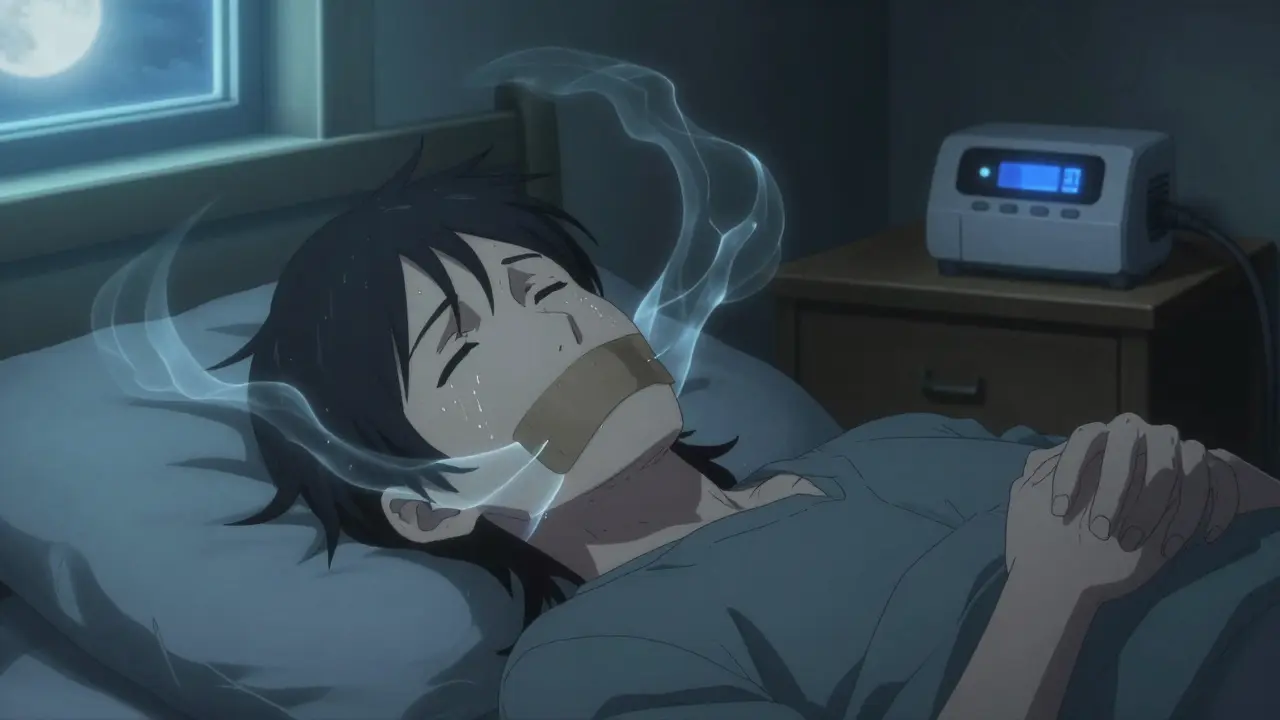
More than 1.2 million TikTok videos claim mouth taping can fix snoring, cure sleep apnea, and even reverse aging. But here’s the truth: mouth taping isn’t a miracle cure-it’s a risky experiment many people are doing without knowing the dangers.
If you’ve ever woken up with a dry mouth, sore throat, or that groggy, unrefreshed feeling, you’re not alone. Mouth breathing during sleep is common, especially if you have nasal congestion, allergies, or mild sleep apnea. That’s why mouth taping caught on. The idea is simple: stick a small piece of tape across your lips at night to force yourself to breathe through your nose. Sounds harmless, right? But the reality is far more complicated-and potentially dangerous.
What Is Mouth Taping, Really?
Mouth taping involves applying a thin strip of medical-grade adhesive tape-like 3M Micropore or similar hypoallergenic paper tape-horizontally across the lips before bed. The goal is to physically block mouth opening during sleep, pushing the body to rely on nasal breathing instead. Proponents say this reduces snoring, improves oxygen levels, and even helps with teeth grinding or dry mouth.
But here’s the catch: nasal breathing isn’t the problem for everyone. For people with blocked nasal passages-about 1 in 5 adults, according to CDC data-forcing the mouth shut doesn’t fix anything. It just makes breathing harder. And that’s when things get risky.
The Evidence: What Studies Actually Show
A 2020 systematic review in PLOS One analyzed 10 studies involving 213 people who tried mouth taping. The results? Mixed at best. Only two studies showed statistically significant improvements in sleep apnea measures. Most had tiny sample sizes, no control groups, or poor methods. None were long-term.
One NIH study from 2022 found that mouth taping reduced snoring and apnea events by about half in people with mild obstructive sleep apnea (OSA)-but only if they could breathe through their nose. The problem? Three out of four participants in that study had positional OSA, meaning their apnea only happened when lying on their back. That’s not the same as general sleep apnea. Taping didn’t help the others.
And then there’s the “mouth puffing” phenomenon. Researchers in a 2022 Journal of Clinical Sleep Medicine study watched 10 people with OSA sleep with tape on. Four of them didn’t stop breathing through their mouths-they just forced air around the tape edges, creating visible air leaks. That means the tape wasn’t working. Worse, their oxygen levels dropped more than when they slept without it.
How It Compares to Real Treatments
Let’s put this in perspective. The gold standard for treating moderate to severe sleep apnea is CPAP-a machine that delivers steady air pressure through a nasal mask. It works 85-90% of the time when used correctly. Mandibular advancement devices (MADs), which reposition the jaw, reduce apnea events by 40-60% in mild to moderate cases, according to a 2021 meta-analysis of nearly 4,000 patients.
Mouth taping? It doesn’t come close. The few studies showing benefit are small, short, and don’t account for people who can’t breathe through their nose. Plus, CPAP and MADs are backed by decades of research, FDA clearance, and clinical guidelines. Mouth taping? No FDA approval. No professional endorsement. Just social media hype.
The Safety Risks You’re Not Being Told About
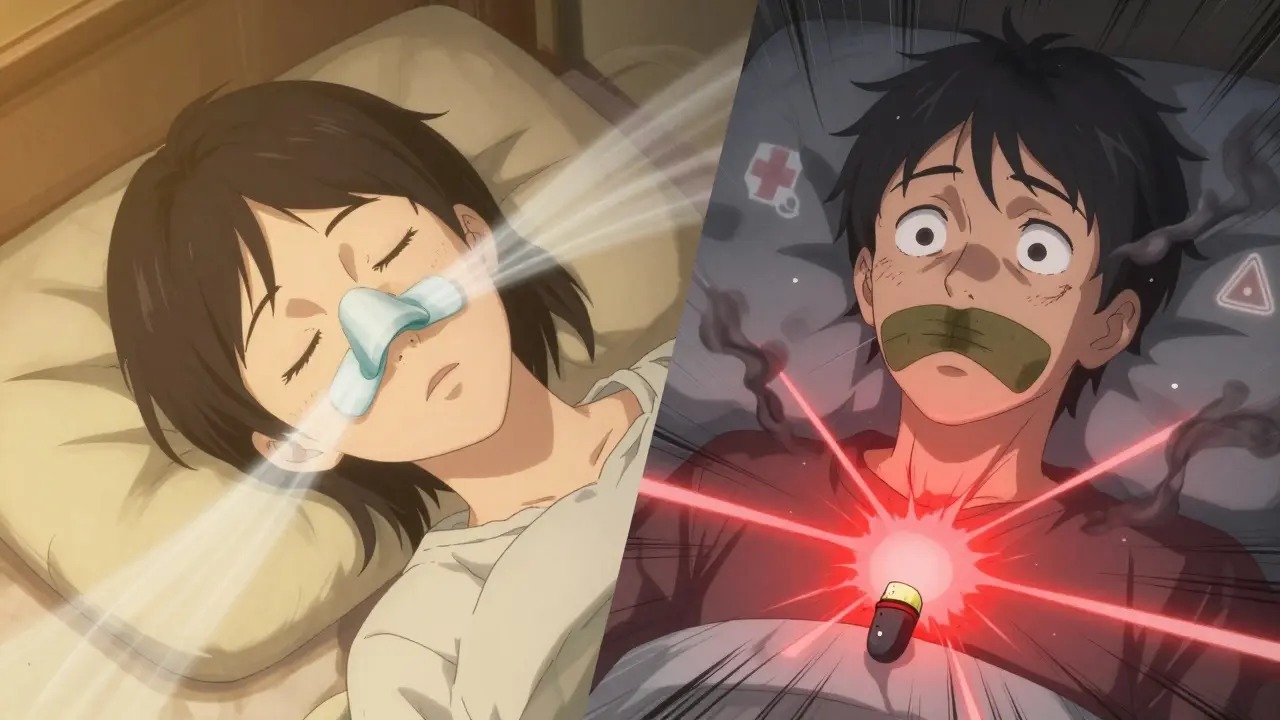
Here’s what no influencer will tell you: mouth taping can be life-threatening for people with undiagnosed sleep apnea.
Dr. Brian Rotenberg, one of the lead researchers on the PLOS One review, says: “Taping the mouth shut during sleep is dangerous, especially among those who may not be aware they have sleep apnea. These individuals are unknowingly making their symptoms worse.”
Why? Because if your nose is blocked and your mouth is taped, you can’t breathe. Your body doesn’t know how to compensate. That’s when oxygen levels drop. A June 2023 study found that 22% of people with mild OSA experienced dangerous oxygen desaturation (below 88%) while taped-compared to only 4% without tape.
Other risks include:
- Skin irritation, redness, or peeling from adhesive
- Anxiety or panic from feeling unable to breathe
- Waking up gasping or choking
- Worsening of existing respiratory conditions
Reddit’s r/SleepApnea community has over 140 comments from people who tried it. 36 reported waking up gasping. 29 had severe skin reactions. 19 said they felt anxious all night. Only 22% said it helped.
Who Should Avoid Mouth Taping
If you have any of these, don’t tape your mouth:
- Any history of snoring, daytime sleepiness, or witnessed breathing pauses
- Nasal congestion, deviated septum, or chronic allergies
- Diagnosed or suspected sleep apnea
- Children or older adults with reduced respiratory reserve
- Anyone who’s ever woken up feeling like they couldn’t breathe
The American Academy of Sleep Medicine, the American Academy of Dental Sleep Medicine, and the Cleveland Clinic all warn against it. The FDA hasn’t approved any mouth tape for sleep apnea treatment. And in August 2022, the FTC sent warning letters to three companies for making false claims about their products.
Why It’s So Popular (And Why That’s Dangerous)
Mouth taping went viral because it’s cheap, simple, and promises quick fixes. A roll of medical tape costs $5-$15. Products like Somnifix Lips Strips sell for $20 a pack. That’s a fraction of the cost of CPAP or dental devices.
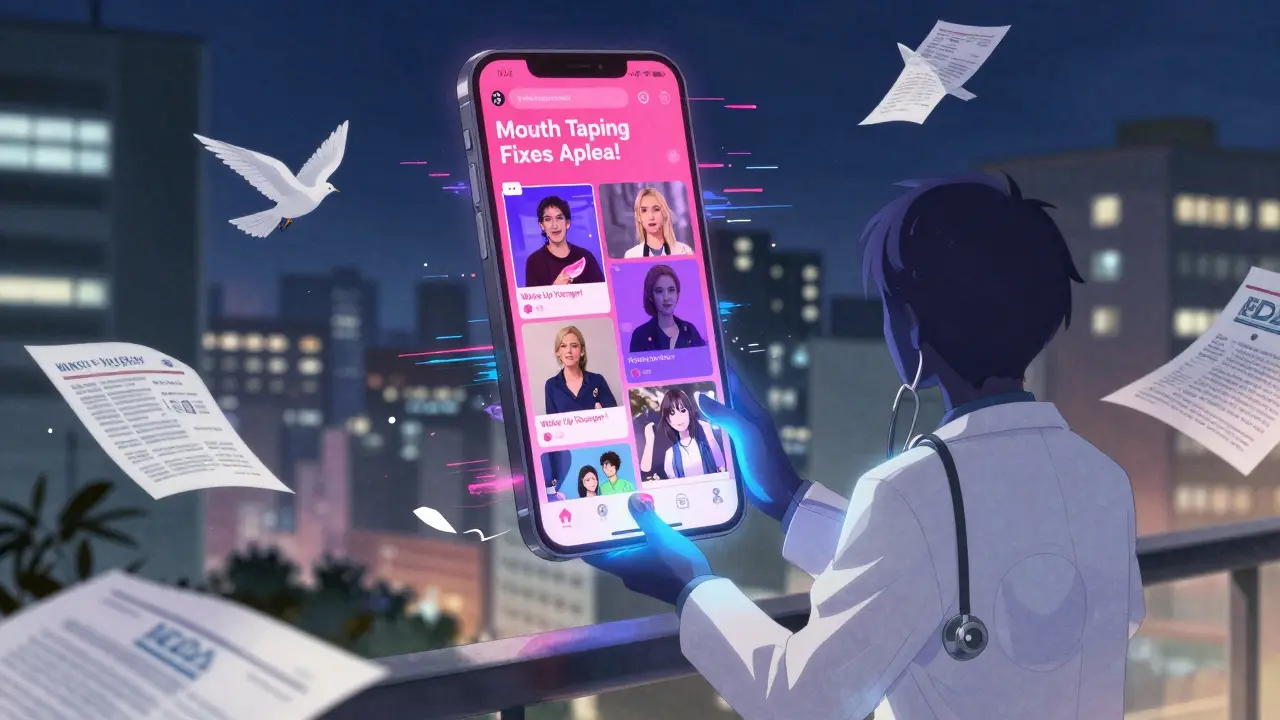
But the real driver? Social media. A University of Pennsylvania analysis found that 73% of #mouthtaping videos on TikTok promoted benefits without mentioning risks. YouTube’s top 50 videos? 87% had no medical disclaimers-even though 41% claimed to treat sleep apnea or improve overall health.
And it’s working. A 2023 survey found 18% of U.S. adults have tried mouth taping. Among 18-34 year olds? 29%. Most didn’t consult a doctor first.
What to Do Instead
If you snore or wake up tired, here’s what actually works:
- Get tested for sleep apnea. A home sleep test or overnight sleep study can confirm if you have it. It’s covered by most insurance.
- Try nasal dilators. Products like Breathe Right strips or Provent (FDA-cleared in September 2023) help open nasal passages without blocking your mouth.
- Use a humidifier. Dry air worsens nasal congestion and mouth breathing.
- Sleep on your side. Positional apnea improves dramatically when you avoid lying on your back.
- Treat allergies. Nasal saline rinses or antihistamines can clear your nose and make breathing easier.
And if you still want to try mouth taping? Do this first: test your nasal breathing during the day. Pinch your nose shut and try to breathe only through your mouth. If you feel panic or struggle, you’re not a good candidate. Then, talk to a sleep specialist-not a TikTok creator.
The Bottom Line
Mouth taping isn’t a solution. It’s a gamble. For a small group of people with mild snoring and clear nasal passages, it might help. But for the majority-especially those with undiagnosed sleep apnea-it’s a hidden risk.
The science doesn’t support the hype. The risks are real. And the medical community is sounding the alarm.
If you’re tired, snoring, or waking up gasping-don’t tape your lips. Get tested. Get help. Your breathing-and your health-depend on it.
Is mouth taping safe for people with sleep apnea?
No. Mouth taping is dangerous for anyone with undiagnosed or diagnosed sleep apnea. It can block airflow when the nose is congested, leading to dangerous drops in oxygen levels. Studies show 22% of people with mild OSA experienced clinically low oxygen levels while taped. The American Academy of Sleep Medicine strongly advises against it.
Does mouth taping reduce snoring?
It may reduce snoring in people who breathe through their mouth due to mild nasal congestion-but only if they can breathe easily through their nose. One study found snoring dropped by about half in a small group of mouth-breathers with positional apnea. But it doesn’t work for most people with true sleep apnea, and it doesn’t fix the underlying cause.
What kind of tape should I use?
If you still choose to try it, use medical-grade hypoallergenic paper tape like 3M Micropore. Avoid duct tape, athletic tape, or any non-medical adhesive. Even then, skin irritation and allergic reactions are common. But remember: no tape is safe if you have breathing problems.
Can mouth taping improve sleep quality?
There’s no strong evidence it improves overall sleep quality. Some people report feeling more rested, but that’s likely due to placebo or coincidental changes in sleep position. Studies measuring actual sleep stages found no consistent improvement. Any perceived benefit is not backed by clinical data.
Are there safer alternatives to mouth taping?
Yes. Nasal dilators (like Breathe Right strips or FDA-cleared Provent), treating allergies, using a humidifier, sleeping on your side, or using a CPAP machine are proven, safe options. If you’re a mouth breather, focus on opening your nasal passages-not blocking your mouth.
Why do doctors warn against mouth taping?
Because it’s unregulated, poorly studied, and can mask or worsen serious conditions like sleep apnea. Many people who try it have undiagnosed breathing disorders. Blocking their mouth without ensuring nasal patency can lead to oxygen deprivation, heart strain, and long-term health risks. Major medical organizations have issued formal warnings.
Is mouth taping FDA-approved?
No. The FDA has not cleared or approved any mouth tape product for the treatment of sleep apnea, snoring, or any sleep disorder. Products marketed for this use are sold as general wellness items to avoid regulation. The FTC has issued warning letters to companies making false health claims.



Reviews
Just tried this for a week and woke up gasping three times. Not worth it. My nose is stuffy at night and the tape just made it worse. Go see a doctor instead.
People keep treating this like a hack when it's a medical risk. If you're snoring or waking up tired, get a sleep study. It's covered by insurance. CPAP works. Mouth tape doesn't. Stop gambling with your breathing.
I used to tape my mouth because I saw it on TikTok. Then I started having panic attacks at night. I stopped. My sleep got better immediately. No one talks about the anxiety part.
Of course it's dangerous. You can't just slap tape on your face and expect biology to obey your Instagram aesthetic. The fact that people think this is science is why we have a public health crisis.
As someone from India where nasal breathing is part of traditional yoga practice, I get why this seems intuitive. But modern sleep science says otherwise. If your nose is blocked, fix the nose-not by taping your mouth shut. Try saline rinses or a humidifier first. Simple, safe, effective.
Wait-so you're telling me the same people who swear by cold showers and tongue scraping are now taping their lips? I’m not surprised. But the data here is solid. This isn’t a trend. It’s a hazard. And the FTC warning? That’s not a footnote. That’s the headline.
My cousin did this for three months. Got a rash that took six weeks to heal. Then found out she had mild sleep apnea. She’s on CPAP now. Says she wishes she’d just gone to the doctor in the first place. No tape. No drama.
It is both intellectually and ethically indefensible to promote an unregulated, non-FDA-approved, clinically unsupported intervention as a therapeutic modality for a condition with documented mortality risk. The proliferation of such misinformation on digital platforms constitutes a public health failure of alarming proportions.
Oh please. This is just Big Sleep trying to protect their CPAP monopoly. I taped my mouth and slept like a baby. My snoring stopped. The ‘studies’ are biased. I don’t need some doctor telling me what to do with my own face.
In India, we have a saying: ‘Don’t cover the door when the window is locked.’ Mouth taping is like that. If your nose is blocked, don’t tape your mouth-fix your nose. Steam, turmeric milk, nasal irrigation. Real solutions, not sticky tape.
Stop taping. Get tested. Use a humidifier. Sleep on your side. Done.
My dad’s 72. Tried mouth tape because he saw it online. Woke up blue. Called 911. Turns out he had undiagnosed OSA. He’s on CPAP now. Lives better. Don’t be him.
It is profoundly tragic that a population so desperate for effortless solutions has embraced a practice that is not only medically unsound but actively contraindicated for those who need intervention the most. The cult of convenience has eclipsed the sanctity of science-and now, people are suffocating in the name of viral wellness.