
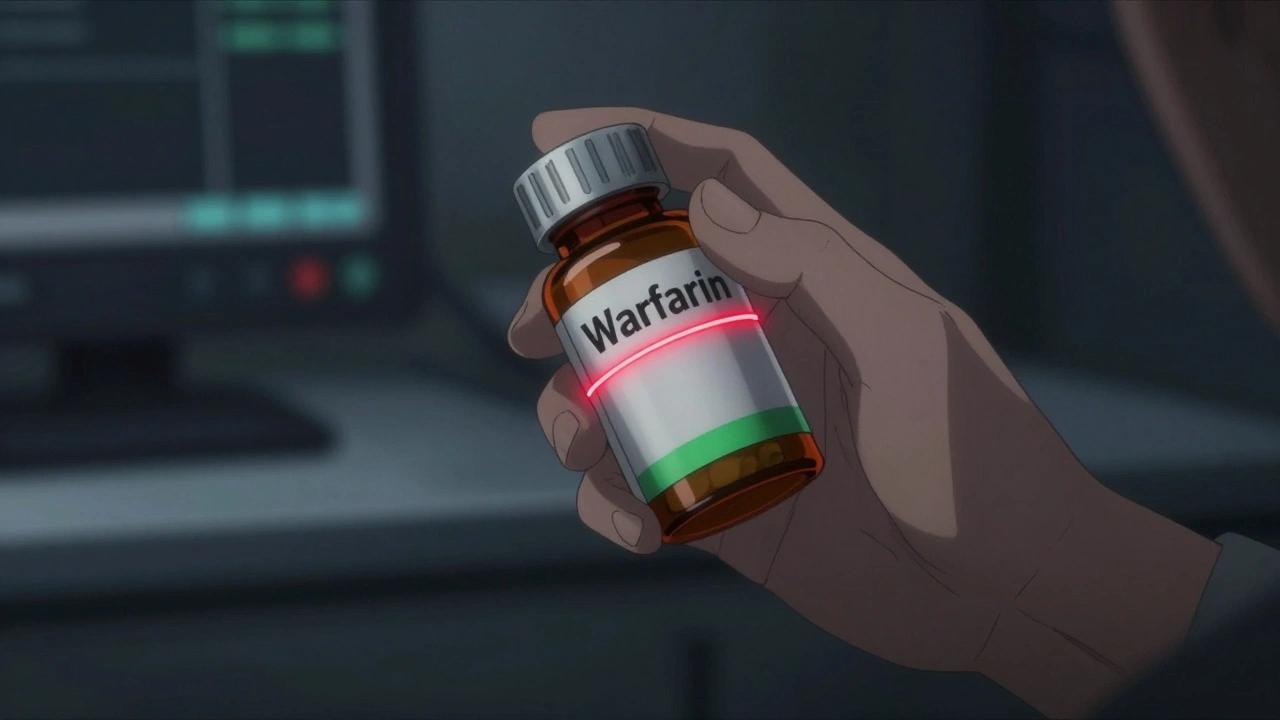
When you take a medication like warfarin or levothyroxine, even a tiny change in how much drug enters your bloodstream can mean the difference between getting better and ending up in the hospital. These are narrow therapeutic index drugs - medicines where the gap between a safe dose and a dangerous one is razor-thin. That’s why regulators don’t treat them like other generic drugs. The rules for proving they work the same as the brand-name version are stricter, more complex, and more expensive. But why? And does it actually make patients safer?
What Makes a Drug a Narrow Therapeutic Index (NTI) Drug?
A narrow therapeutic index means the drug has a very small window between the dose that works and the dose that causes harm. The FDA defines NTI drugs as those with a therapeutic index of 3 or less. That means the toxic dose is only three times higher than the effective dose. For comparison, most common drugs like ibuprofen or amoxicillin have therapeutic indexes of 100 or more. With those, you can miss a dose or take an extra pill without serious consequences. With NTI drugs, you can’t.
Examples include warfarin (a blood thinner), levothyroxine (for thyroid disease), digoxin (for heart rhythm), phenytoin (for seizures), and tacrolimus (used after organ transplants). These aren’t optional medications. People depend on them to stay alive or avoid life-threatening complications. A 10% drop in blood levels of warfarin could lead to a clot. A 10% rise could cause dangerous bleeding. There’s no room for error.
Doctors have known this since the 1970s, when therapeutic drug monitoring became routine. Blood tests were used to check levels of phenytoin and digoxin because even small changes in how the body absorbed the drug could cause problems. That’s why when generic versions of these drugs started appearing, regulators knew they couldn’t just use the same rules as for other generics.
Standard Bioequivalence Rules Don’t Work for NTI Drugs
For most generic drugs, bioequivalence is proven if the generic delivers between 80% and 125% of the brand-name drug’s amount in the bloodstream. That’s called the 80-125% rule. It’s based on decades of data showing that within that range, most drugs work just as well and are just as safe.
But for NTI drugs, that range is too wide. A 25% variation might mean the difference between a therapeutic dose and a toxic one. So regulators had to tighten the rules. The European Medicines Agency (EMA) set a fixed range of 90-111% for NTI drugs. Health Canada uses 90.0-112.0% for the area under the curve (AUC), which measures total drug exposure over time. These limits are tighter, but they’re still fixed - meaning every NTI drug gets the same standard, no matter how it behaves in the body.
The FDA took a different approach. Instead of a one-size-fits-all limit, they use a method called Reference-Scaled Average Bioequivalence (RSABE). This adjusts the acceptable range based on how variable the brand-name drug is in people’s bodies. If the brand drug’s levels bounce around a lot from person to person, the FDA allows a slightly wider range for the generic. If the brand drug is very consistent, the generic has to match it even more precisely.
That’s not all. The FDA also requires two extra checks: First, the generic can’t be more variable than the brand. If the generic’s levels jump around more than the brand’s, it’s rejected. Second, the generic still has to meet the standard 80-125% range as a backup. So a generic must pass three tests to get approved. That’s far more rigorous than what’s required for most other drugs.

Why the FDA’s Approach Is More Complex - and More Expensive
The FDA’s method sounds smarter, and in many ways, it is. It’s based on real pharmacokinetic data, not arbitrary numbers. But it comes at a cost - literally. A standard bioequivalence study for a regular generic drug costs between $300,000 and $700,000. For an NTI drug, it’s $500,000 to $1 million. Why? Because the studies need more people. Instead of 24-36 volunteers, NTI studies require 36 to 54. The design is more complicated too - often a four-period crossover where each participant takes both the brand and generic multiple times under controlled conditions.
These higher costs slow down generic competition. Only about 68% of NTI drugs have generic versions available, compared to 90% for other drugs. That’s not because manufacturers don’t want to make them. It’s because the financial risk is too high. A company might spend $800,000 on a study, only to have the FDA reject it because the generic was too variable. That’s a huge gamble.
Some experts argue the FDA’s approach is too strict. Dr. Lawrence Lesko from the University of Florida has pointed out that for some NTI drugs with very low variability - like levothyroxine - the extra requirements may not add meaningful safety benefits. He worries these rules could reduce competition and keep prices higher than necessary.
But others, like Dr. Leslie Benet from UCSF, defend the FDA’s method. He calls it scientifically sound. Real-world evidence backs him up. A 2017 study in the American Journal of Transplantation showed that generic tacrolimus performed just as well as the brand in transplant patients - as long as it met the FDA’s stricter criteria. Another study in Circulation: Cardiovascular Quality and Outcomes found no difference in outcomes between brand and generic warfarin when used under proper monitoring.
Which NTI Drugs Are Covered?
The FDA doesn’t publish a single official list of NTI drugs. Instead, they issue product-specific guidance for each one. As of 2023, they’ve issued formal bioequivalence guidance for 15 NTI drugs. The most common ones include:
- Warfarin
- Levothyroxine
- Digoxin
- Phenytoin
- Tacrolimus
- Carbamazepine
- Valproic acid
- Phenytoin
- Sirolimus
- Everolimus
- Lithium carbonate
- Theophylline
- Mercuraptopurine
- Thioguanine
These drugs are used in critical conditions - heart disease, epilepsy, organ transplants, thyroid disorders, and cancer. They’re not just any generics. They’re life-sustaining. That’s why regulators treat them differently.
Despite the stricter rules, generic versions of these drugs are still widely used. The market for NTI drugs in the U.S. was worth $45 billion in 2023, according to IQVIA. That’s a huge incentive for manufacturers to find a way through the regulatory maze. But the lack of a clear, centralized list from the FDA creates confusion. Generic companies don’t always know which drugs are classified as NTI until they start the approval process - and sometimes not until they’re rejected.
What’s Next? Harmonization and Better Rules
In July 2023, the FDA announced plans to move away from case-by-case evaluations and start using quantitative calculations to classify NTI drugs. This means they’ll use data - like therapeutic index values from clinical studies - to assign a score, rather than relying on expert judgment. It’s a step toward more transparency and consistency.
The FDA is also working to align its approach with other agencies. Right now, the EMA, Health Canada, and the FDA all use different standards. That makes it harder for companies to develop a single generic product for multiple markets. A 2023 McKinsey analysis predicted that by 2026, global harmonization could reduce development costs by 15-20%. That would mean more generics, faster.
The FDA plans to issue final guidance on the RSABE approach by Q2 2024. This will turn the current draft rules into official policy. It’s a big moment. For the first time, the rules will be clearly written, publicly available, and legally binding.
What This Means for Patients
Patients on NTI drugs should know that generic versions are safe - but only if they’ve met the stricter standards. If your doctor switches you to a generic warfarin or levothyroxine, don’t panic. Studies show that when generics pass the FDA’s three-part test, they perform just as well as the brand.
But you should still monitor your response. For drugs like warfarin, regular blood tests (INR checks) are still essential. For levothyroxine, your doctor may check your TSH levels after the switch. These aren’t signs of distrust - they’re just good medical practice for any critical medication.
For now, the system isn’t perfect. Costs are high. Rules are complex. But the goal is clear: prevent harm. And so far, the data shows it’s working. Generic NTI drugs approved under these rules are not riskier than the brand. In fact, they’re saving lives and billions of dollars - without compromising safety.
What is a narrow therapeutic index (NTI) drug?
A narrow therapeutic index (NTI) drug is a medication where small changes in dose or blood concentration can lead to serious therapeutic failure or toxic side effects. The FDA defines NTI drugs as those with a therapeutic index of 3 or less - meaning the toxic dose is only three times higher than the effective dose. Examples include warfarin, levothyroxine, digoxin, and phenytoin.
Why are bioequivalence requirements stricter for NTI drugs?
Because NTI drugs have a very small margin between a safe and dangerous dose, even small differences in how the body absorbs or processes the drug can cause harm. Standard bioequivalence limits (80-125%) are too wide for these drugs. Stricter rules - like 90-111% or FDA’s RSABE method - ensure generic versions deliver nearly identical blood levels to the brand, reducing the risk of treatment failure or toxicity.
How does the FDA’s bioequivalence approach differ from the EMA’s?
The FDA uses Reference-Scaled Average Bioequivalence (RSABE), which adjusts the acceptable range based on how variable the brand-name drug is in the body. It also requires the generic to be no more variable than the brand and to still meet the standard 80-125% range. The EMA uses a fixed, tightened interval of 90-111% for all NTI drugs, regardless of variability. The FDA’s method is more scientifically tailored but more complex and costly to study.
Are generic NTI drugs safe?
Yes, when they meet the stricter regulatory requirements. Real-world studies show that generic versions of warfarin, levothyroxine, and tacrolimus approved under FDA or EMA guidelines perform just as well as brand-name versions in patients. Clinical outcomes, like blood clotting or thyroid hormone levels, show no significant differences when bioequivalence is properly demonstrated.
Why are generic NTI drugs more expensive to develop?
Developing a generic NTI drug requires larger, more complex clinical studies - often with 36 to 54 participants instead of 24 to 36. The testing must include multiple dosing periods and detailed pharmacokinetic analysis. These studies cost $500,000 to $1 million, compared to $300,000-$700,000 for standard generics. The higher cost discourages some manufacturers, slowing generic availability.
How many NTI drugs are there in the U.S.?
There are about 35 drugs classified as NTI by major regulatory agencies. The FDA has issued formal bioequivalence guidance for 15 of them, including warfarin, levothyroxine, digoxin, phenytoin, and tacrolimus. The FDA does not maintain a complete public list, which creates uncertainty for manufacturers.
Will NTI drug rules become simpler in the future?
Yes. The FDA plans to adopt a data-driven, quantitative method to classify NTI drugs instead of case-by-case reviews. They also aim to harmonize rules with the EMA and Health Canada by 2026. This could reduce development costs by 15-20% and speed up generic approvals, improving access without sacrificing safety.



Reviews
Stop overcomplicating it.