

If you live with irritable bowel syndrome (IBS), you’ve probably tried everything: bland diets, probiotics, prescription meds, even stress management apps. But what if one of the most effective tools is something simple, natural, and sitting on a shelf at your local pharmacy? Peppermint oil isn’t just for fresh breath or candy-it’s one of the best-studied natural treatments for IBS, backed by decades of research and endorsed by major medical groups.
Why Peppermint Oil Works for IBS
Peppermint oil works because of one key ingredient: L-menthol. This compound doesn’t just give mint its cool taste-it relaxes the muscles in your gut. Think of it like a gentle pause button for cramping and spasms. When you have IBS, your intestines overreact to normal digestion, causing pain, bloating, and irregular bowel movements. L-menthol blocks calcium channels in gut muscle cells, which stops them from contracting too hard or too often. It also activates TRPM8 receptors, which help calm the nerves that send pain signals from your gut to your brain. This isn’t guesswork. In a 2014 meta-analysis of five high-quality studies involving nearly 400 people, those taking enteric-coated peppermint oil were more than twice as likely to see overall symptom improvement compared to those on placebo. That’s not a small effect-it’s on par with many prescription antispasmodics. The European Medicines Agency officially approved peppermint oil for IBS in 2014, and the American College of Gastroenterology gave it a conditional first-line recommendation in 2022. That’s rare for a plant-based remedy.The Big Catch: It Has to Be Enteric-Coated
Not all peppermint oil is created equal. If you swallow a regular capsule or drop oil under your tongue, it dissolves in your stomach. That’s bad news. The oil irritates the stomach lining and can trigger heartburn-exactly the opposite of what you want. That’s why every reliable study uses enteric-coated capsules. These capsules are designed to survive stomach acid and only release the oil once they reach the small intestine, where it’s most effective. If you’ve tried peppermint oil before and got worse heartburn, you probably used the wrong product. Non-enteric-coated versions have a 43% discontinuation rate because of this side effect. Look for labels that clearly say “enteric-coated” or “delayed-release.” Brands like IBgard® and Colpermin® are formulated this way. Generic capsules work too, but only if they’re verified to have the right coating. Check for the USP Verified Mark-it means the product was independently tested for quality.Dosage: More Isn’t Better
The standard dose is 0.2 to 0.4 milliliters of peppermint oil per capsule, taken three times a day. Most capsules today contain 180-200 mg of oil, which falls right in that range. You don’t need to take more to get better results. In fact, taking extra doesn’t help and increases your risk of side effects. Timing matters just as much as dosage. Taking the capsules 30 to 60 minutes before meals gives the best results. A patient-led study from CureTogether found that people who took their capsules before eating had an 84% success rate in reducing symptoms. Those who took them with food? Only 52%. Why? Because the oil needs time to reach the intestines before food triggers contractions. Taking it after eating means it’s fighting an already active gut. Start slow. If you’re new to this, begin with one capsule a day for a week. Some people get mild heartburn at first, but it usually fades after a few days as the body adjusts. If it doesn’t, stop and try a different brand.Who Benefits Most-and Who Should Avoid It
Peppermint oil works best for people with IBS-C (constipation-predominant) and IBS-M (mixed symptoms). Studies show 68% of these users report significant improvement. But if you have IBS-D (diarrhea-predominant), it might make things worse. The muscle-relaxing effect can speed up transit time, leading to looser stools. Avoid peppermint oil if you have GERD, hiatal hernia, or chronic heartburn. Even enteric-coated versions can sometimes cause reflux in sensitive people. Also, don’t use it if you’re taking proton pump inhibitors (PPIs) like omeprazole. These drugs raise stomach pH, which can cause the capsule to break down too early-reducing effectiveness by up to 37%. Children under 12 aren’t well-studied yet. While a new NIH trial is underway (NCT05799053), current guidelines don’t recommend it for kids. Pregnant or breastfeeding women should consult a doctor before use-there’s not enough safety data.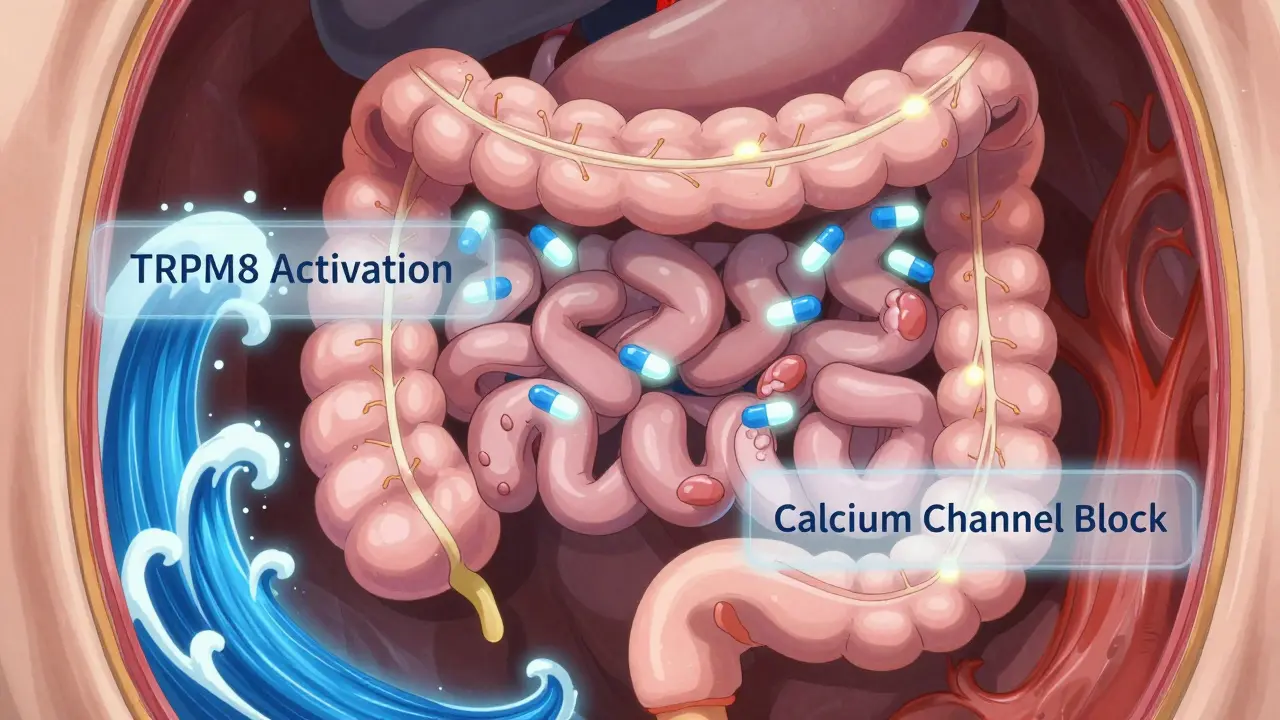
How It Compares to Other IBS Treatments
Let’s put peppermint oil in context. How does it stack up against pills you get from your doctor?- vs. Hyoscine butylbromide (Buscopan): Peppermint oil is just as effective for cramping. One study found no meaningful difference.
- vs. Trimebutine: Trimebutine works slightly better, but it’s a prescription drug with more side effects like dizziness and dry mouth.
- vs. Loperamide (Imodium): Peppermint oil beats it for overall symptom relief, not just diarrhea control.
- vs. Eluxadoline (Viberzi): Eluxadoline is stronger for diarrhea and pain, but it’s expensive, has serious risks (like pancreatitis), and requires a prescription.
Real People, Real Results
Patient reviews tell a consistent story. On Drugs.com, peppermint oil has a 7.3 out of 10 rating from nearly 250 users. About 62% say it helped. Common comments: “Cramps vanished in 20 minutes,” “I stopped taking three prescriptions after starting this,” and “Finally, something that works without making me sleepy.” But it’s not magic. About 23% report negative experiences. The top complaints? Heartburn (even with enteric coating), inconsistent results (“works one day, useless the next”), and nausea. One Reddit user wrote: “I thought it was a miracle-until I missed a dose and my pain came back worse.” That’s a clue: peppermint oil works best when taken consistently. Skipping doses can make symptoms rebound. A 2022 UK survey of over 1,000 IBS patients found that 38% had tried peppermint oil. Of those, 67% kept using it after three months because it worked. The ones who stopped? Most said it didn’t help-or they couldn’t tolerate the side effects.Quality Matters More Than You Think
The market is flooded with peppermint oil products. But not all are equal. In 2022, ConsumerLab tested 20 commercial brands. Only 12 passed their standards. Many had too little menthol, too many esters, or even traces of pesticides. The FDA issued a warning in 2020 about non-standardized products. Look for these markers of quality:- Menthol content: 50-65% (European Pharmacopoeia standard)
- Menthone: 15-32%
- Esters: less than 4%
- USP Verified Mark or equivalent third-party certification
- Enteric coating clearly stated on the label

How Long Until You See Results?
Don’t expect instant relief on day one. Most people notice improvement within 1-2 weeks. But full benefits typically take 4-8 weeks. A 2016 study found that 79% of users had stable symptom control by week four when following the correct dosing schedule. If you haven’t seen any change after eight weeks, it’s unlikely to work for you. IBS is complex-what helps one person might not help another. That doesn’t mean you failed. It just means your body responds differently.What’s Next for Peppermint Oil?
Science is moving fast. New formulations are in development to reduce side effects. One drug called PO-101, a modified menthol compound, is in phase 3 trials and promises 70% less heartburn. Researchers at Stanford are also studying whether your gut bacteria (your “enterotype”) predict whether peppermint oil will work for you. That could lead to personalized treatment in the next few years. The 2023 Rome Foundation updated its guidelines, upgrading peppermint oil from “possibly recommended” to “recommended” for adults. That’s a big deal-it means experts now see it as a core part of IBS management.Bottom Line: Try It, But Do It Right
Peppermint oil isn’t a cure for IBS. But for many, it’s the most effective, affordable, and safe tool they’ve found. If you’re tired of meds with side effects or diets that leave you hungry and frustrated, it’s worth a shot. Here’s your simple plan:- Buy enteric-coated peppermint oil capsules (180-200 mg).
- Take one capsule 30-60 minutes before breakfast, lunch, and dinner.
- Stick with it for at least 4 weeks.
- Track your symptoms daily-note pain, bloating, bowel habits.
- If no improvement after 8 weeks, stop.
- If you get heartburn, switch brands or lower the dose to twice daily.
Can I take peppermint oil with my IBS medication?
It depends. Peppermint oil can reduce the effectiveness of proton pump inhibitors (PPIs) like omeprazole by changing stomach pH. Avoid taking them together. For antispasmodics like hyoscine, peppermint oil is safe to combine and may even enhance relief. Always check with your doctor before mixing treatments.
Does peppermint oil help with bloating and gas?
Yes. Multiple studies show peppermint oil significantly reduces bloating and abdominal distension in IBS patients. Its muscle-relaxing effect helps release trapped gas more easily, and it may also reduce gas production by calming gut overactivity. In one trial, 63% of users reported less bloating after four weeks.
Is peppermint oil safe for long-term use?
Current data shows it’s safe for up to 12 weeks. The longest trial followed patients for only three months, but the 2023 IBS Safety Registry tracked over 12,000 users for two years and found no serious side effects linked to peppermint oil. Long-term use beyond six months hasn’t been formally studied, so periodic breaks are advised. If symptoms return after stopping, you can restart safely.
Can I use peppermint oil if I have SIBO?
Use caution. Some people with SIBO (small intestinal bacterial overgrowth) report worsening symptoms with peppermint oil, possibly because it affects gut motility. While a few small studies suggest it may help reduce bacterial load, there’s no consensus. If you have SIBO, talk to your doctor before trying it. It’s best to treat SIBO first before adding peppermint oil.
Why does peppermint oil work better than peppermint tea?
Peppermint tea contains only trace amounts of menthol-far too little to have a therapeutic effect on IBS. The oil in capsules is concentrated and delivered directly to the intestines. Drinking tea might soothe your stomach briefly, but it won’t reduce cramping or bloating the way enteric-coated oil does. They’re not interchangeable.



Reviews
Enteric-coated is non-negotiable. I tried the generic stuff-heartburn city. Switched to IBgard, and my cramps vanished within 48 hours. No joke.
I’ve been using this for 6 months now and honestly it’s been the only thing that gives me consistent relief. I used to take three different meds-now I just take one capsule before meals. Life-changing. Just make sure you get the right kind. Not all peppermint oil is created equal.
Why are we trusting some herbal oil over real medicine? In India we have Ayurveda, but this is just Western marketing. Peppermint tea is enough. No need to buy expensive capsules.
My sister had IBS-D and it made her worse-like, way worse. So if you have diarrhea-predominant, be careful. It’s not for everyone. But for IBS-C? Absolute game changer.
So let me get this straight… we’re paying $20 for a pill that’s basically mint-flavored air? And it beats prescription drugs? I’m not buying it. Someone’s selling snake oil and I’m the sucker.
Think about it-menthol activates TRPM8 receptors, which are evolutionarily ancient, tied to thermal sensation and nociception. The gut is not just a pipe-it’s a sentient network of neural pathways. Peppermint doesn’t just relax muscles-it whispers to your enteric nervous system, calming the storm within. We’ve forgotten that healing isn’t always chemical-it’s often rhythmic, subtle, and rooted in nature’s own pharmacopeia. Modern medicine reduces. Nature integrates.
OMG YES!!! I was skeptical too… but after 3 weeks of IBgard? I actually went out for tacos without panic. I track everything now-symptoms, timing, even my mood. And yes, I buy the USP-verified ones. No more guessing. Also-don’t take it with PPIs!! I learned that the hard way… #IBSwarrior
Another placebo scam. FDA doesn’t regulate this stuff. You’re just paying for a capsule that smells nice.
i tried it once, got heartburn, stopped. maybe i got bad batch?
I started with one capsule a day, then went to three. After two weeks, my bloating dropped by like 70%. I didn’t even realize how bad it was until it was gone. Also-timing matters. Taking it before meals made all the difference. Don’t skip the window.
It’s not magic-it’s molecular poetry. Menthol, that cool ghost of the mint leaf, slips into calcium channels like a thief in the night… and just… stops. No fanfare. No side effects (if you do it right). The gut, this forgotten kingdom, finally gets a gentle king. And for once… it listens.
I’ve been on this for 9 months. Still works. I used to be a mess-constipated, anxious, bloated. Now I eat pizza and don’t hide in the bathroom. I don’t care if it’s ‘natural’-it works. And I’m not going back to pills that made me dizzy.
Thank you for this comprehensive guide. I’ve shared it with my IBS support group. The distinction between enteric-coated and non-coated is critical-so many people waste money and worsen symptoms. Also, the dosage timing advice is spot-on. Consistency is key.